The reading room / 150 sourced essays
History,
well told.
Clear, vivid stories about the choices that changed ordinary life—each grounded in museum, archive or institutional sources.
 01Ideas
Ideas / c. 1487-1505
The notebook that imagined flight four centuries early
Leonardo's flying machines never left the ground. Their real achievement was teaching the eye to treat air as something that could be studied.
7 min read ↗ 02Technology
Technology / 1843
How Ada Lovelace saw beyond the calculating machine
In 1843, a set of notes turned Charles Babbage's unfinished engine into something larger: a general machine for manipulating symbols.
7 min read ↗ 03Courage
Courage / 20 April 1964
The speech that risked everything for freedom
At the Rivonia Trial, Nelson Mandela used the dock not to plead for mercy, but to explain the democratic ideal for which he was prepared to die.
8 min read ↗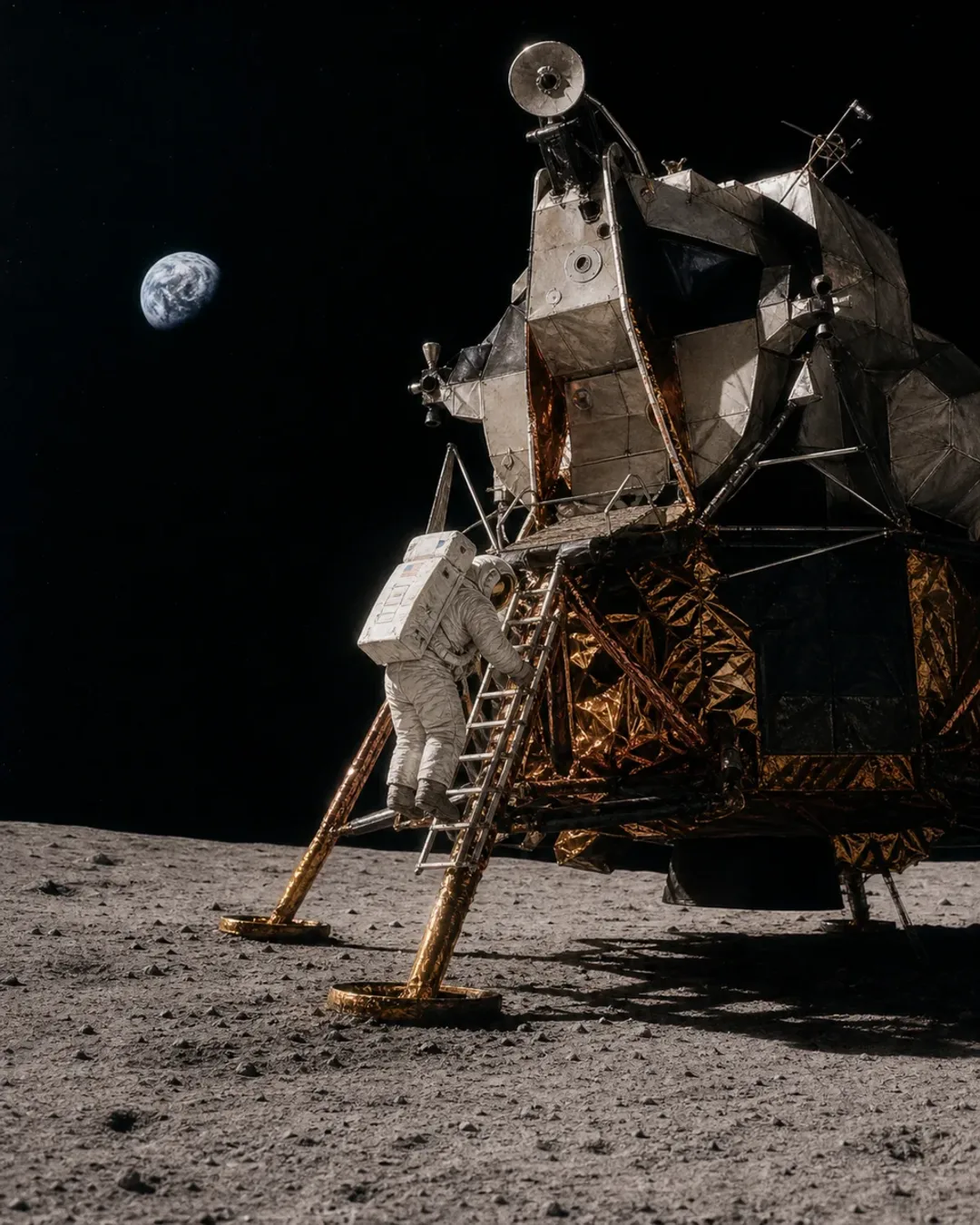 04Exploration
Exploration / 16-24 July 1969
The eight days that made the Moon feel close
Apollo 11 joined planetary-scale engineering to the intimate decisions of three astronauts, thousands of specialists and one small spacecraft.
7 min read ↗ 05Cartography
Cartography / 16th century
Why monsters once swam across the map
Sea creatures on old maps were decoration, inherited knowledge and warnings about the unknown—not simply proof that cartographers believed every tale.
6 min read ↗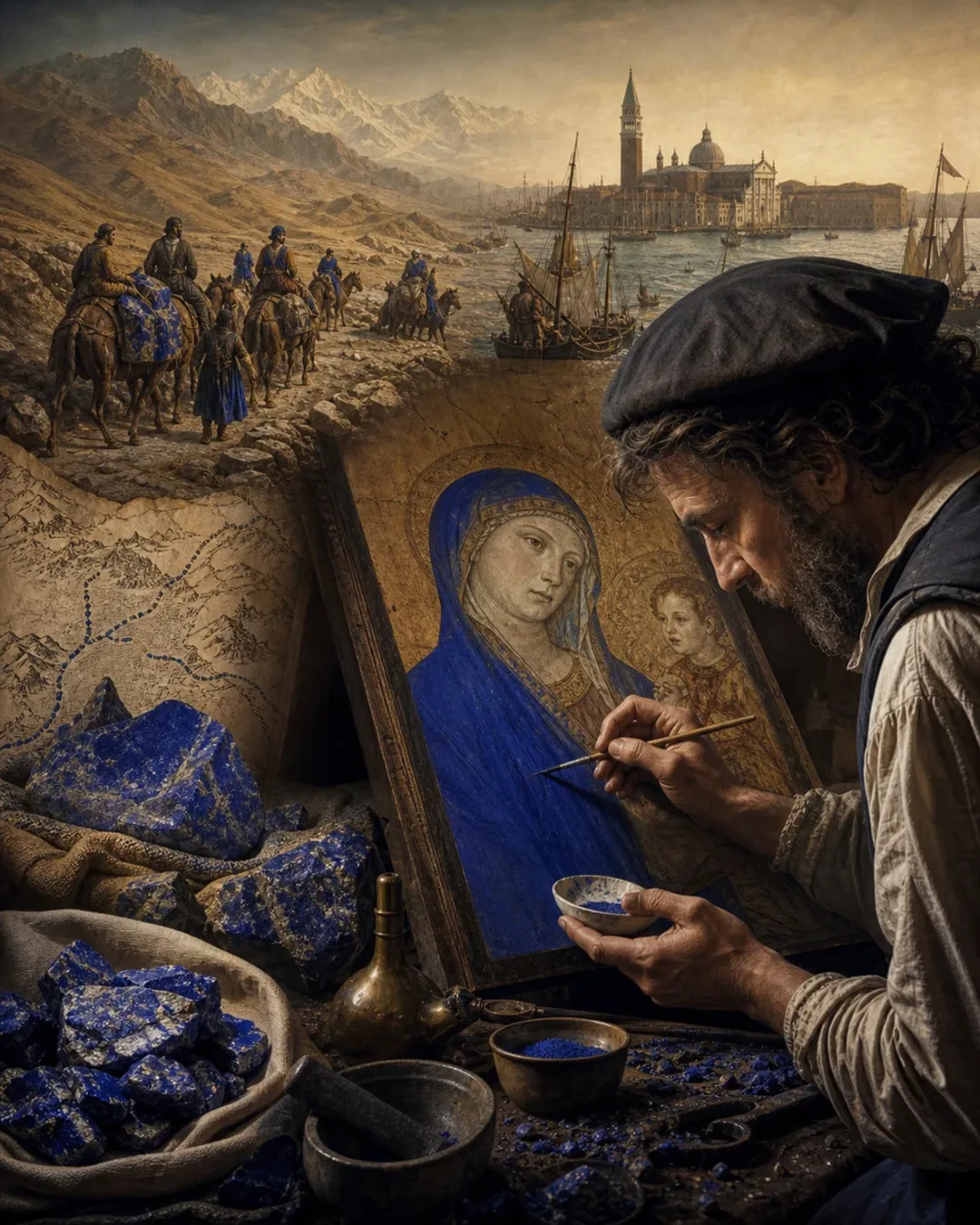 06Culture
Culture / Ancient-19th c.
The blue that crossed mountains to reach a painter's brush
Natural ultramarine began as lapis lazuli, travelled vast trade routes and emerged as one of Renaissance Europe's most prized pigments.
7 min read ↗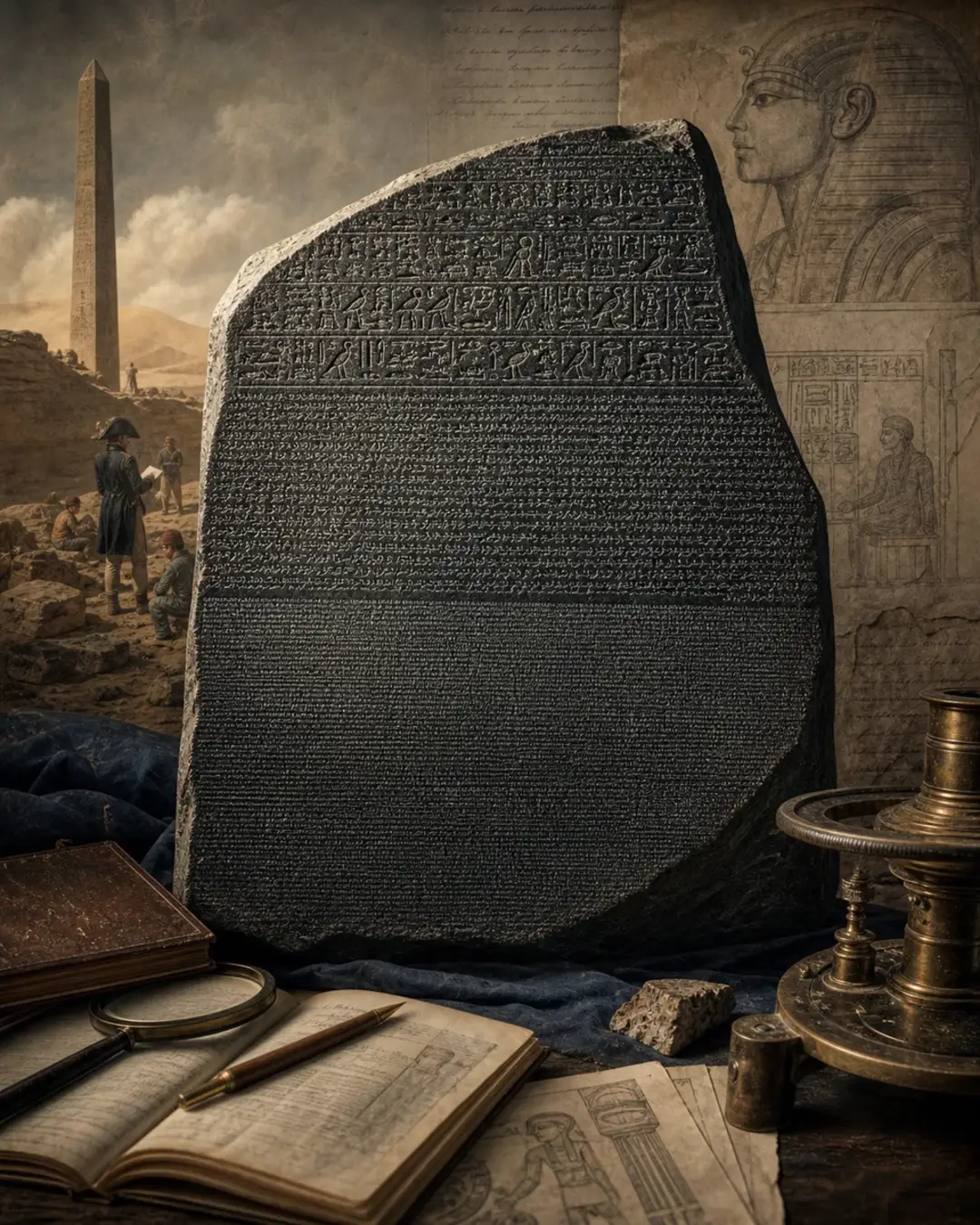 07Language
Language / 196 BCE / 1799
The stone that let a lost script speak again
The Rosetta Stone did not contain a secret code. It offered scholars the same decree in three scripts—and a way to test one insight against another.
7 min read ↗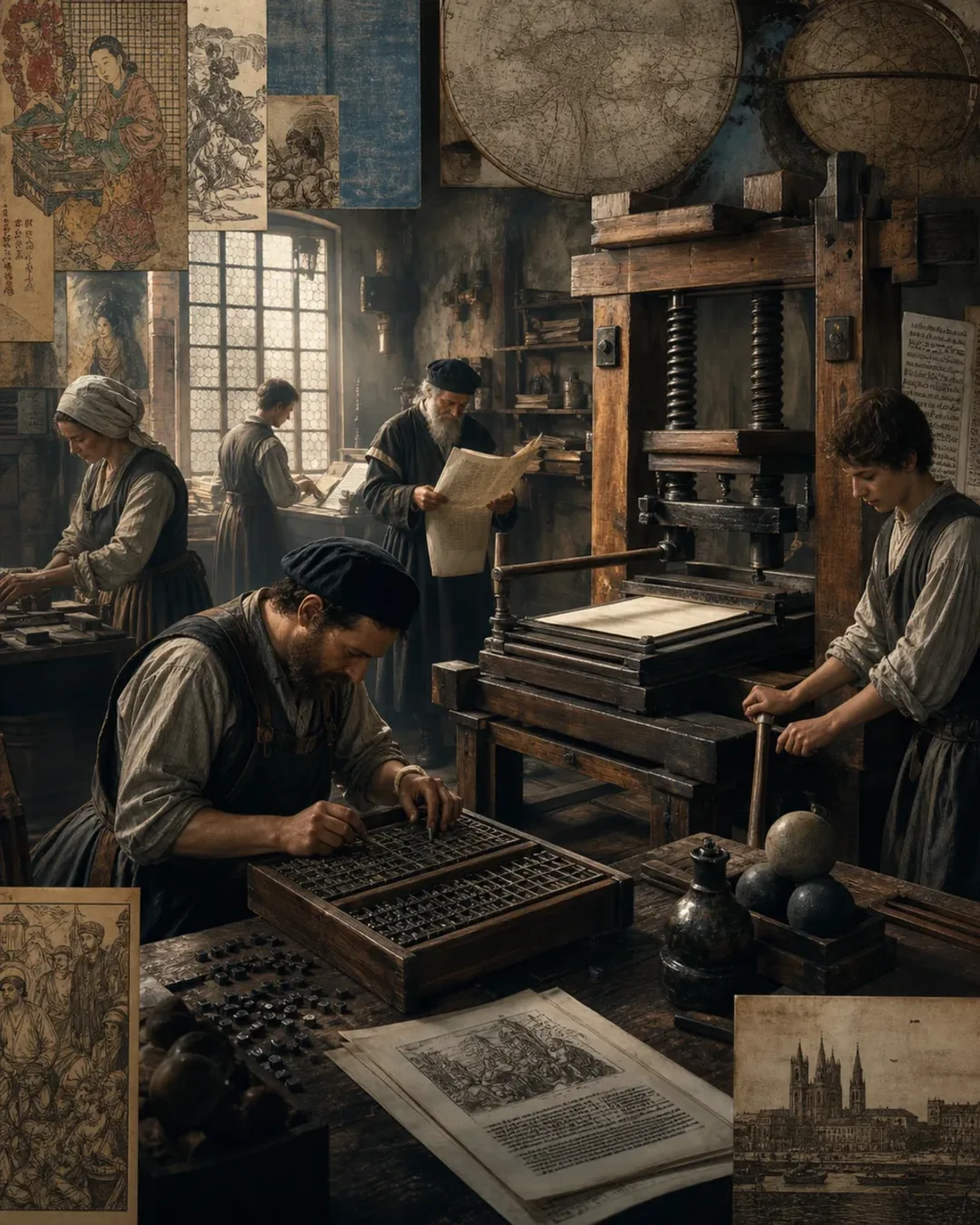 08Media
Media / c. 1450s
Gutenberg did not invent printing. He transformed its European system
Printing long predated Johannes Gutenberg. His achievement was combining type, ink, presswork and finance into a repeatable European production process.
8 min read ↗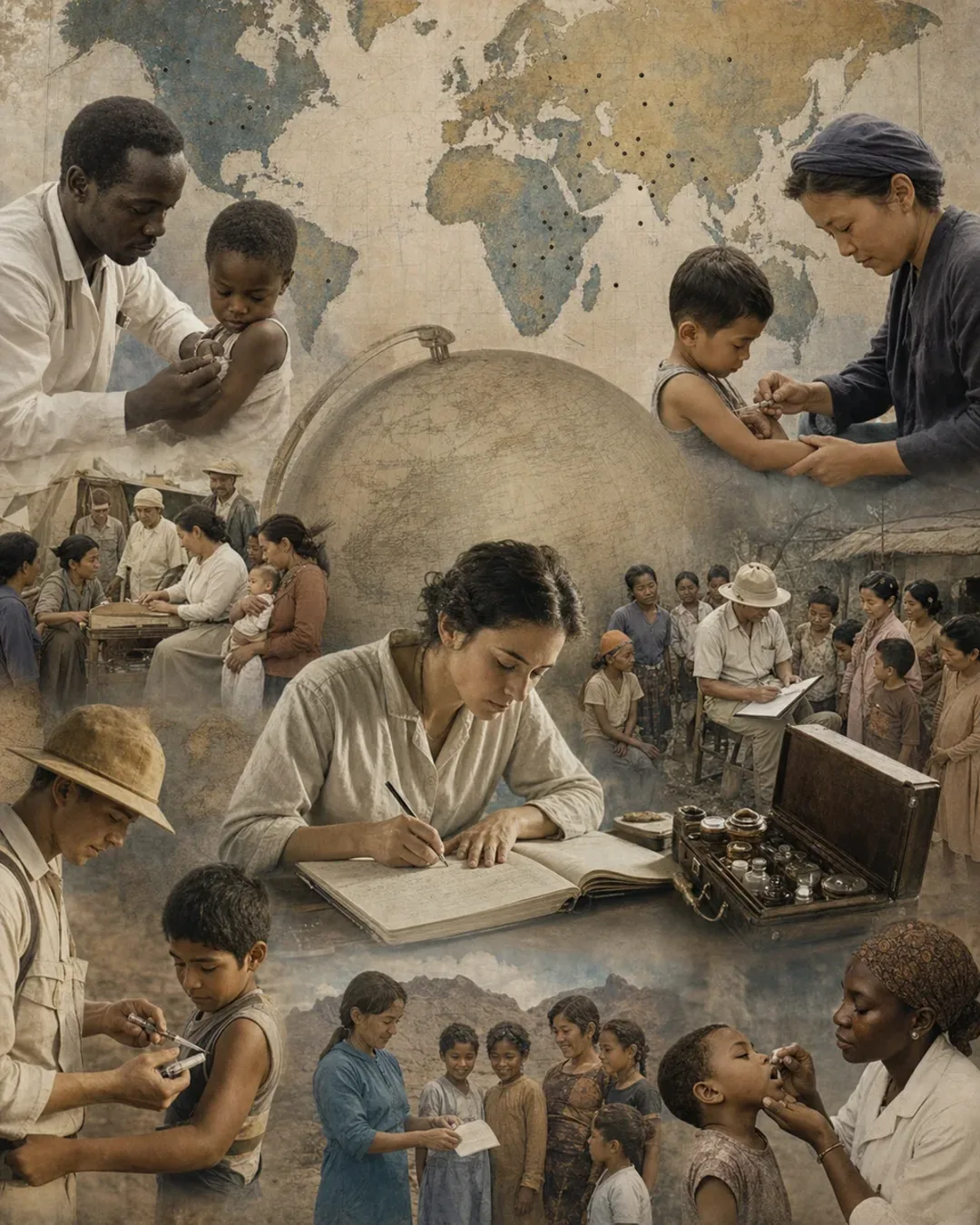 09Public Health
Public Health / 1796-1980
How the world eradicated smallpox
The first human disease to be eradicated disappeared through vaccination, surveillance and thousands of local decisions—not through one discovery alone.
8 min read ↗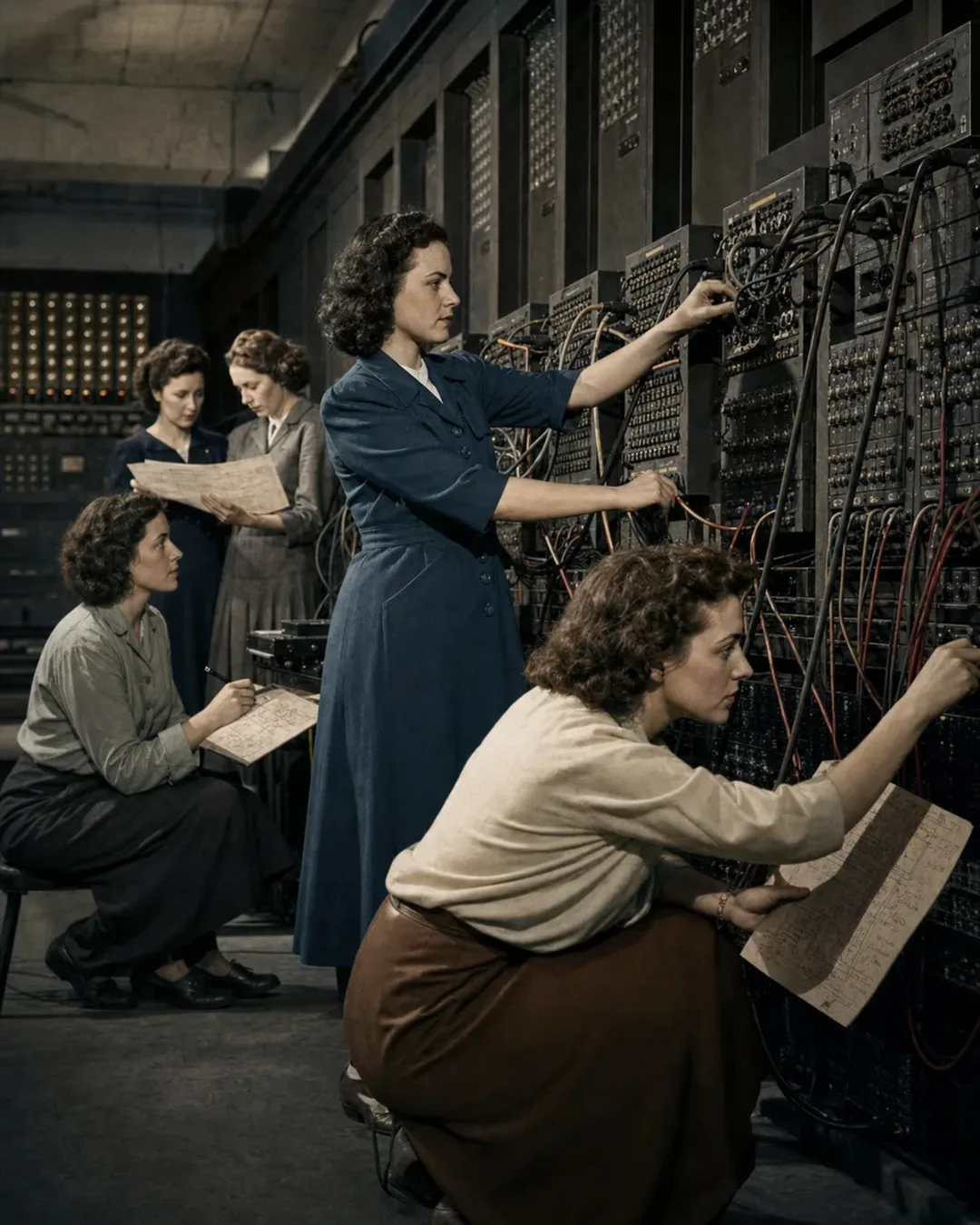 10Computing
Computing / 1945-1946
The women who taught ENIAC how to work
Six women translated ballistic equations into a new kind of program, mastering a machine whose manual was still being invented.
7 min read ↗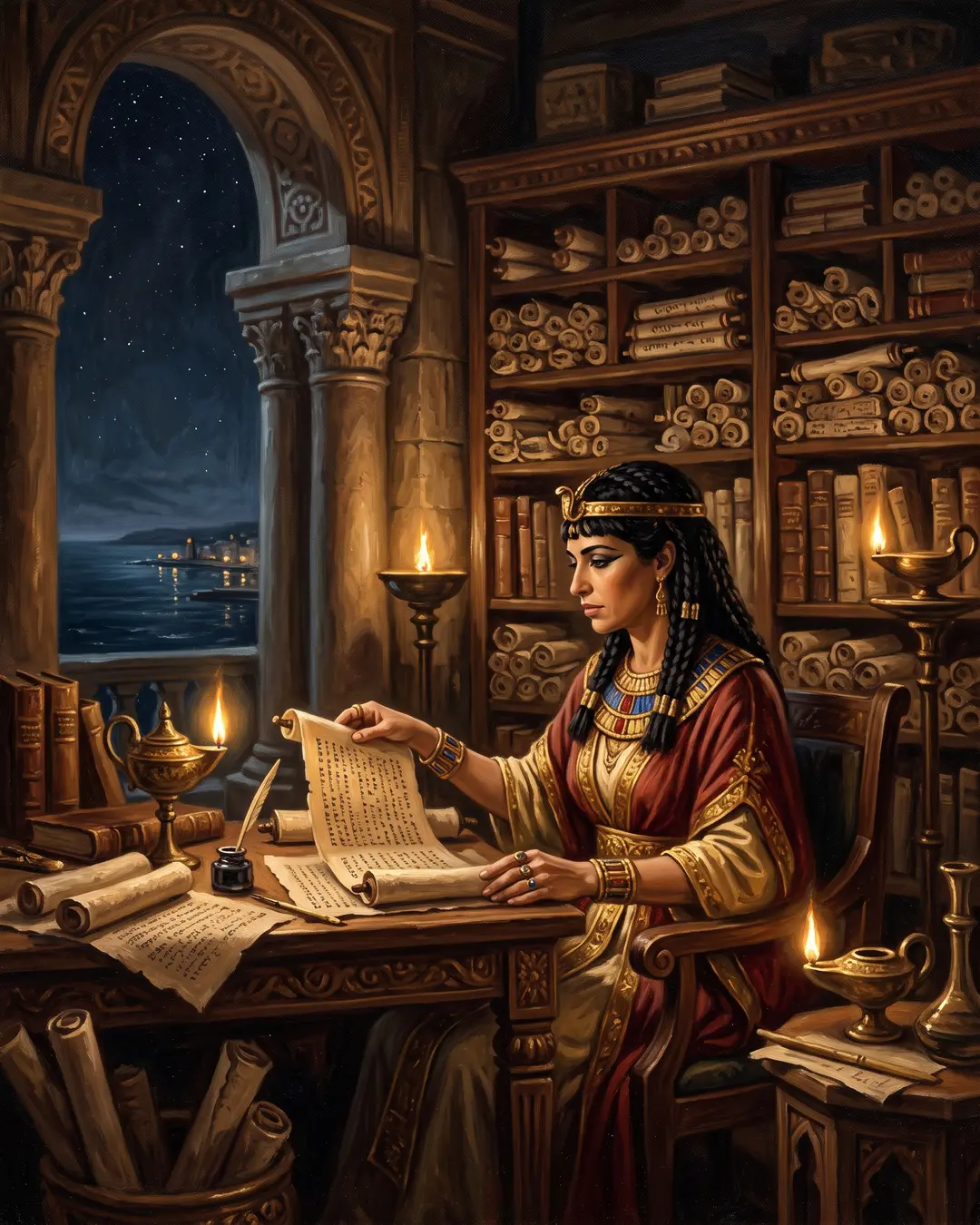 11Leadership
Leadership / 69-30 BCE
The last pharaoh, written by her enemies
Cleopatra VII ruled the richest kingdom of the eastern Mediterranean for two decades. Nearly everything we know about her was written by the Romans who defeated her.
7 min read ↗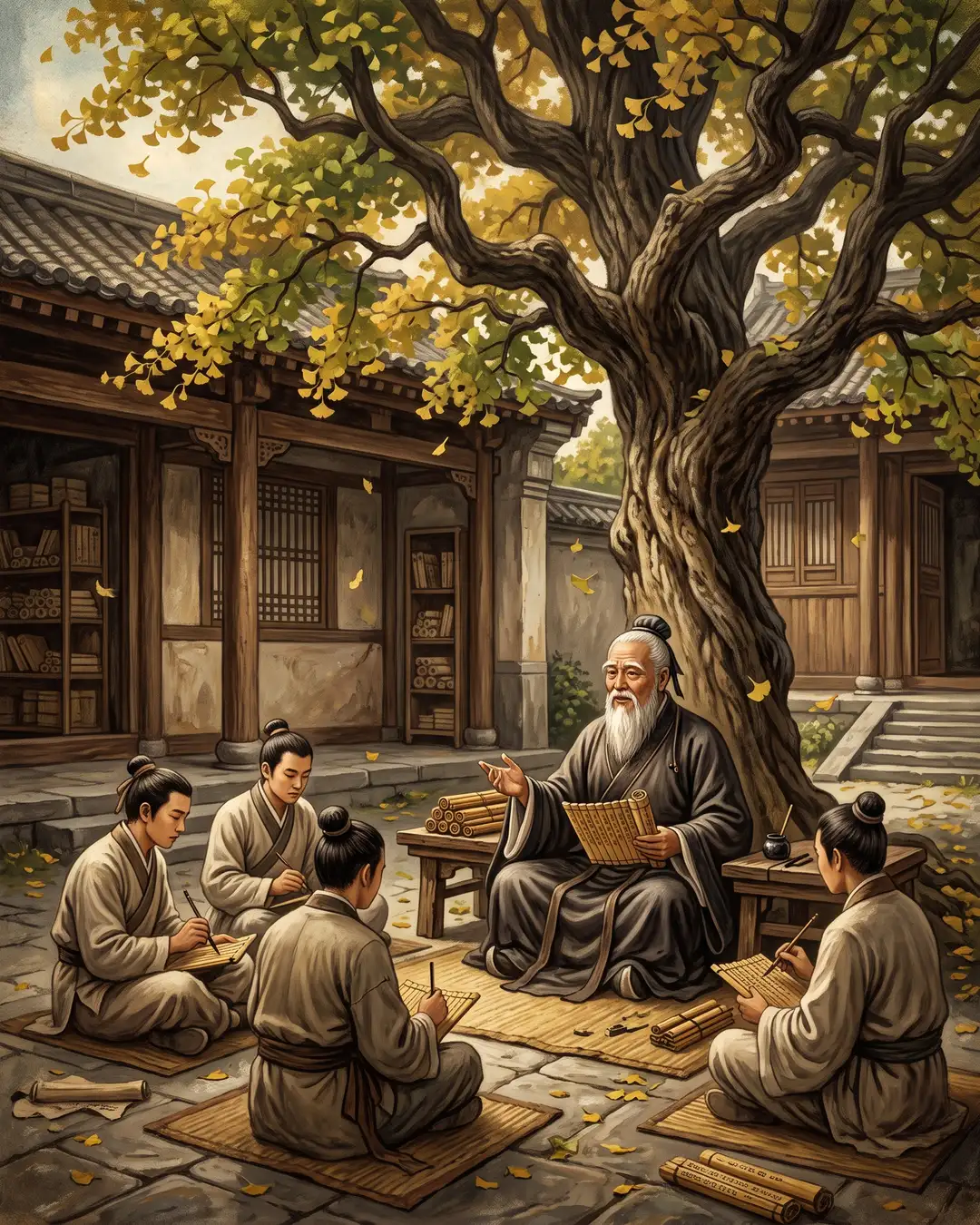 12Philosophy
Philosophy / 551-479 BCE
A failed official who became a civilization's teacher
Confucius held minor posts, wandered between courts and died believing he had accomplished little. The conversations his students remembered shaped East Asia for two millennia.
7 min read ↗ 13Mathematics
Mathematics / c. 355-415 CE
The philosopher Alexandria could not protect
Hypatia led Alexandria's Neoplatonist school and taught mathematics and astronomy to pagans and Christians alike. Her murder in 415 CE made her a symbol every later age has reshaped.
6 min read ↗ 14Mathematics
Mathematics / c. 780-850 CE
The Baghdad scholar whose name became a word for method
In ninth-century Baghdad, Muhammad ibn Musa al-Khwarizmi wrote the book that gave algebra its name. Garbled Latin renderings of his own name gave us the word algorithm.
6 min read ↗ 15Medicine
Medicine / 980-1037 CE
The physician whose textbook outlived six centuries
Ibn Sina, known in Latin as Avicenna, wrote encyclopedias of medicine and philosophy while serving unstable courts. His Canon of Medicine was still taught in European universities in the 1600s.
7 min read ↗ 16Language
Language / 1397-1450
The king who gave his people an alphabet
Sejong the Great ruled Korea through three decades of invention in astronomy, agriculture and printing. His boldest project was Hangul, a new alphabet designed so ordinary people could read.
7 min read ↗ 17Courage
Courage / c. 1412-1431
The girl who commanded armies and unsettled her judges
In two years Joan of Arc rose from a village in Lorraine to the head of a royal army, then was burned as a heretic at about nineteen. Her trial record preserves her voice with rare clarity.
7 min read ↗ 18Science
Science / 1564-1642
The man who pointed a telescope at settled truths
Galileo turned a Dutch spyglass into an instrument of discovery and made mathematics the language of motion. His collision with the Church became the defining parable of science and authority.
7 min read ↗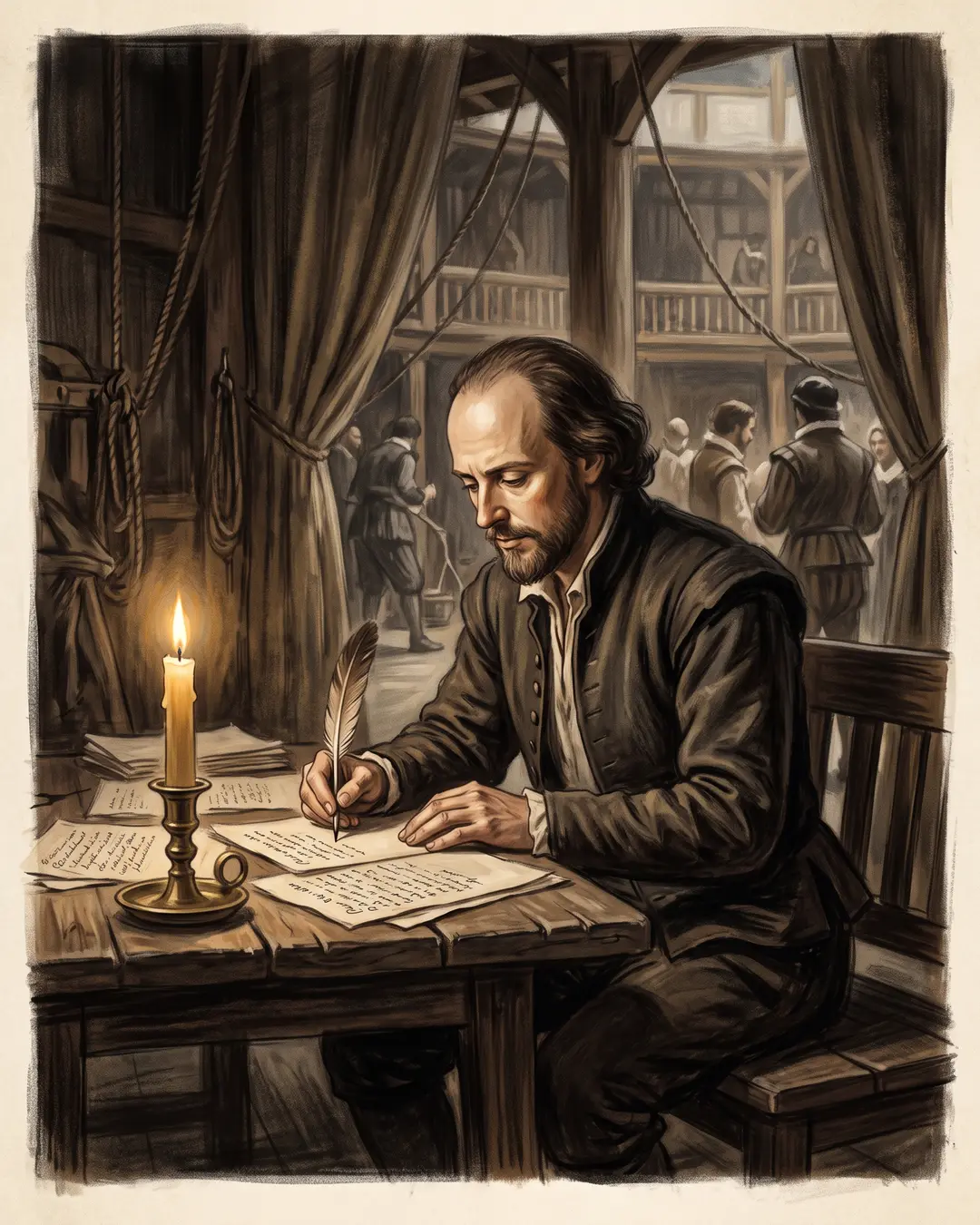 19Literature
Literature / 1564-1616
The glover's son who furnished the world's stage
William Shakespeare left a market town for the London theater and wrote plays that have never stopped being performed. The documented life is thin; the surviving words are inexhaustible.
7 min read ↗ 20Science
Science / 1642-1727
The system builder who kept his secrets
Isaac Newton bound the falling apple and the orbiting Moon into a single law and invented mathematics to prove it. He was also secretive, vindictive and devoted to alchemy.
7 min read ↗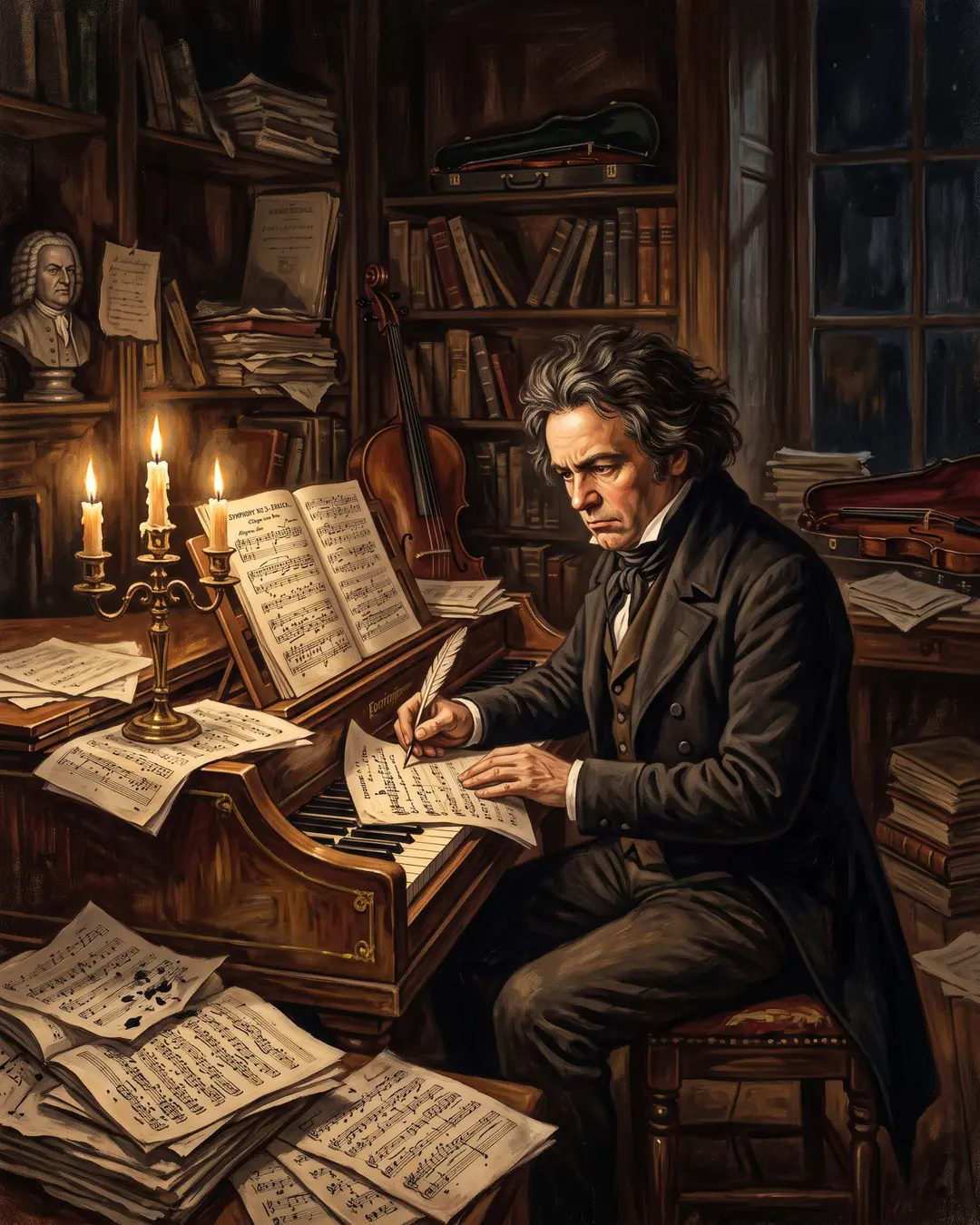 21Music
Music / 1770-1827
The composer who kept writing after the sound was gone
Ludwig van Beethoven reshaped every musical form he touched while losing the sense a musician needs most. His most visionary works were composed in near-total deafness.
7 min read ↗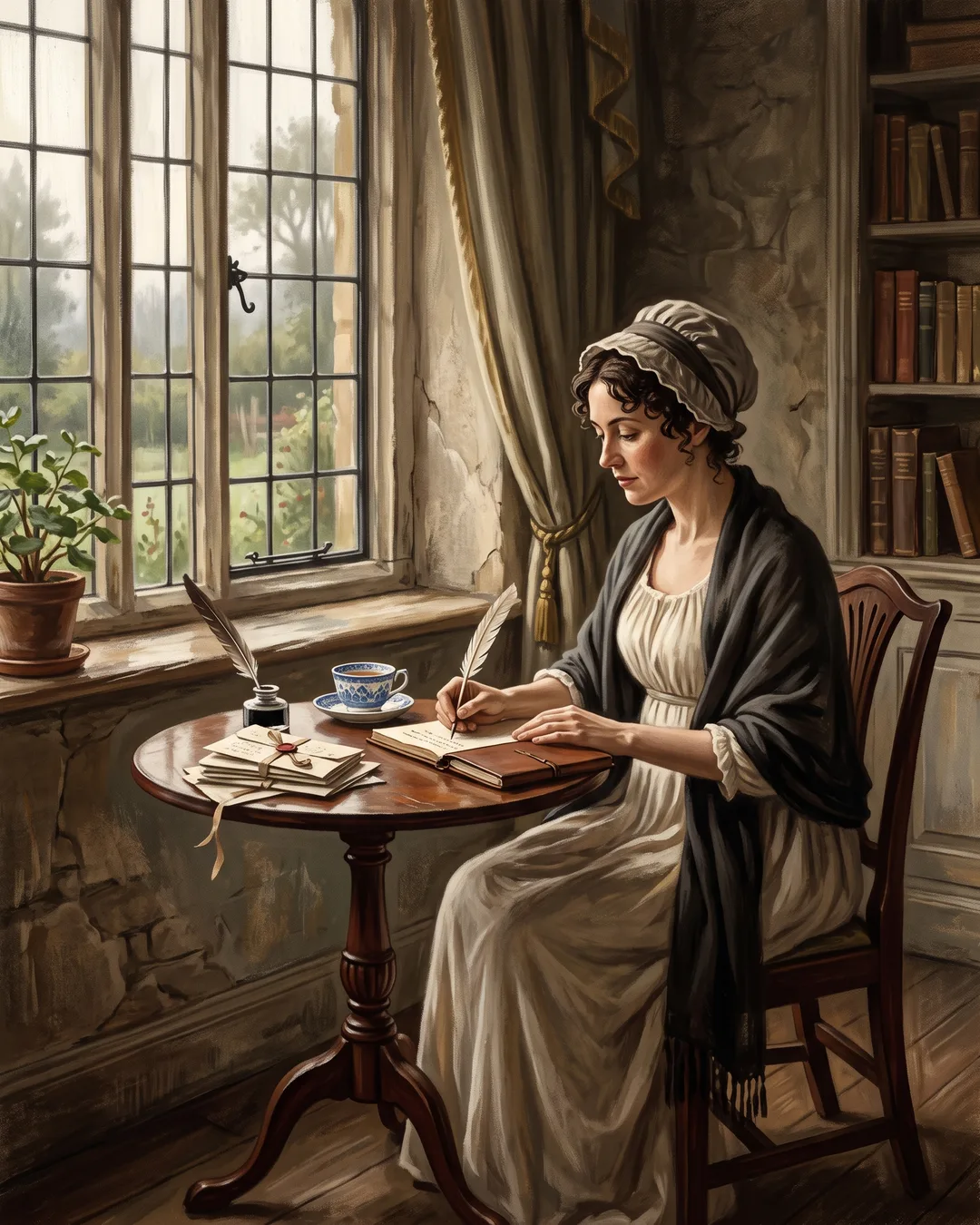 22Literature
Literature / 1775-1817
Six novels from a small writing table
Jane Austen published anonymously, earned modest sums and died at forty-one. Her six completed novels turned the marriage plot into an instrument of moral precision.
6 min read ↗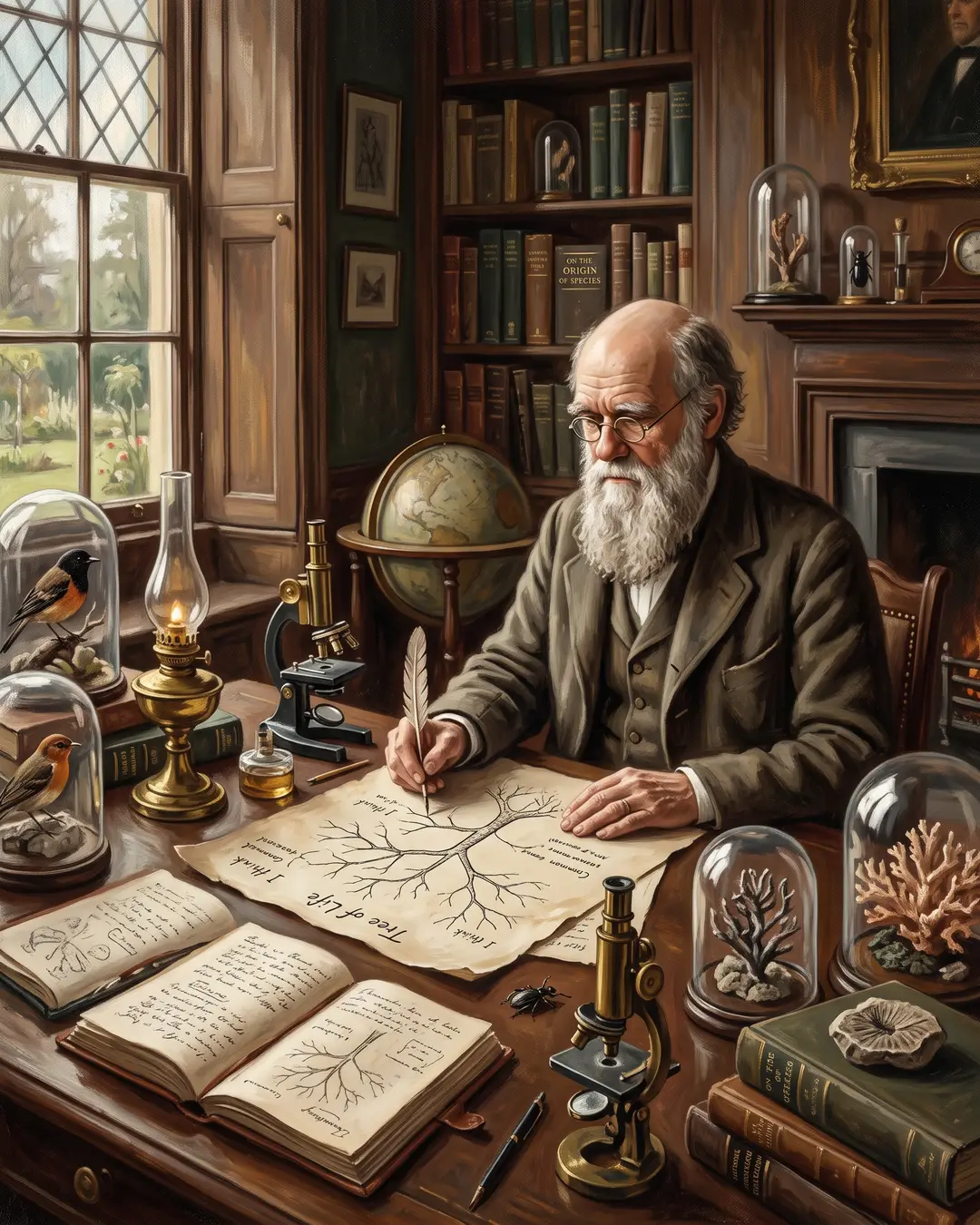 23Science
Science / 1809-1882
The twenty years he spent not publishing
Darwin sketched his theory of natural selection in 1842 and released it in 1859. What happened in between explains as much as the book itself.
8 min read ↗ 24Freedom
Freedom / c. 1822-1913
The woman who kept going back
Harriet Tubman escaped slavery in 1849 and returned repeatedly to lead others out. The verified numbers are smaller than the legend, and considerably more astonishing.
7 min read ↗ 25Medicine
Medicine / 1820-1910
The statistician behind the lamp
The Lady with the Lamp is the least interesting thing about Florence Nightingale. Her hospital at Scutari began as a death trap, and her real weapon was arithmetic.
7 min read ↗ 26Art
26ArtArt / 1853-1890
Ten years, and the brother who paid for them
Van Gogh painted for barely a decade and sold almost nothing. The legend of the mad genius hides how methodically he trained and how much he owed to others.
7 min read ↗ 27Science
Science / 1867-1934
The element she named for a country that had vanished
Marie Curie won Nobel Prizes in two sciences and was almost left off the first. The radiation that made her name also killed her.
8 min read ↗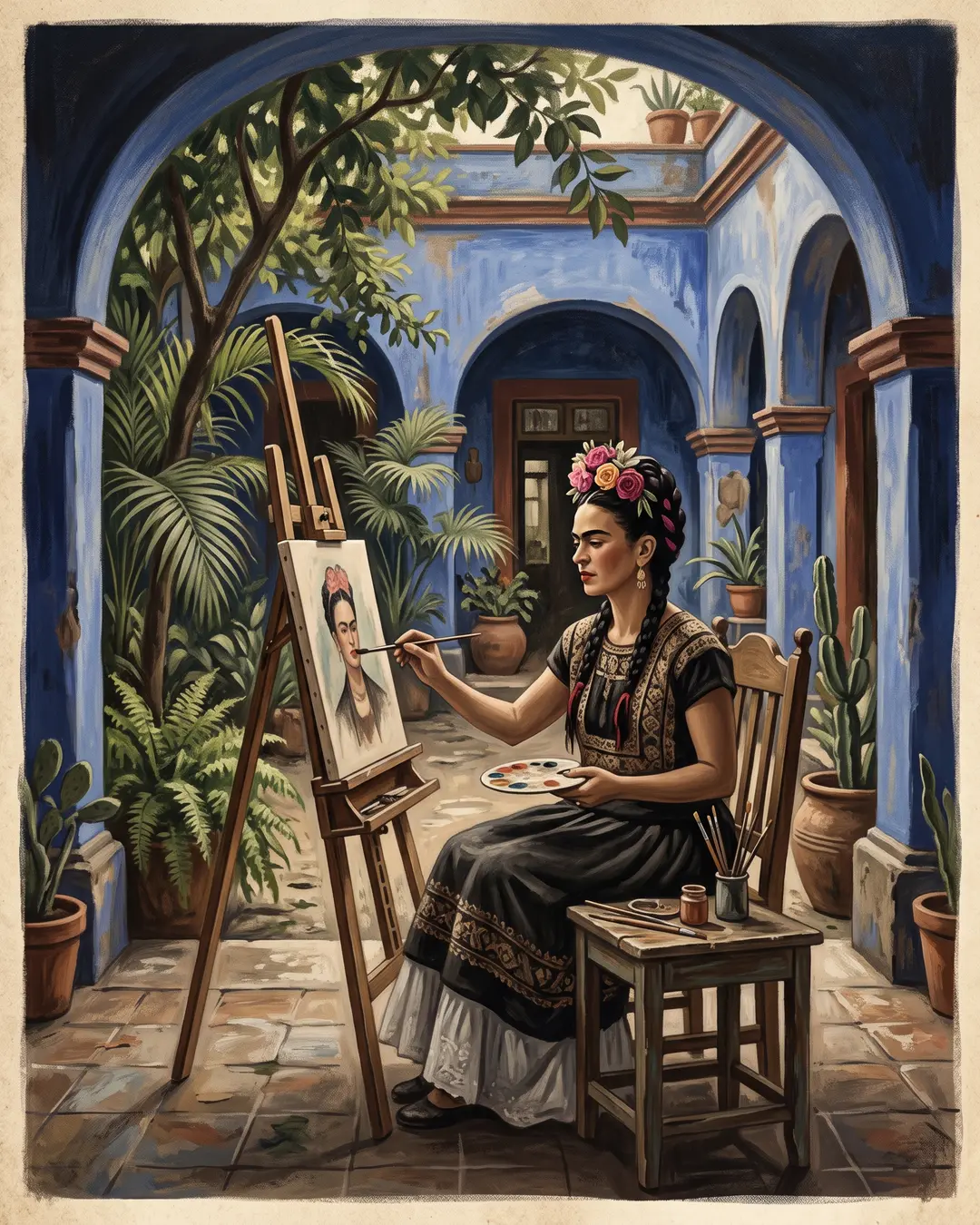 28Art
28ArtArt / 1907-1954
The painter who refused to be a symptom
Frida Kahlo made a body of work out of injury, politics and self-scrutiny. The industry built on her face keeps flattening the difficult artist underneath.
7 min read ↗ 29Freedom
Freedom / 1869-1948
The lawyer who turned refusal into a technology
Gandhi built a form of political pressure out of self-denial and helped end an empire's grip on India. An honest account includes the parts his admirers prefer to skip.
8 min read ↗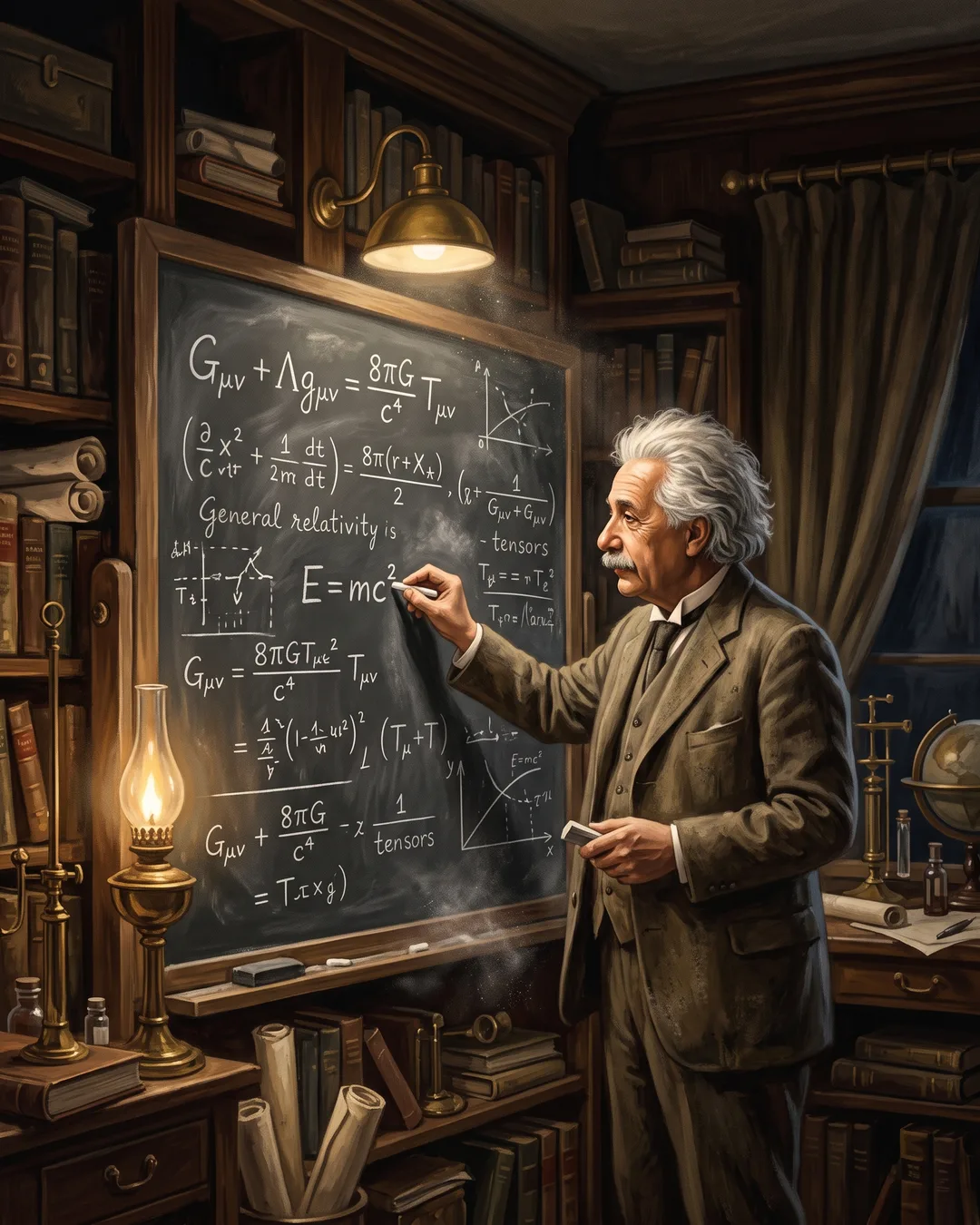 30Science
Science / 1879-1955
The patent clerk who rewrote time
In a single year at a Swiss patent office Einstein published four papers that reset physics. His Nobel was not for relativity, and his last thirty years were an argument he lost.
8 min read ↗ 31Philosophy
Philosophy / c. 470-399 BCE
The man who wrote nothing and changed everything
Socrates left not a single line of his own. Everything we know arrives through students and satirists who disagreed sharply about who he was.
7 min read ↗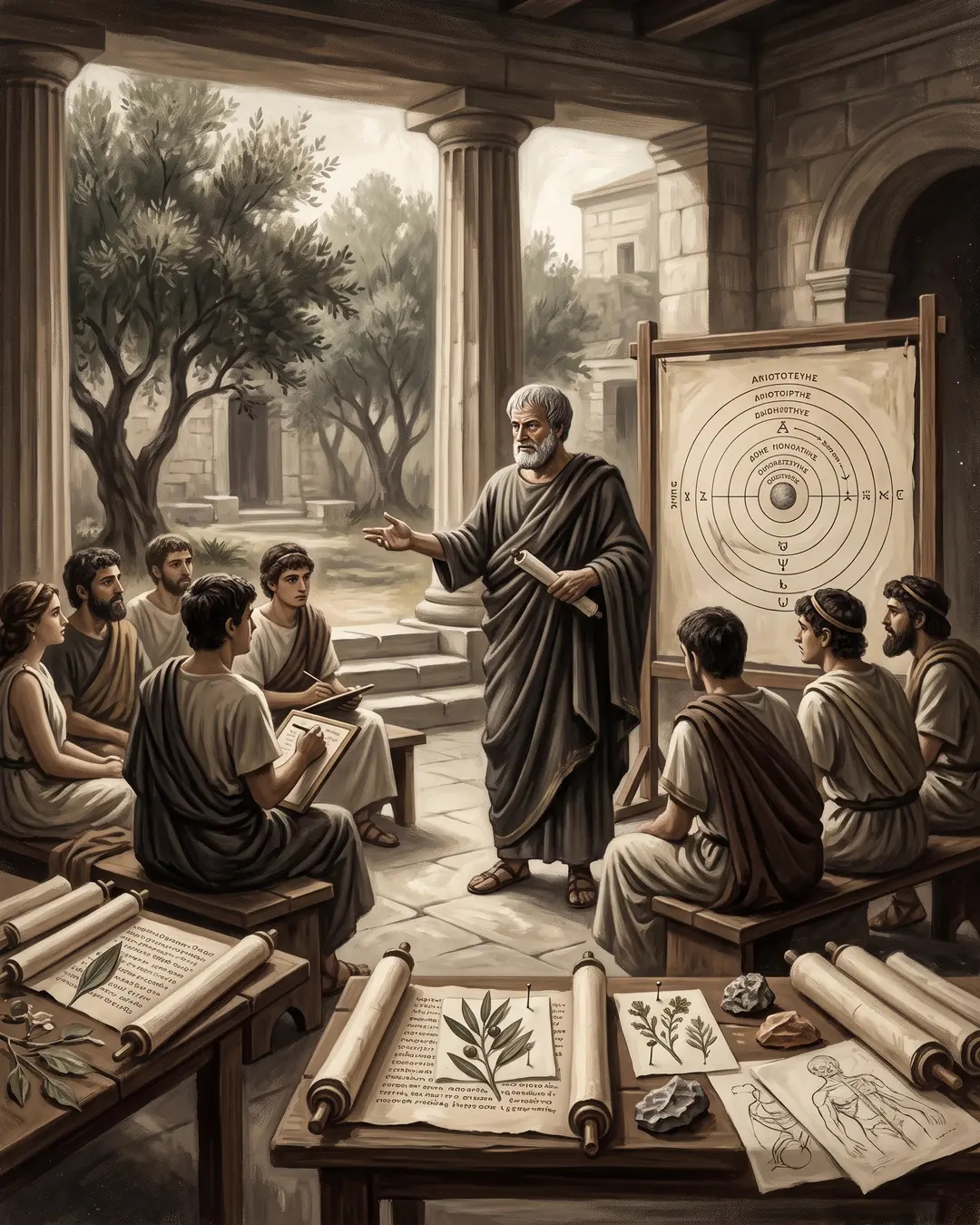 32Philosophy
Philosophy / 384-322 BCE
The tutor who tried to catalogue the world
Aristotle wrote on logic, animals, ethics, drama and government. Europe then treated him as an authority for so long that his mistakes held it back.
8 min read ↗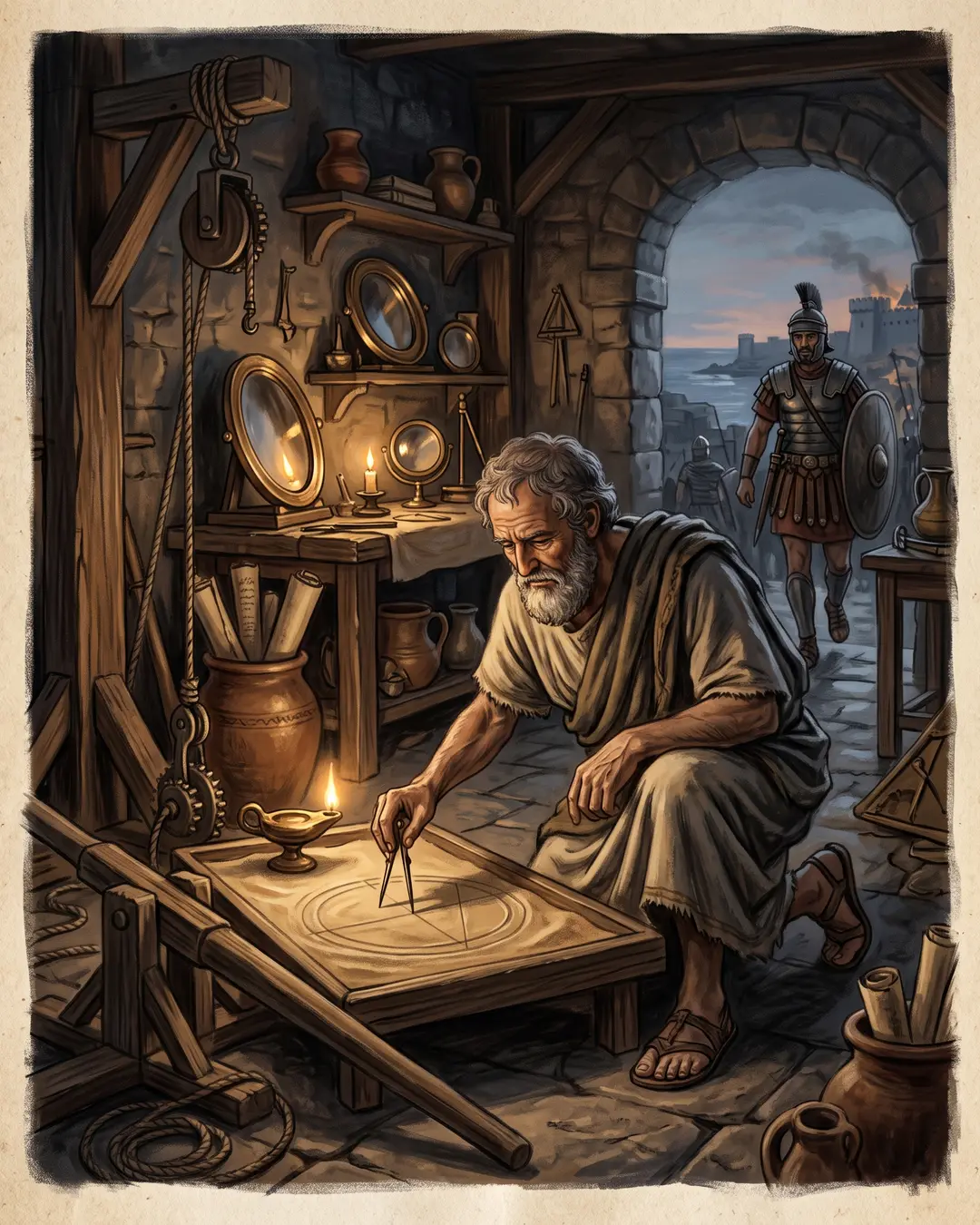 33Mathematics
Mathematics / c. 287-212 BCE
The geometer who weighed the answer first
Archimedes measured curves nobody could measure and came within reach of the calculus. A book a monk scraped clean preserved the secret of how he found his results.
7 min read ↗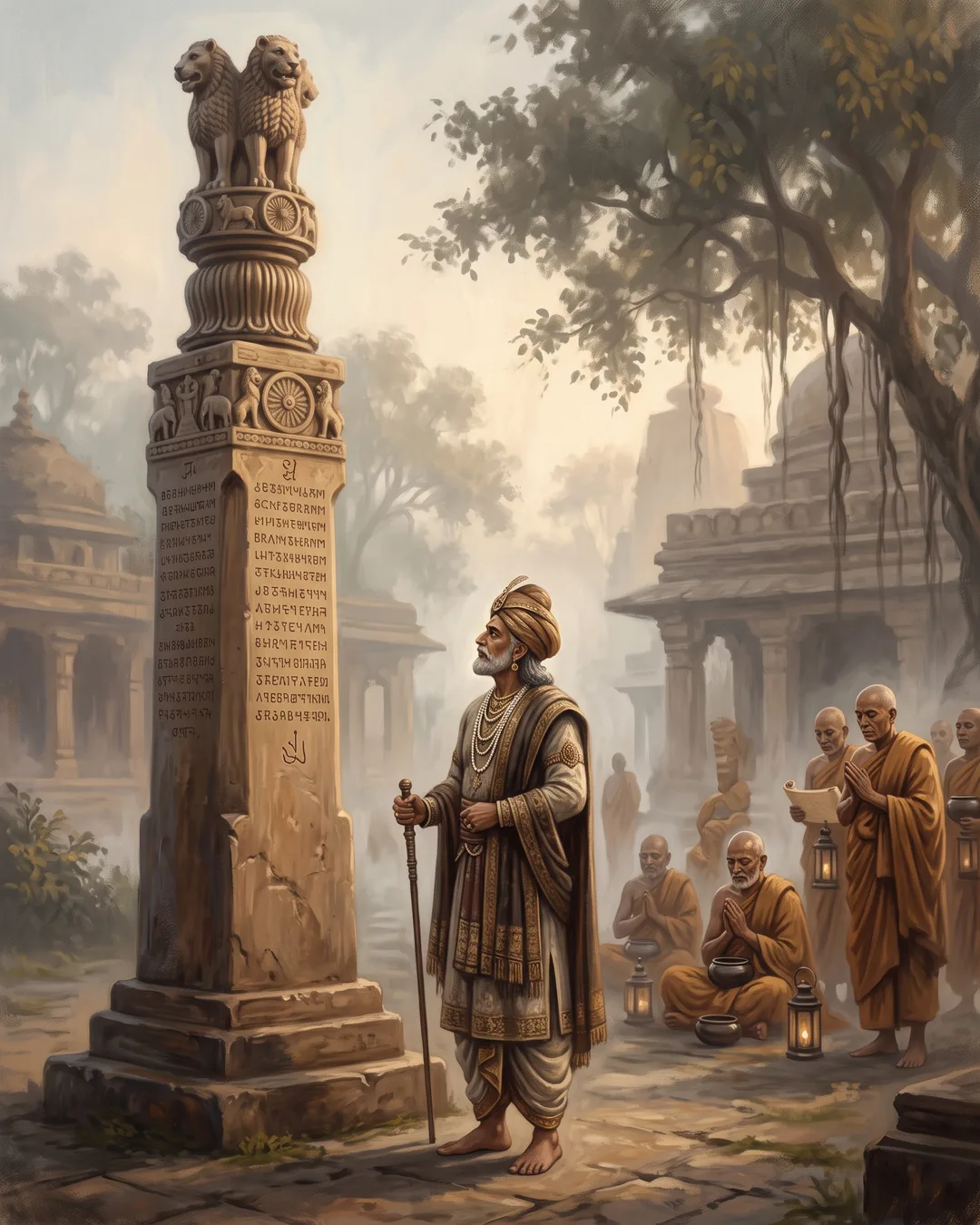 34Leadership
Leadership / c. 268-232 BCE
The emperor who published his own remorse
Ashoka conquered Kalinga and then had his regret carved into rock across a subcontinent. His name was then forgotten for almost two thousand years.
7 min read ↗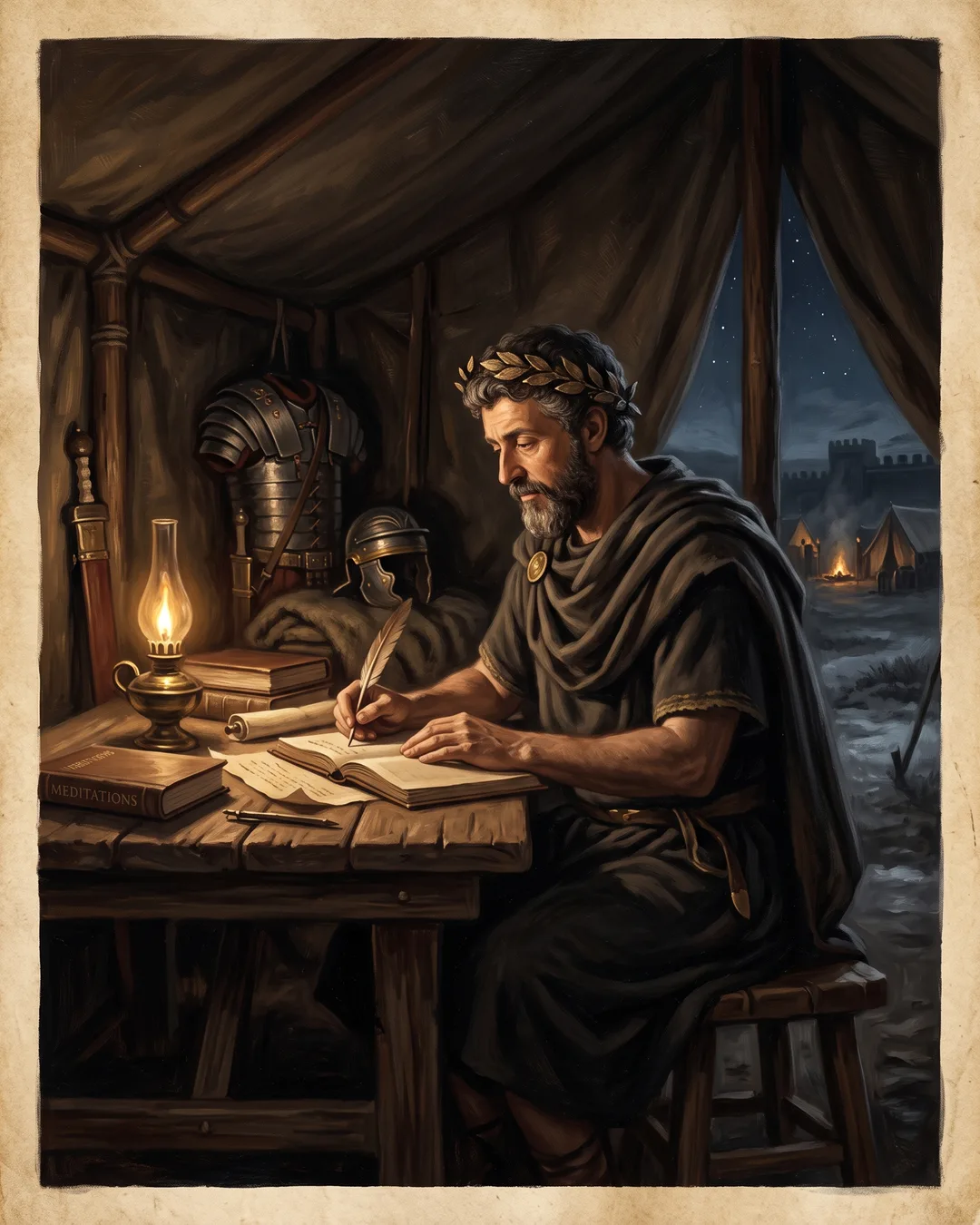 35Philosophy
Philosophy / 121-180 CE
The private notebook of a public emperor
Marcus Aurelius wrote the Meditations for himself, in Greek, in army camps. The calm on the page sits beside plague, endless frontier war and a succession he got wrong.
7 min read ↗ 36Leadership
Leadership / 624-705 CE
The only woman to rule China in her own name
Wu Zetian rose from junior consort to emperor of a dynasty she founded. The officials who wrote her history had every reason to make her a monster.
7 min read ↗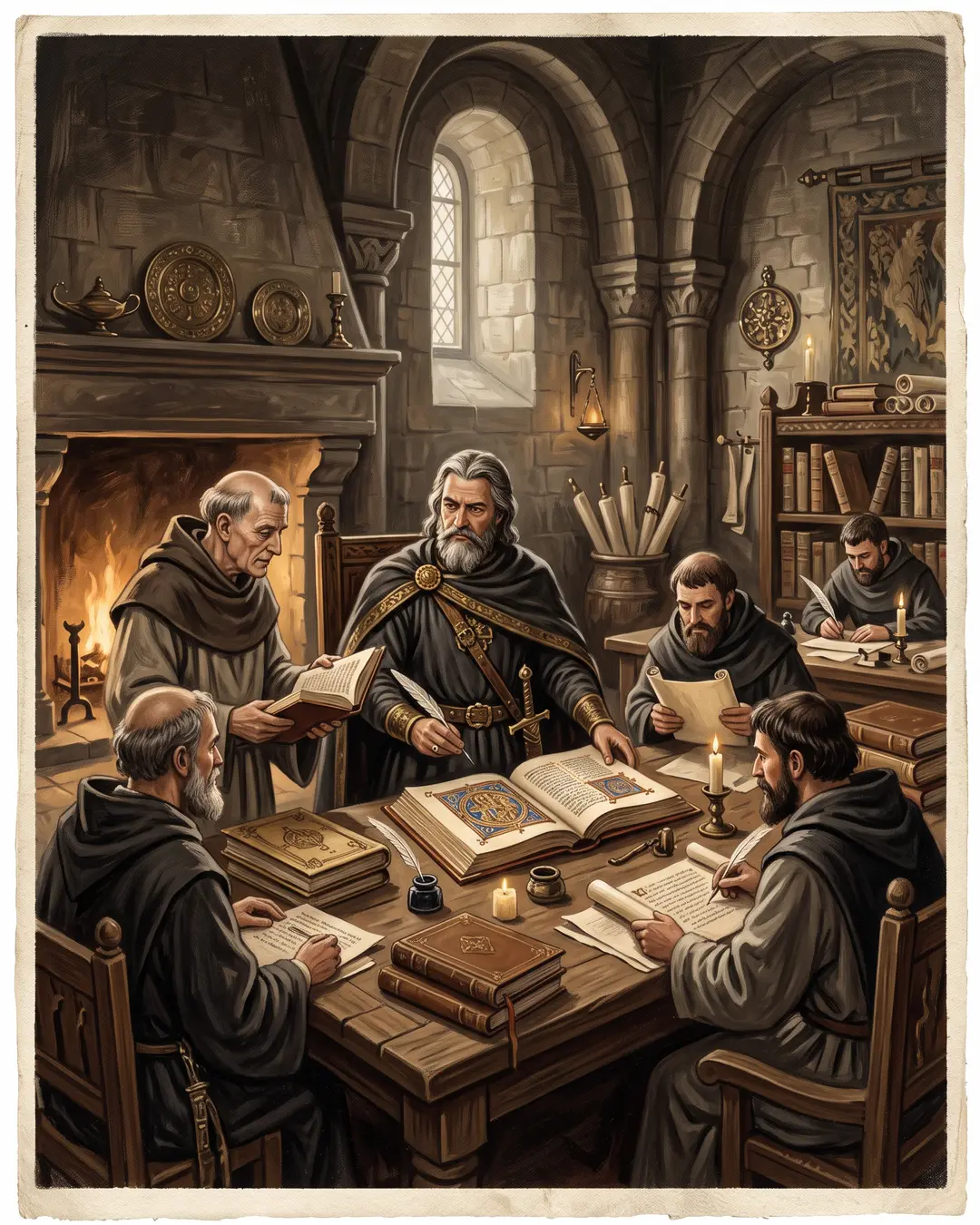 37Leadership
Leadership / 747-814
The king who bought a continent an alphabet
Charlemagne could barely write his own name. His court still produced the script, the schools and the copying programme that carried Latin antiquity into modern Europe.
7 min read ↗ 38Literature
Literature / c. 973-c. 1014
The lady-in-waiting whose name we lost
A thousand years ago a woman at the Japanese court wrote a fifty-four chapter work of psychological fiction. Her personal name was never written down.
7 min read ↗ 39Philosophy
Philosophy / 1332-1406
The exile who built a science of collapse
Between embassies, prisons and shifting patrons, Ibn Khaldun asked why dynasties rise and fall, and answered with a theory that reads like sociology four centuries early.
8 min read ↗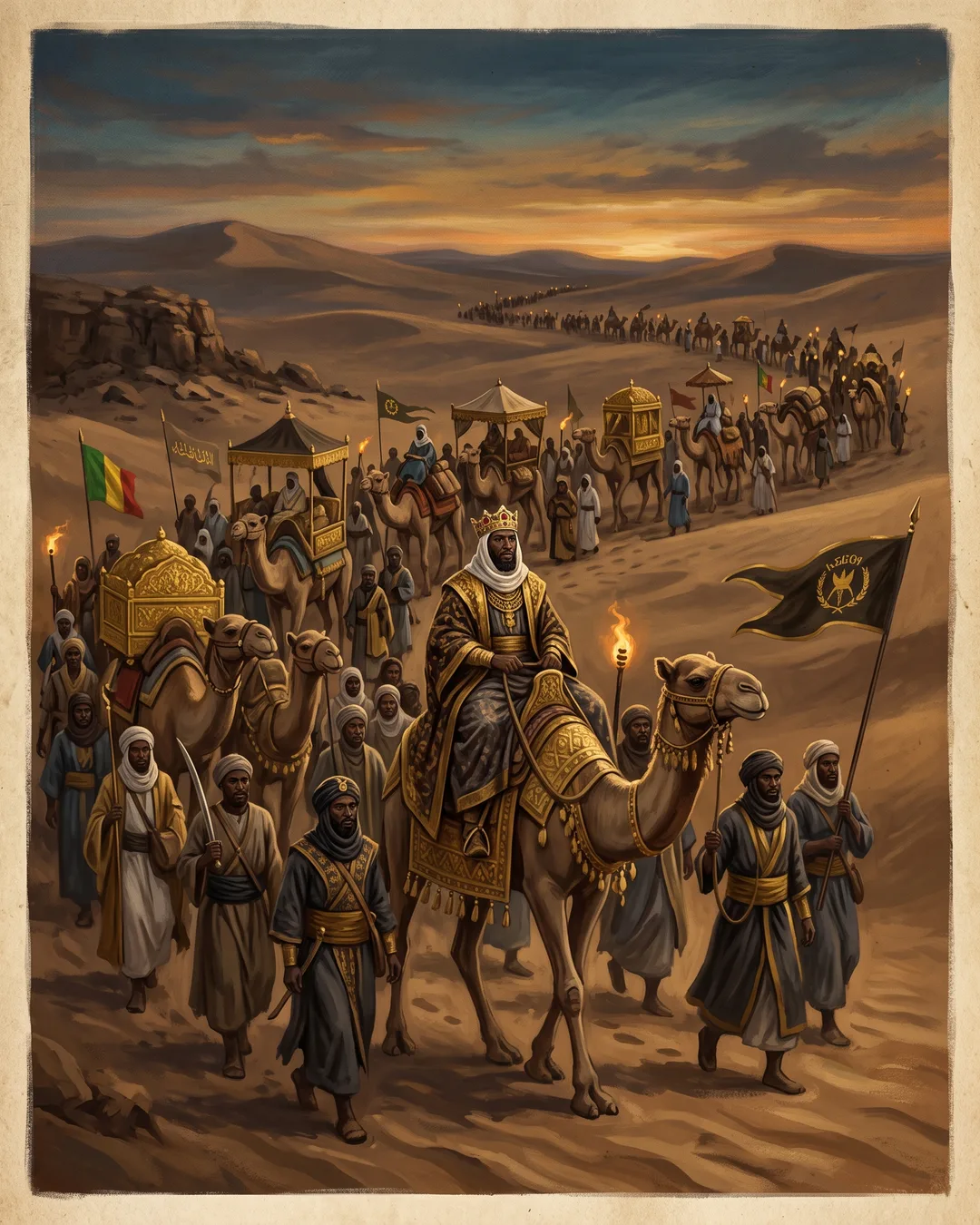 40Faith
Faith / reigned c. 1312-1337
The pilgrimage that moved the price of gold
In 1324 the ruler of Mali crossed the Sahara to Mecca with a caravan so heavily laden that Cairo reportedly felt the effects for years. Every account of it was written by onlookers.
7 min read ↗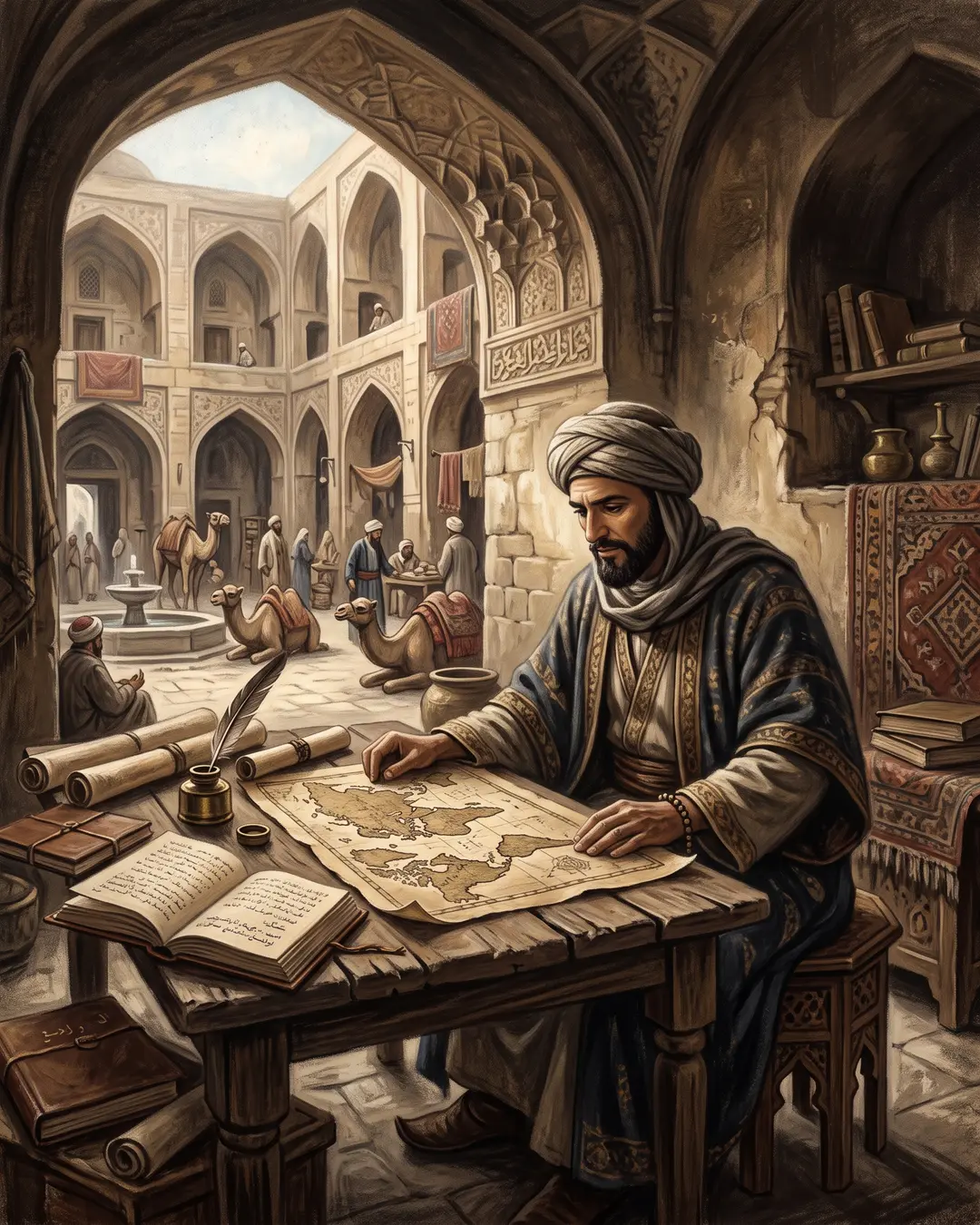 41Exploration
Exploration / 1304-1369
The Pilgrim Who Never Stopped Walking
Ibn Battuta left Tangier at twenty-one to perform the hajj and came home twenty-nine years later. His book is the richest surviving portrait of the fourteenth-century Muslim world, and one of the most argued over.
8 min read ↗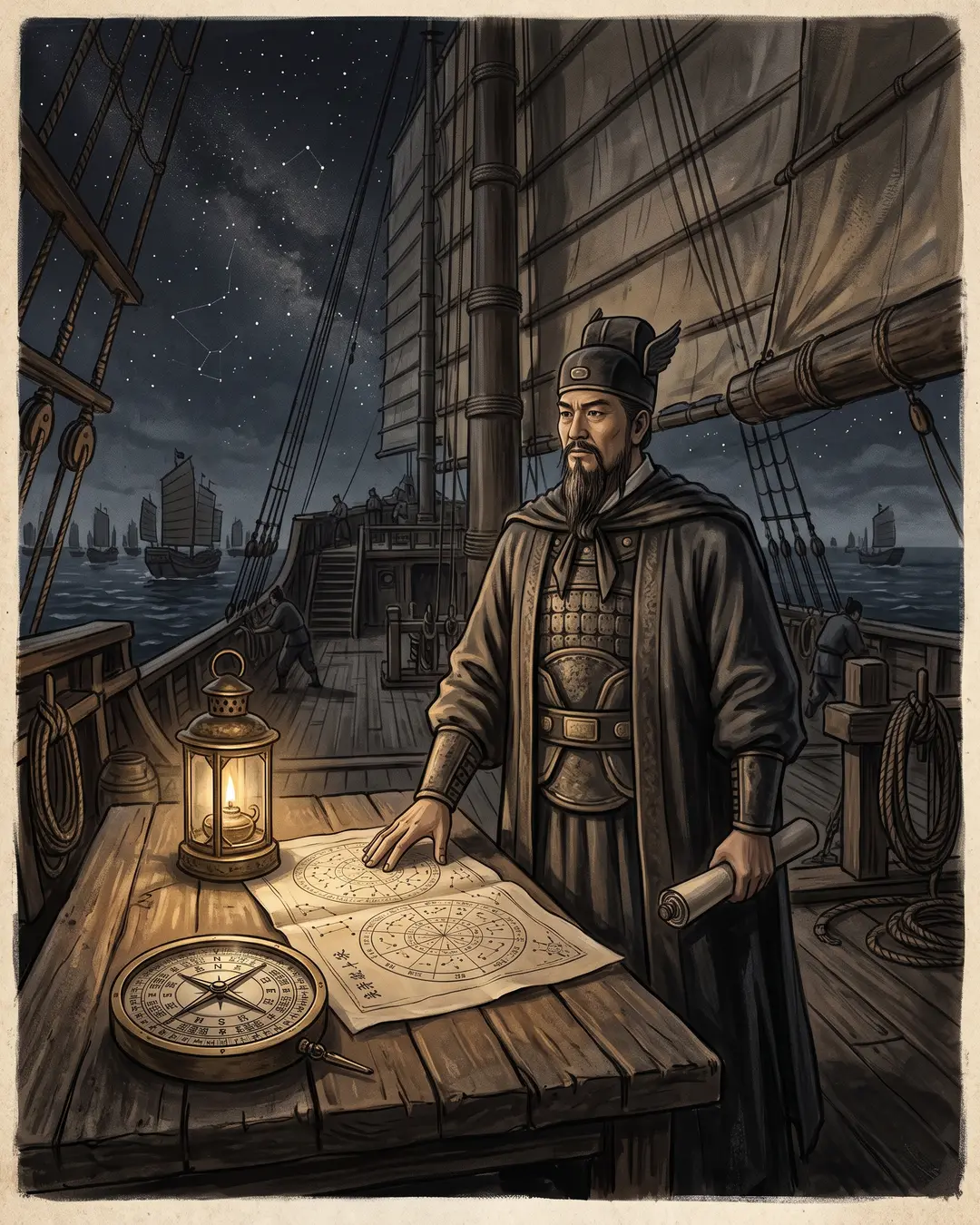 42Exploration
Exploration / c. 1371-1433
The Admiral Whose Fleets Were Erased
Seven times Zheng He crossed the Indian Ocean with the largest fleets the world had seen. Within a generation, his own dynasty was burying the record of them.
8 min read ↗ 43Science
Science / 1473-1543
The Cathedral Canon Who Set the Earth in Motion
Copernicus spent thirty years hesitating over a book that moved the earth. What he finally published was stranger, and less finished, than the revolution named after him.
7 min read ↗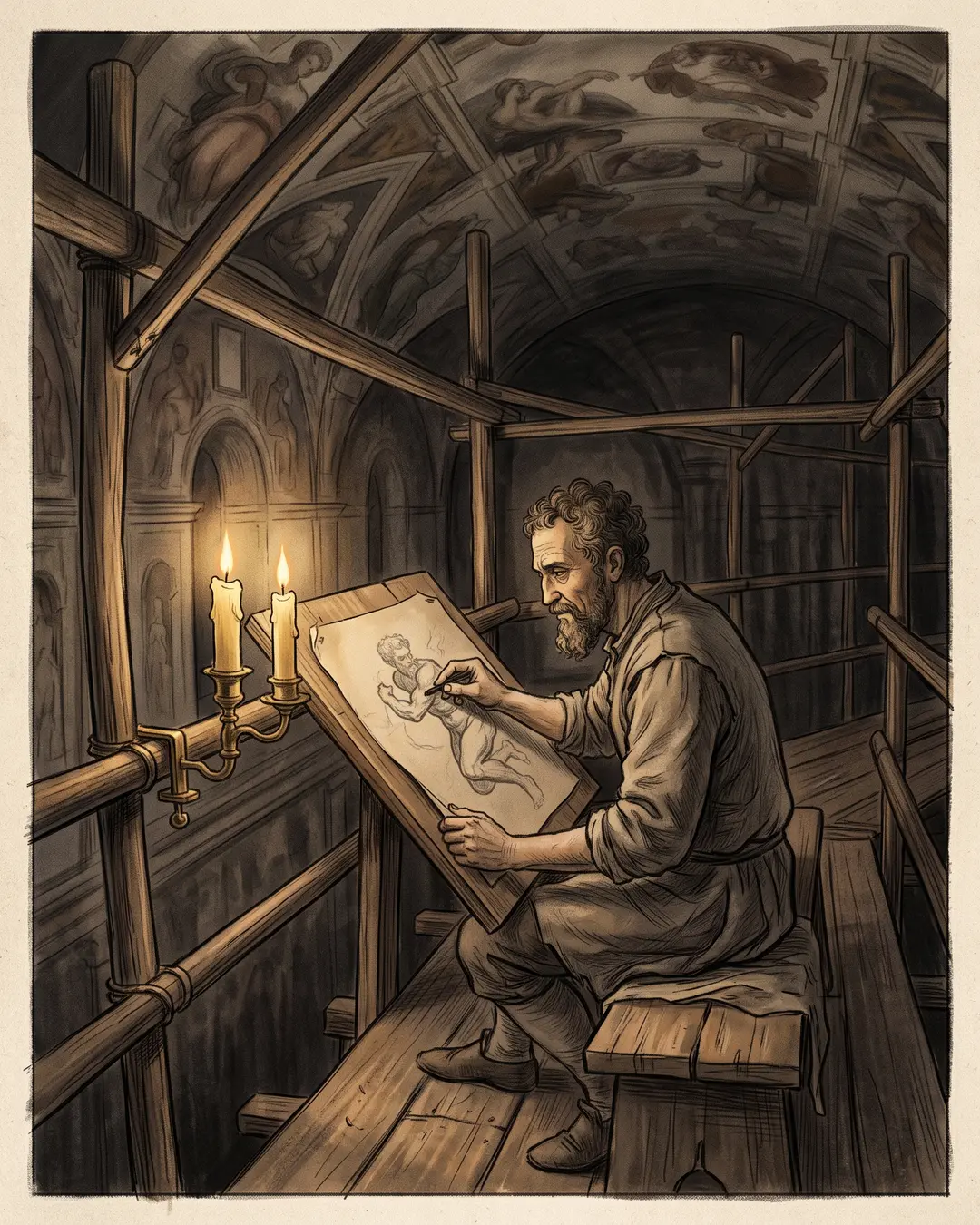 44Art
44ArtArt / 1475-1564
The Sculptor Who Kept Being Handed a Brush
Michelangelo insisted he was a sculptor, not a painter, and spent his greatest years on ceilings and domes he had not asked for. The friction produced the art.
8 min read ↗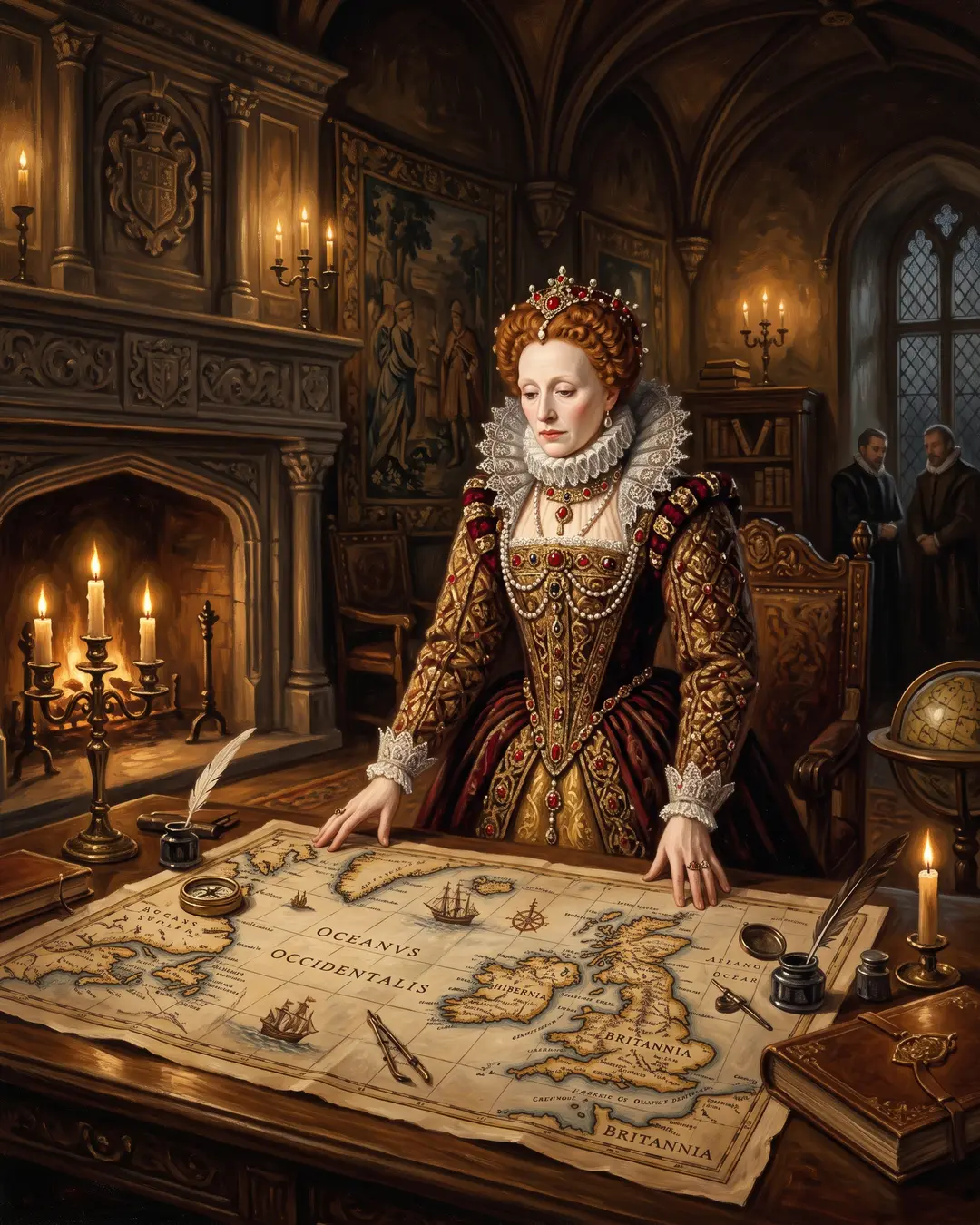 45Leadership
Leadership / 1533-1603
The Queen Who Made Delay a Weapon
Elizabeth Tudor survived a childhood that should have killed her, then ruled for forty-four years by refusing to decide anything a day sooner than she had to.
8 min read ↗ 46Literature
Literature / 1547-1616
The Tax Collector Who Invented the Novel
Soldier, slave, failed playwright, jailed accountant: Cervantes was fifty-seven and out of options when he published the book that taught fiction how to think.
7 min read ↗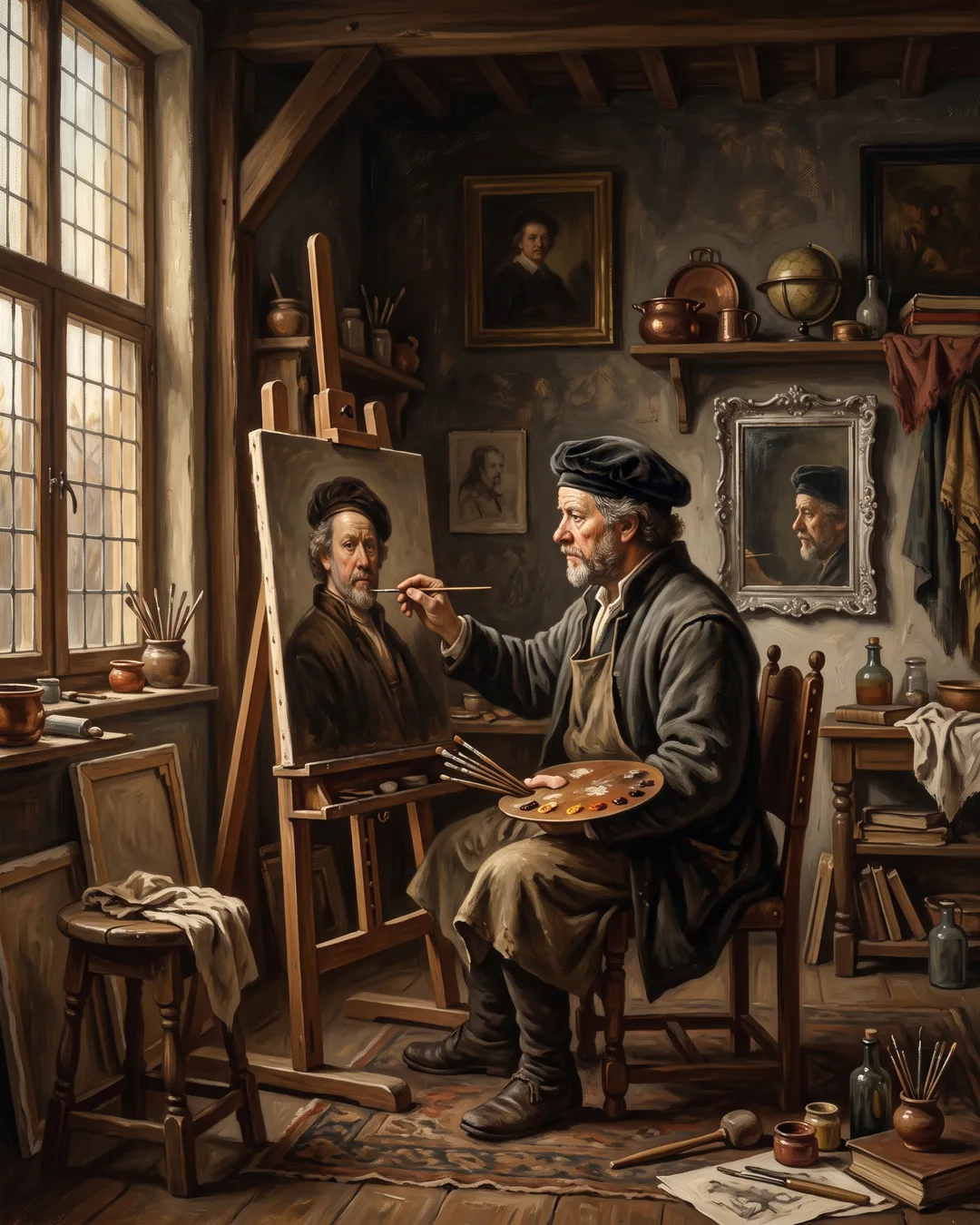 47Art
47ArtArt / 1606-1669
The Painter Who Refused to Flatter Anyone, Including Himself
Rembrandt made the most unsparing self-portraits in European art and lost nearly everything else: a wife, three infants, a son, and finally his house and his collection.
8 min read ↗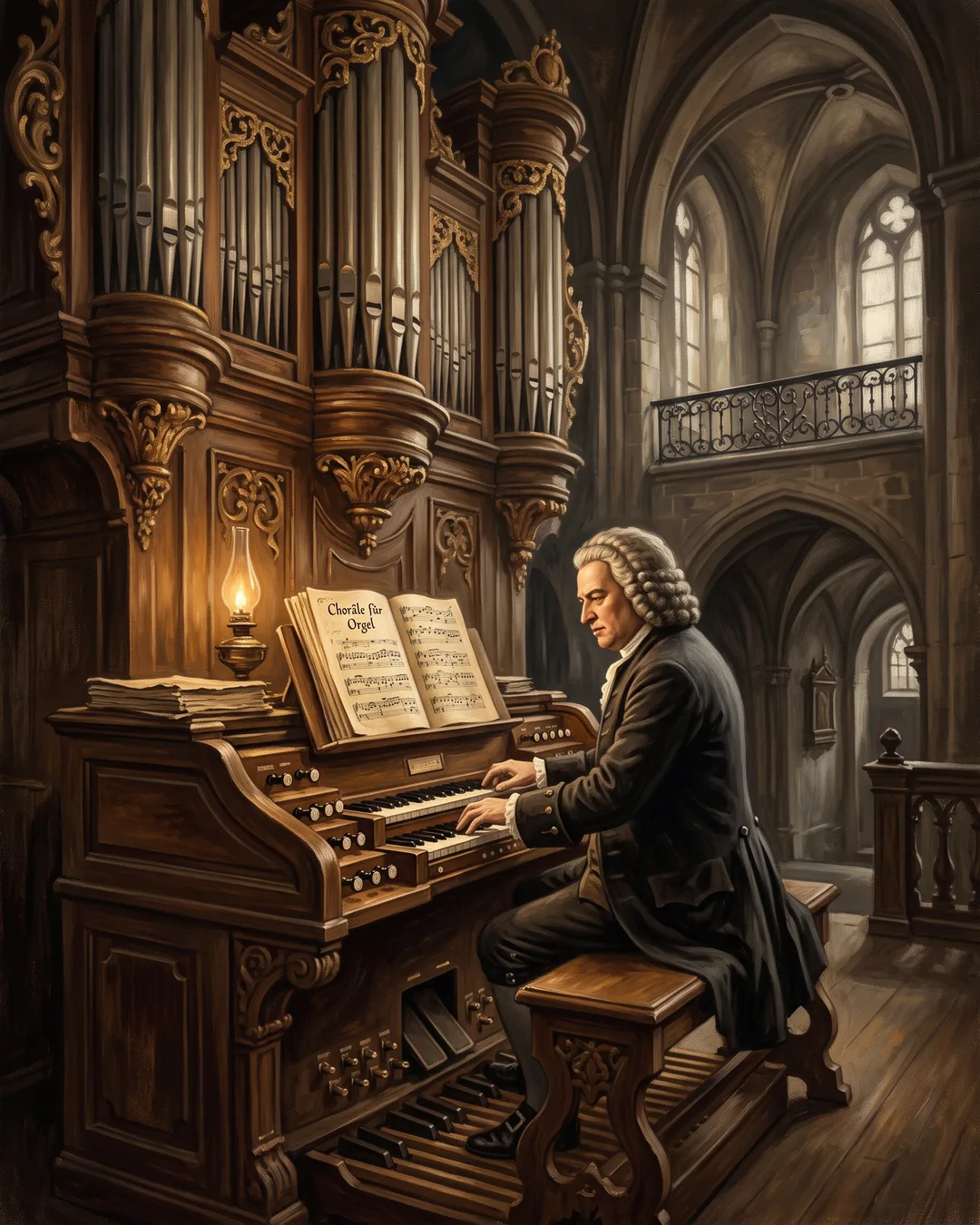 48Music
Music / 1685-1750
The Church Employee Who Wrote for Eternity
Bach spent his life as a municipal servant, quarreling with councils over choirboys and salaries. His employers thought him difficult and old-fashioned; he was building the grammar of Western music.
8 min read ↗ 49Invention
Invention / 1706-1790
The Runaway Apprentice Who Talked a Nation Into Being
Franklin invented a lightning rod, a stove, a library, and a public persona so useful that it won France's fleet. He also owned human beings before he fought to free them.
8 min read ↗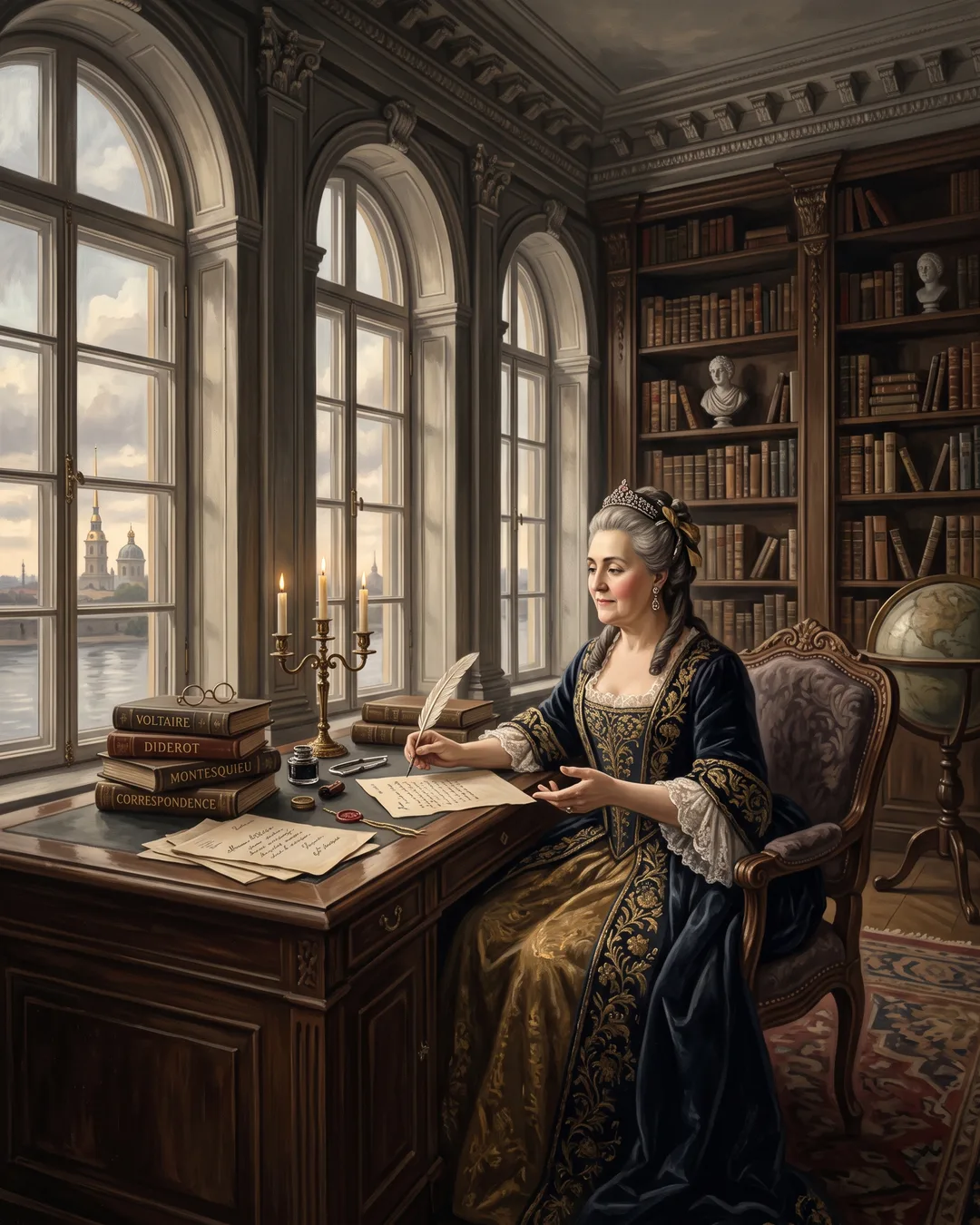 50Leadership
Leadership / 1729-1796
The German Princess Who Made Herself Russian
Catherine corresponded with the philosophers of the Enlightenment while binding more peasants into serfdom than any ruler before her. Both facts are the reign.
8 min read ↗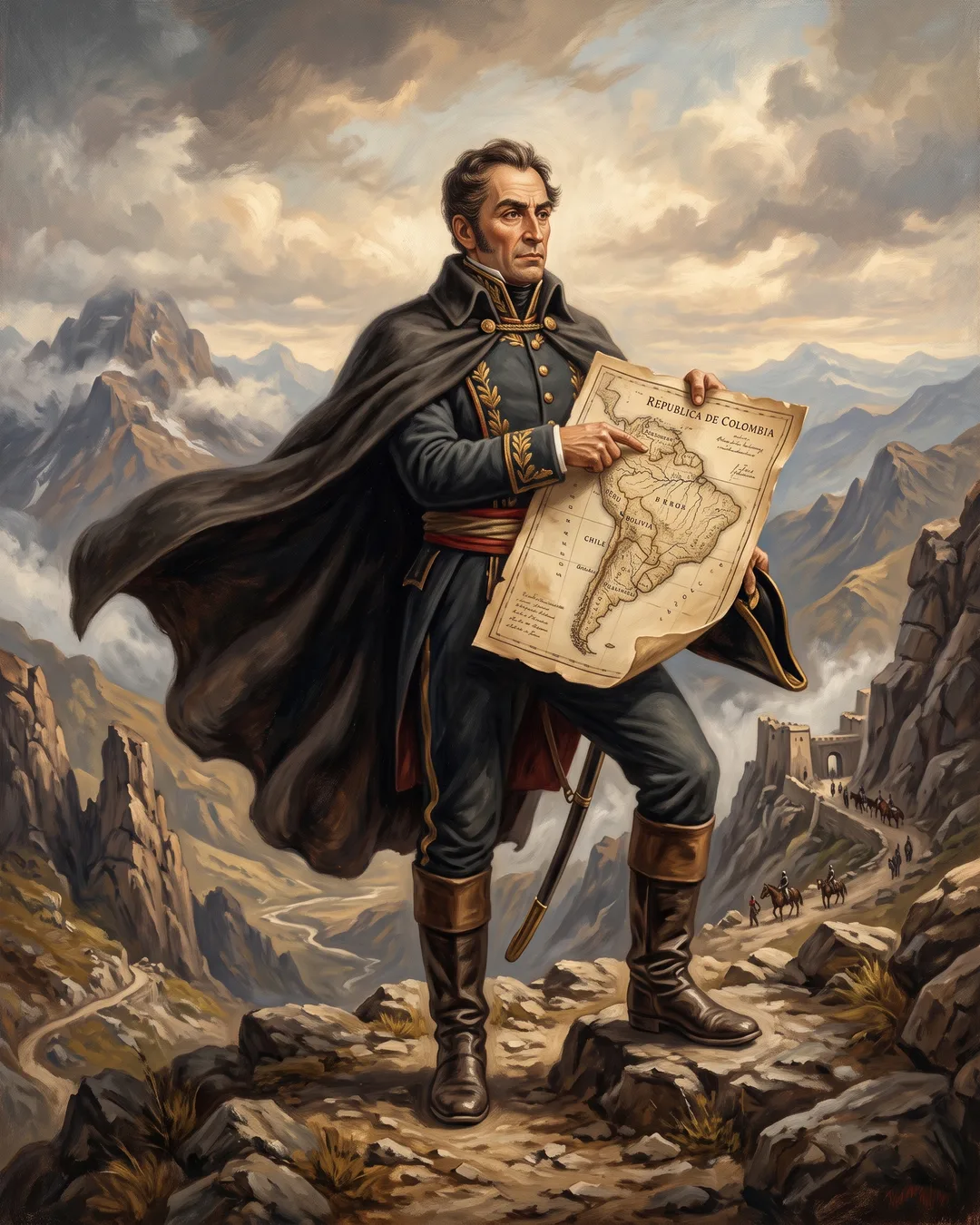 51Freedom
Freedom / 1783-1830
The Liberator Who Could Not Hold What He Freed
Bolivar broke Spanish rule across six future nations and watched his union collapse within a decade. His last years were spent arguing for a dictatorship to save it.
8 min read ↗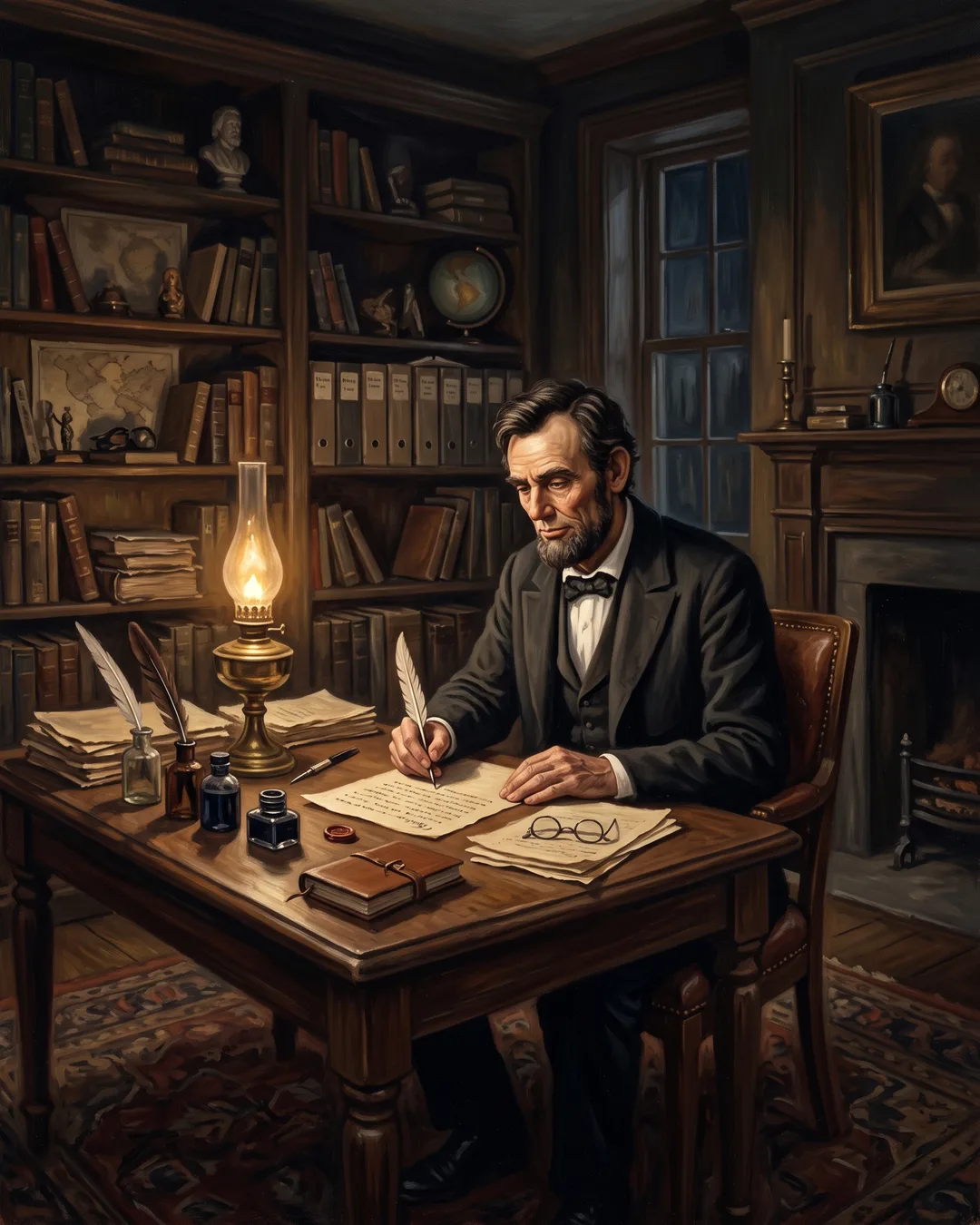 52Leadership
Leadership / 1809-1865
The Lawyer Who Changed His Mind in Public
Lincoln entered the presidency promising not to touch slavery where it existed and left it having abolished it. The distance between those positions is the story.
8 min read ↗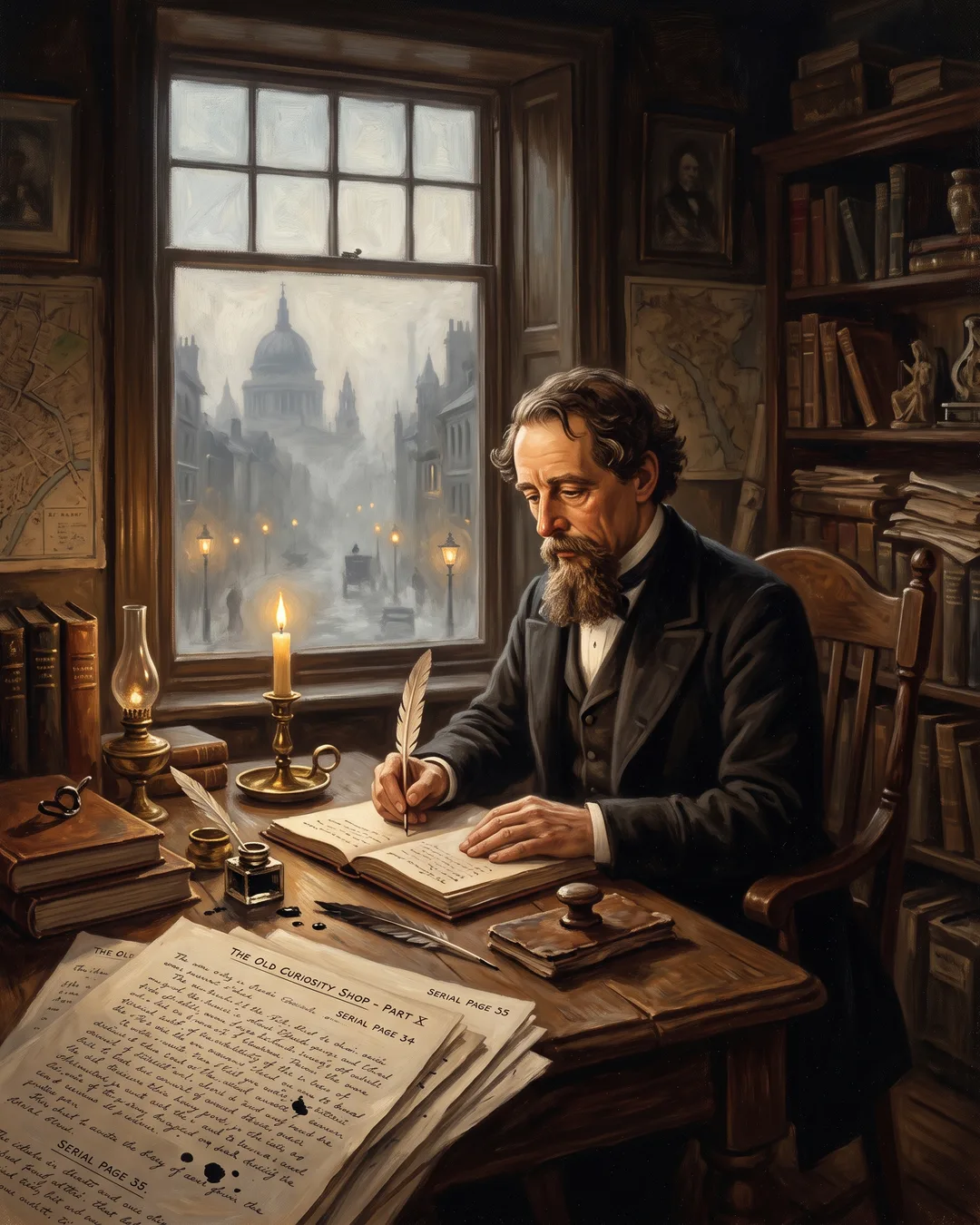 53Literature
Literature / 1812-1870
The Boy From the Blacking Factory
Dickens hid the twelve-year-old who pasted labels in a riverside warehouse from almost everyone he knew, and then spent thirty years writing him into English literature.
8 min read ↗ 54Poetry
Poetry / 1830-1886
The Poems in the Locked Drawer
Fewer than a dozen of Emily Dickinson's poems appeared in print while she lived. Her sister found eighteen hundred more, hand-sewn into little books, after she died.
7 min read ↗ 55Medicine
Medicine / 1822-1895
The Chemist Who Went Looking for Invisible Enemies
Pasteur saved wine, silk, and children, and he fought for credit with a showman's instincts. His private notebooks, opened a century later, made the story more human, not less.
8 min read ↗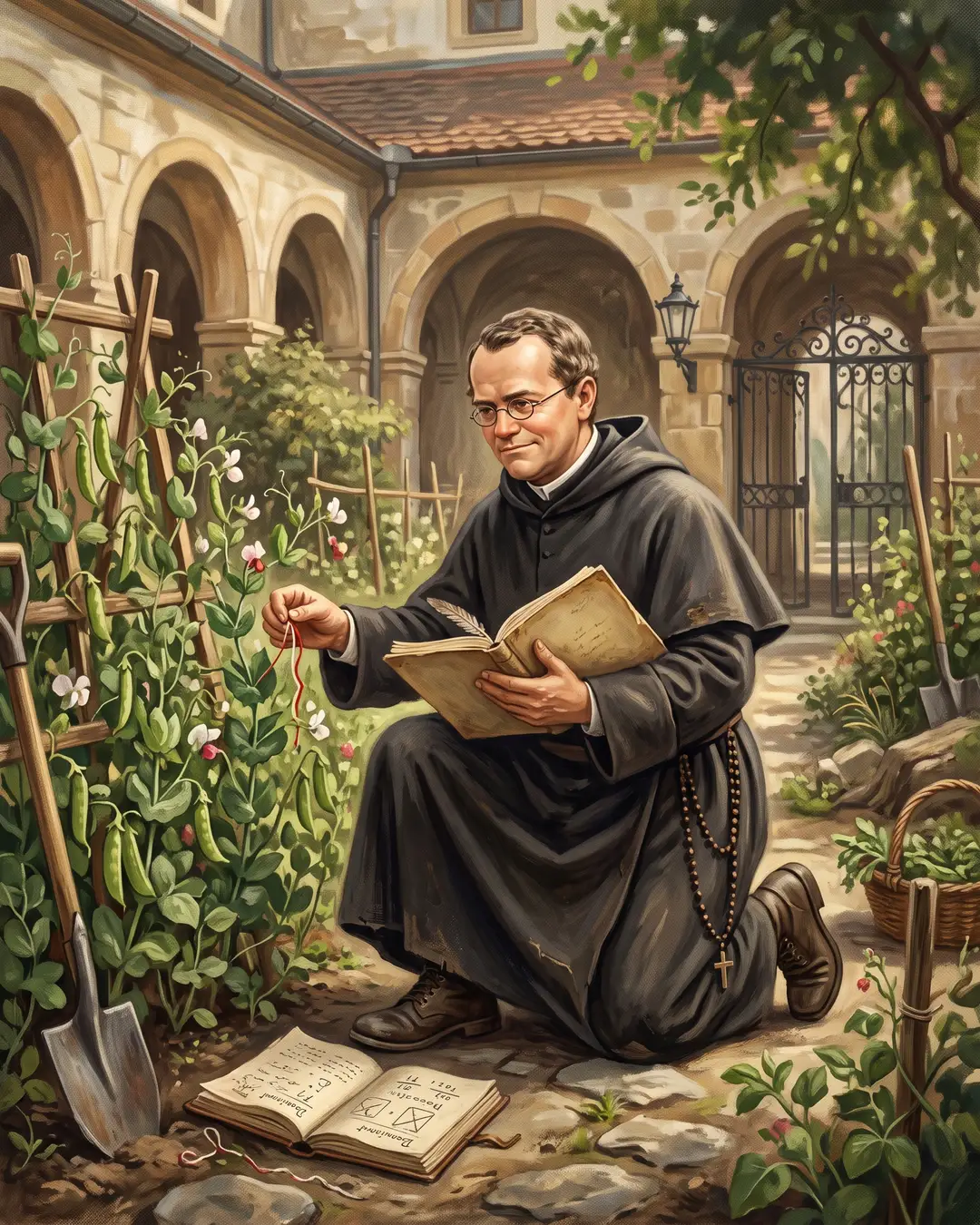 56Science
Science / 1822-1884
The Monk Who Counted Peas for Nobody
Mendel found the rules of inheritance in a monastery garden, published them in a provincial journal, and died an abbot embroiled in a tax dispute, his work unread.
7 min read ↗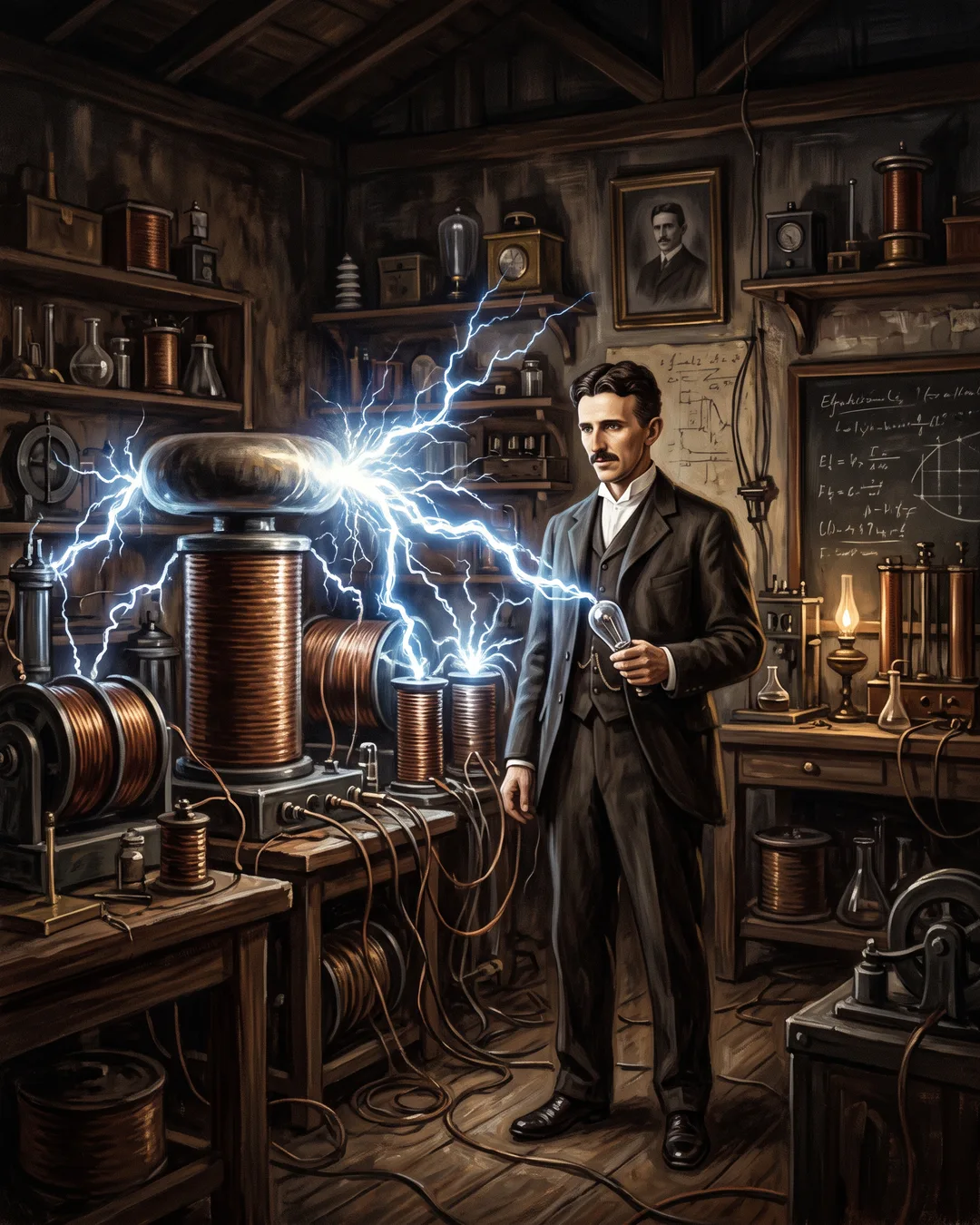 57Invention
Invention / 1856-1943
The Engineer Who Electrified the World and Died Owing Rent
Tesla's alternating current runs the modern grid. The same restless imagination produced a tower he could not finish and predictions no physics could support.
8 min read ↗ 58Literature
Literature / 1835-1910
The Riverboat Pilot Who Cross-Examined America
Twain made the country laugh at itself, then spent his last decade writing furiously against lynching, empire, and the massacre of Filipinos in America's name.
8 min read ↗ 59Courage
Courage / 1897-1937
The Pilot Who Refused to Be Cargo
Earhart crossed the Atlantic first as a passenger and hated it. Four years later she flew it alone, and became the most photographed aviator of an age that consumed her.
7 min read ↗ 60Poetry
Poetry / 1861-1941
The Poet Who Gave Back a Knighthood
Tagore was the first non-European to win the Nobel Prize in Literature, then renounced his British title after a massacre and spent his life arguing that nationalism was a trap.
8 min read ↗ 61Philosophy
Philosophy / c. 428-348 BCE
The Student Who Never Stopped Arguing With His Teacher
Plato wrote dialogues in which he never appears, founded a school that lasted centuries, and designed an ideal city that most modern readers find frightening.
7 min read ↗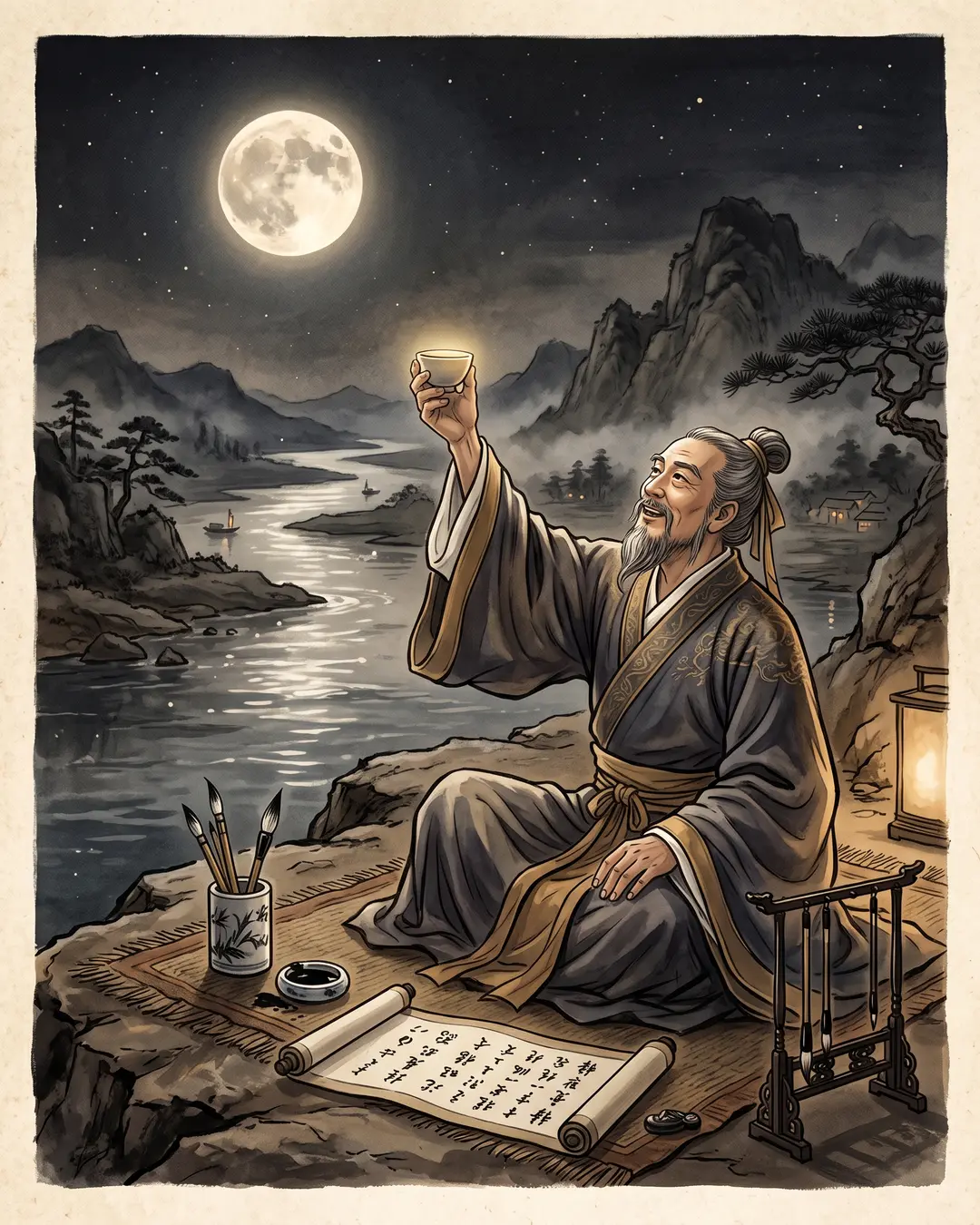 62Poetry
Poetry / 701-762
The Exile Who Made the Moon a Drinking Companion
China's most quoted poet spent his life failing to get the official career he wanted, and wrote a thousand poems that outlived every court he flattered.
7 min read ↗ 63Literature
Literature / c. 484-425 BCE
The Traveler Who Invented the Footnote
Herodotus wandered the known world collecting stories, wrote the first prose history in Greek, and has been called both the father of history and a liar ever since.
7 min read ↗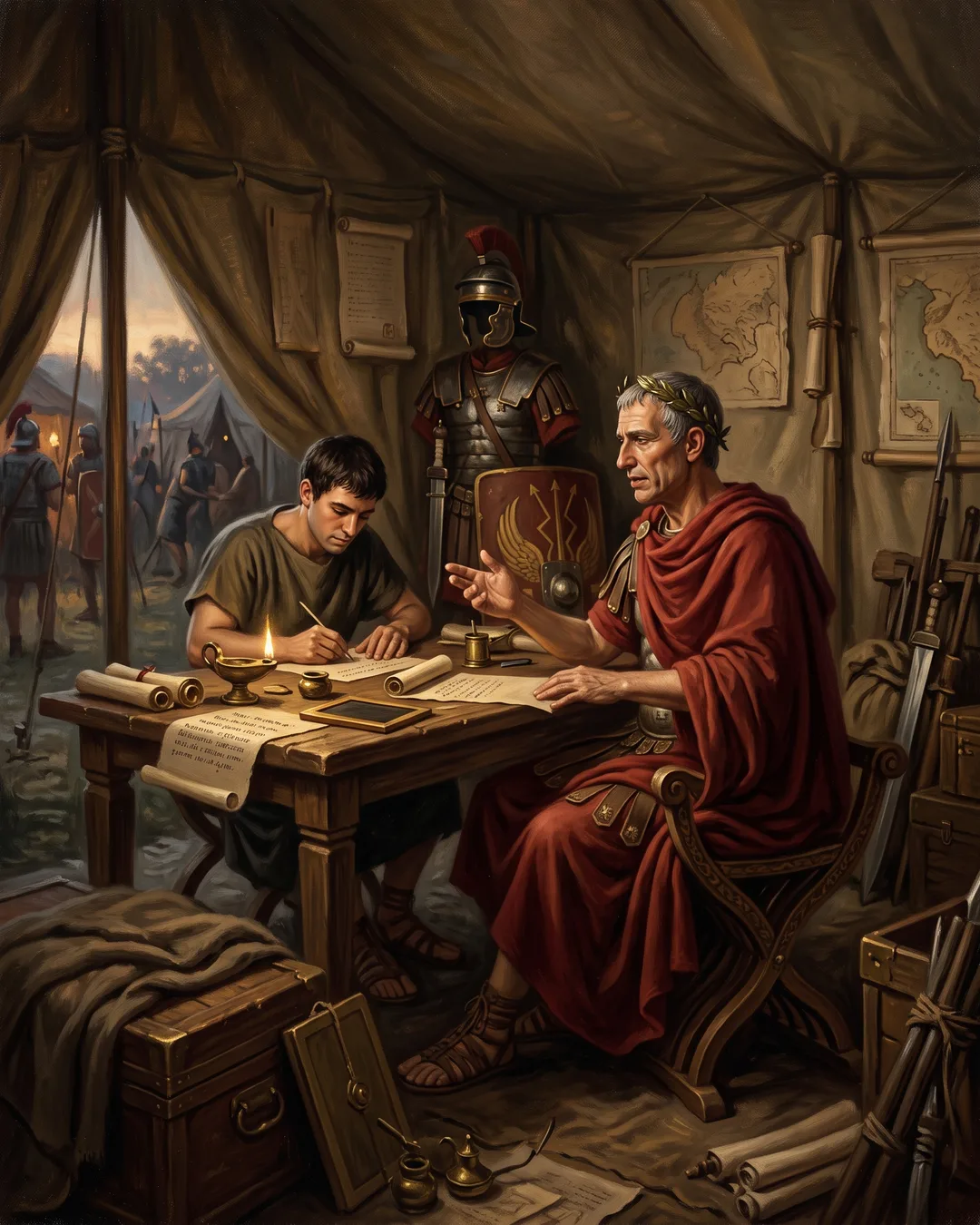 64Leadership
Leadership / 100-44 BCE
The General Who Buried a Republic to Save Himself
Caesar conquered Gaul at a human cost ancient writers themselves called monstrous, then crossed a small river rather than face trial. Rome never had a republic again.
8 min read ↗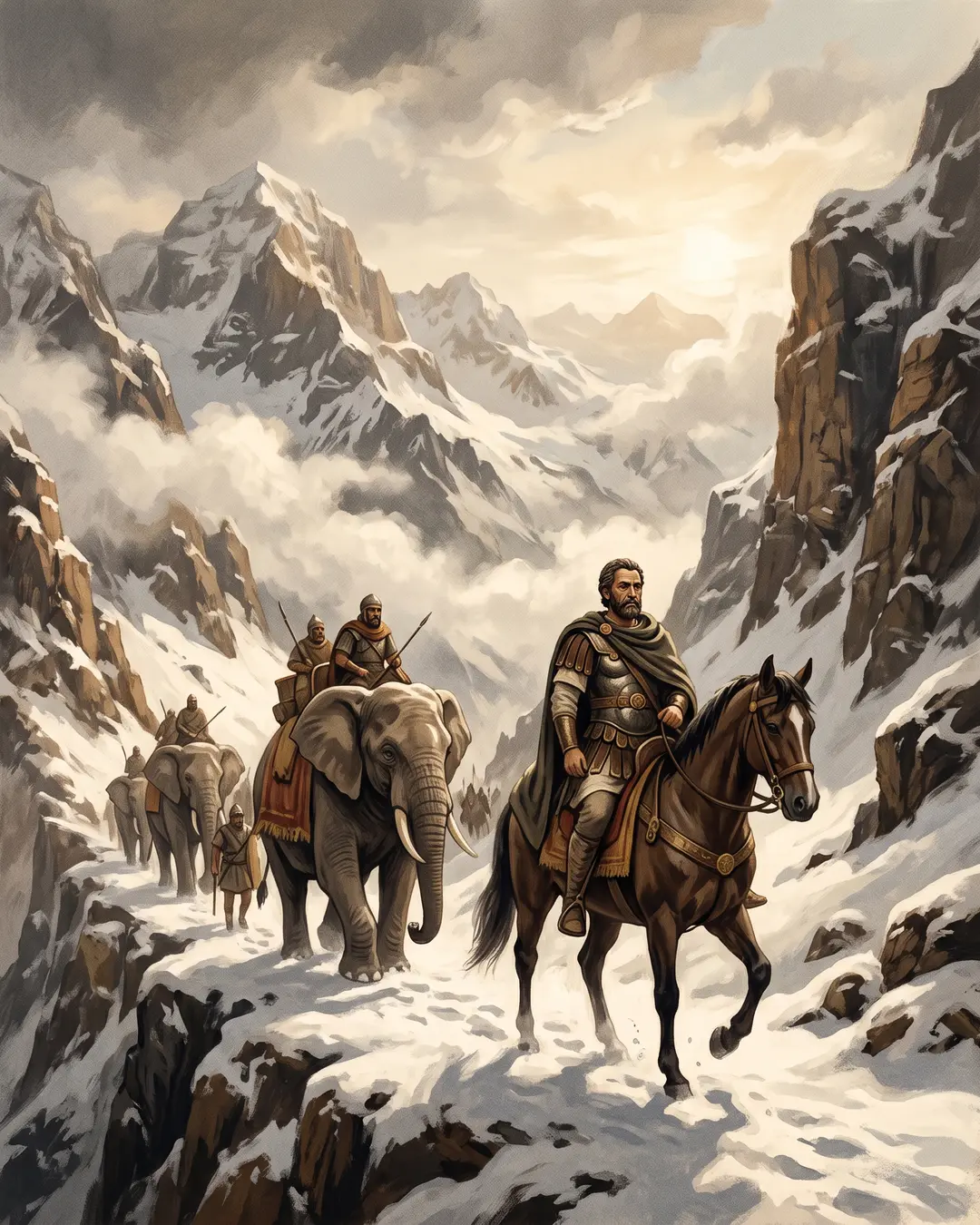 65Courage
Courage / 247-183 BCE
The Commander Who Beat Rome and Still Lost
Hannibal spent fifteen years marching through Italy undefeated in battle, and every word we have about him was written by the people he was trying to destroy.
8 min read ↗ 66Freedom
Freedom / c. 60-61 CE
The Queen We Only Hear Through Her Enemies
Boudica burned three Roman cities in a single year. Everything known about her was written in Latin, by men who needed her to be a monster and an omen.
7 min read ↗ 67Faith
Faith / 1207-1273
The Jurist Who Met a Wanderer and Started Singing
Rumi was a respected teacher of Islamic law until a ragged mystic walked into Konya. The friendship, and its violent end, produced one of the world's largest bodies of poetry.
8 min read ↗ 68Leadership
Leadership / 1137-1193
The Kurdish Officer Who Took Jerusalem Back
Saladin spent more years fighting fellow Muslims than crusaders, and won a reputation for mercy from the chroniclers of the enemies he defeated.
8 min read ↗ 69Exploration
Exploration / 1254-1324
The Merchant Whose Book Nobody Quite Believes
Marco Polo dictated the description of Asia that shaped Europe's imagination for centuries, in a Genoese prison, to a writer of chivalric romances.
7 min read ↗ 70Poetry
Poetry / 1265-1321
The Exile Who Built His Own Afterlife
Condemned to burn if he ever returned to Florence, Dante wrote a poem in the language of the street and filled its hell with the men who had banished him.
8 min read ↗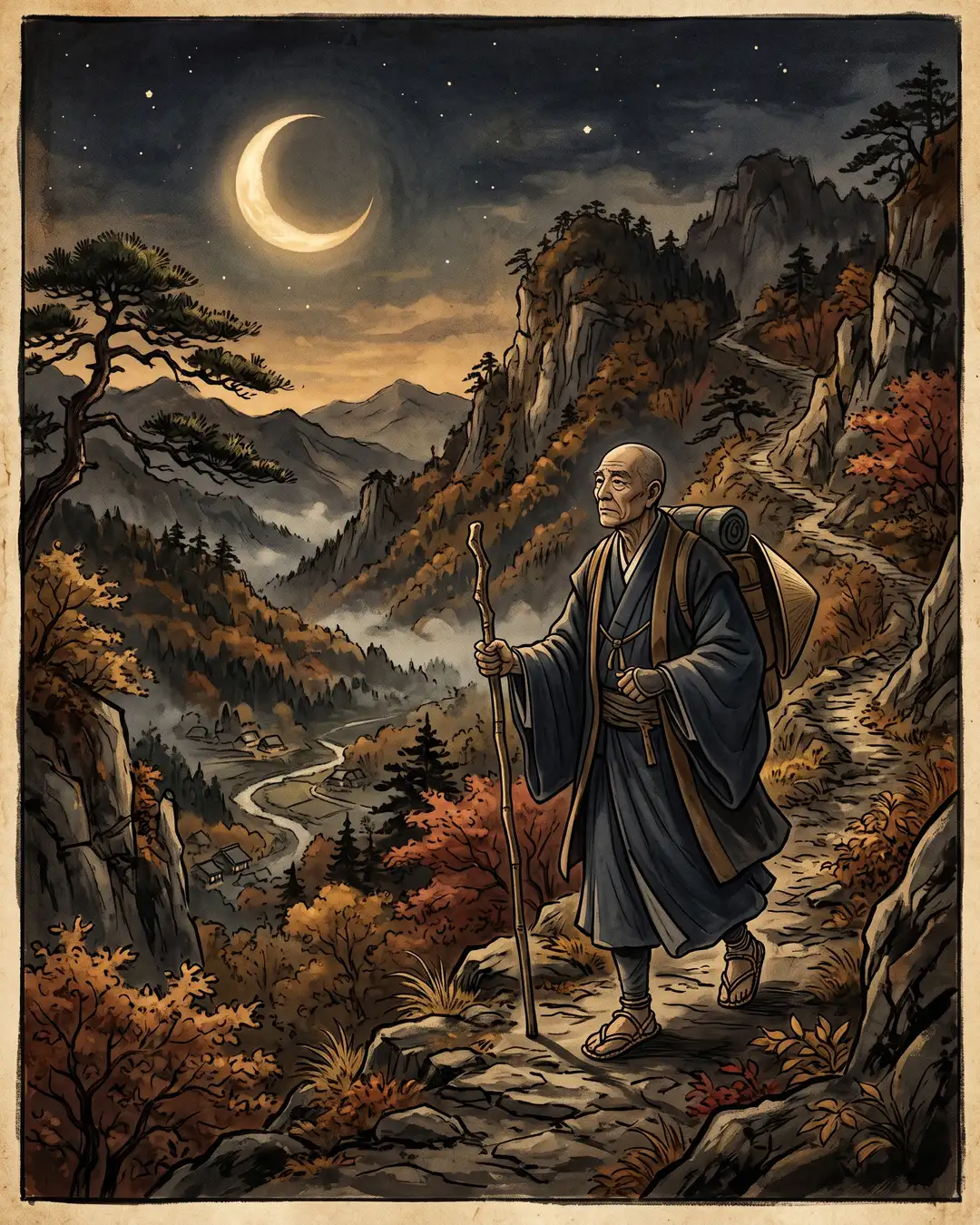 71Poetry
Poetry / 1644-1694
The Narrow Road Out of Silence
Japan's greatest haiku master turned a five-month walk into one of literature's most enduring journeys, and edited his own legend as carefully as his verse.
7 min read ↗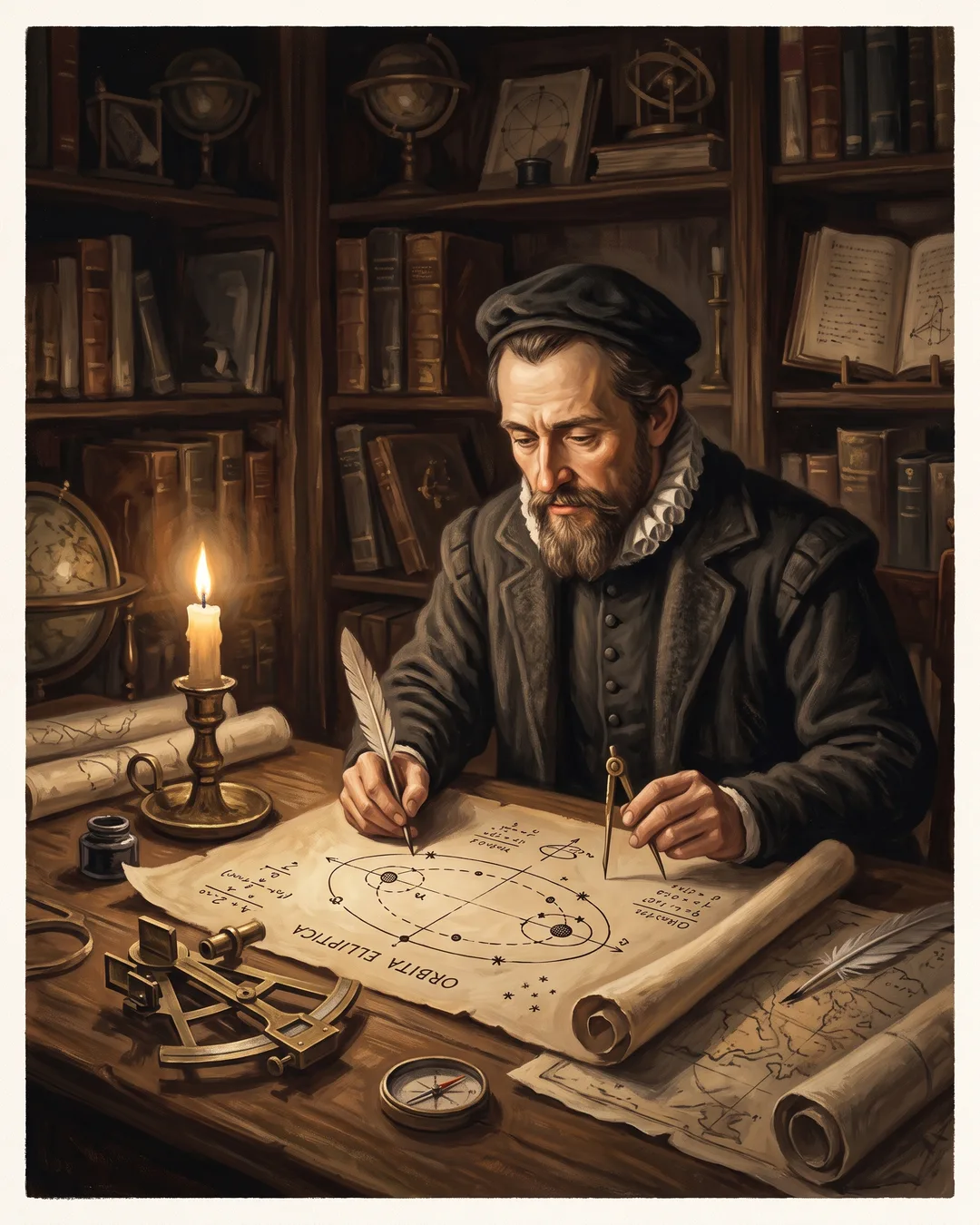 72Science
Science / 1571-1630
The Mystic Who Measured Heaven
Johannes Kepler wanted to hear the harmony of the spheres. Instead he found the ellipse, and modern astronomy began.
7 min read ↗ 73Leadership
Leadership / 1542-1605
An Empire That Learned to Listen
Akbar built Mughal India by the sword, then attempted something rarer: a state that treated religious difference as a resource rather than a threat.
8 min read ↗ 74Philosophy
Philosophy / 1596-1650
The Man Who Rebuilt Knowledge from Zero
Rene Descartes doubted everything he could, kept the one thing he could not, and set the terms of modern philosophy for four centuries.
7 min read ↗ 75Leadership
Leadership / c. 1494-1566
The Lawgiver at the Gates of Vienna
Europe called him Magnificent; his own people called him the Lawgiver. Suleiman ruled the Ottoman Empire at its zenith, and paid for it in sons.
8 min read ↗ 76Philosophy
Philosophy / 1694-1778
The Grin That Unsettled an Age
Voltaire fought fanaticism with the deadliest weapon available to a man without an army: ridicule that all of Europe wanted to read.
7 min read ↗ 77Philosophy
Philosophy / 1723-1790
The Moralist Mistaken for a Market
Adam Smith wrote a book about sympathy before he wrote one about wealth, and he trusted merchants far less than the people who quote him.
7 min read ↗ 78Philosophy
Philosophy / 1724-1804
The Quiet Earthquake of Konigsberg
Immanuel Kant barely left his home city, yet his three Critiques redrew the map of what human beings can know, must do, and may hope.
7 min read ↗ 79Freedom
Freedom / 1759-1797
Reason Is a Woman's Weapon Too
Mary Wollstonecraft argued that half of humanity was being deliberately miseducated into weakness. It took a century of scandal before anyone thanked her.
7 min read ↗ 80Leadership
Leadership / 1769-1821
The Code and the Cannon
Napoleon gave Europe a legal code it still uses and a graveyard it prefers to forget. Both are the true inventory of his genius.
8 min read ↗ 81Music
Music / 1810-1849
A Country Carried in Twelve Fingers' Reach
Frederic Chopin left Poland at twenty and never returned. Everything he wrote afterward found ways to smuggle it back.
7 min read ↗ 82Art
82ArtArt / 1760-1849
Old Man Mad About Painting
Hokusai made the most reproduced image in art history at seventy-one, then insisted he was just getting started.
7 min read ↗ 83Literature
Literature / 1802-1885
The Conscience That Would Not Stay in Exile
Victor Hugo spent nineteen years on rock islands rather than accept a tyrant's pardon, and wrote the century's great novel of mercy while he waited.
8 min read ↗ 84Philosophy
Philosophy / 1818-1883
The Specter Study in Soho
Karl Marx analyzed capitalism with a ferocity no one has matched, from a rented room paid for by a factory owner's son. The systems built in his name he never lived to see, or sanction.
8 min read ↗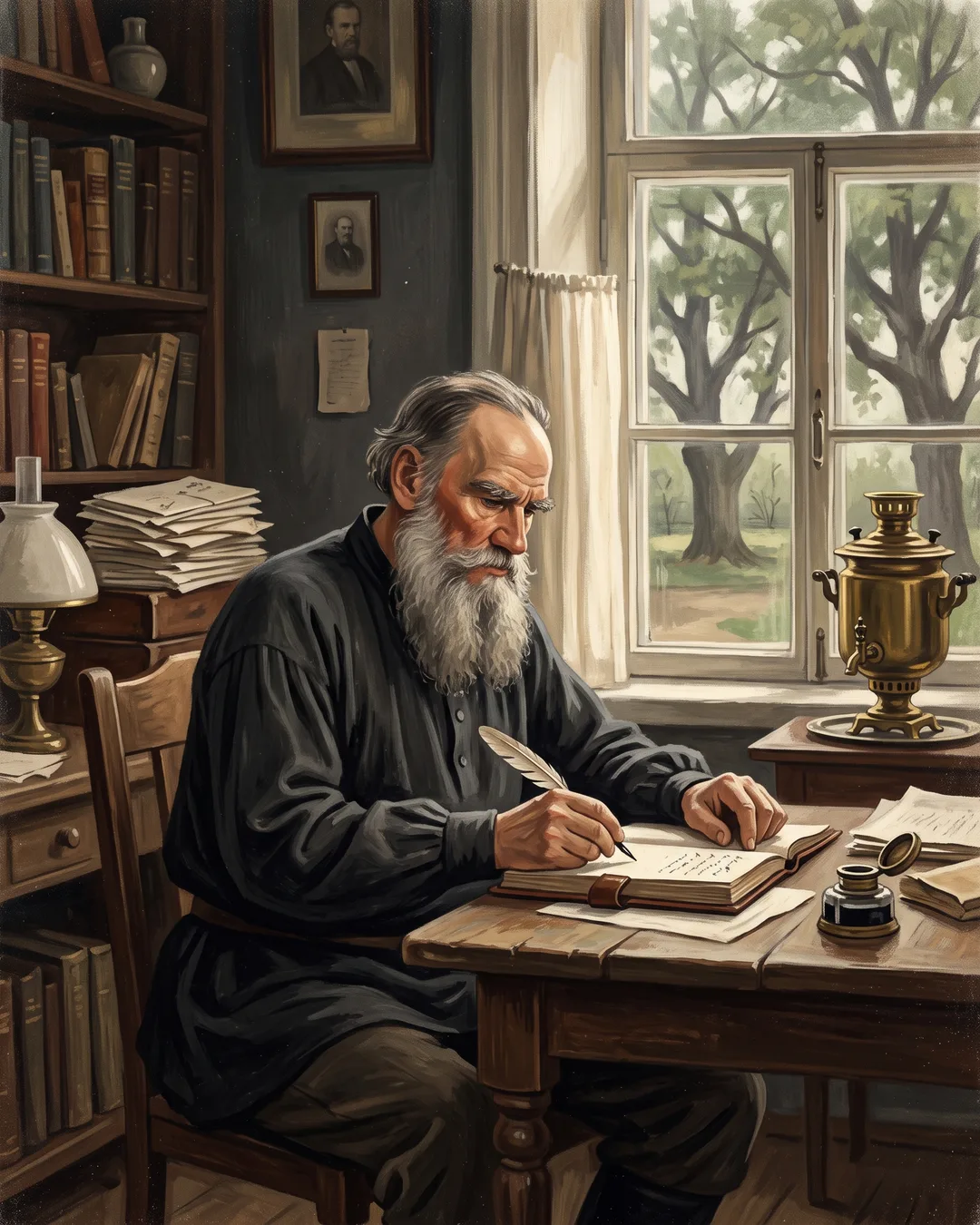 85Literature
Literature / 1828-1910
The Count Who Tried to Resign from Himself
Leo Tolstoy wrote the two summits of the realist novel, then spent thirty years trying to renounce the man who wrote them.
8 min read ↗ 86Literature
Literature / 1821-1881
Five Minutes Before the Firing Squad
Fyodor Dostoevsky was reprieved at the stake, buried alive in Siberia, and ruined at the roulette table. Then he wrote down what he had learned about the human soul.
8 min read ↗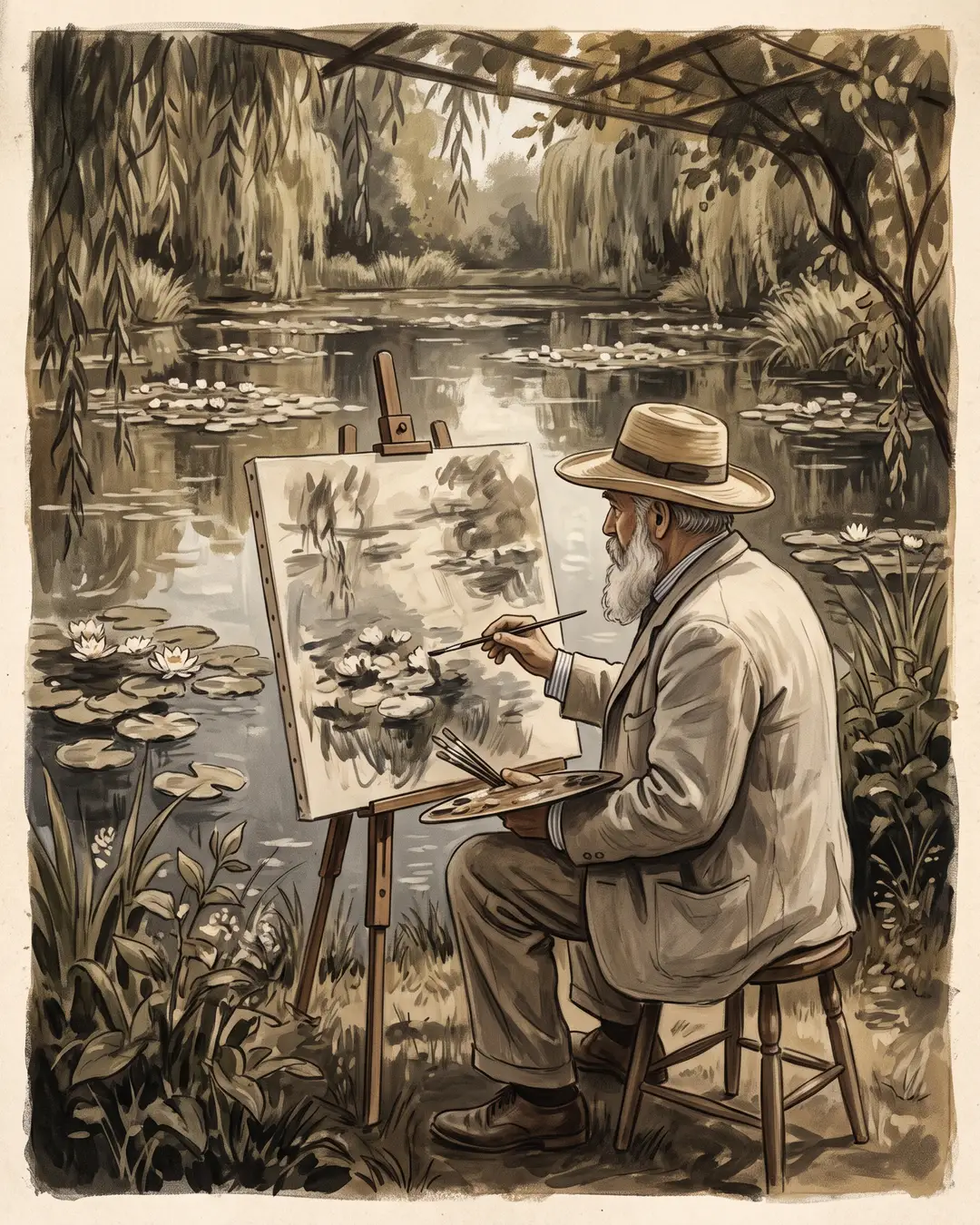 87Art
87ArtArt / 1840-1926
Painting the Time of Day
Claude Monet was mocked with the word Impressionist and kept the insult. Half a century later he painted light itself into a chapel of water.
7 min read ↗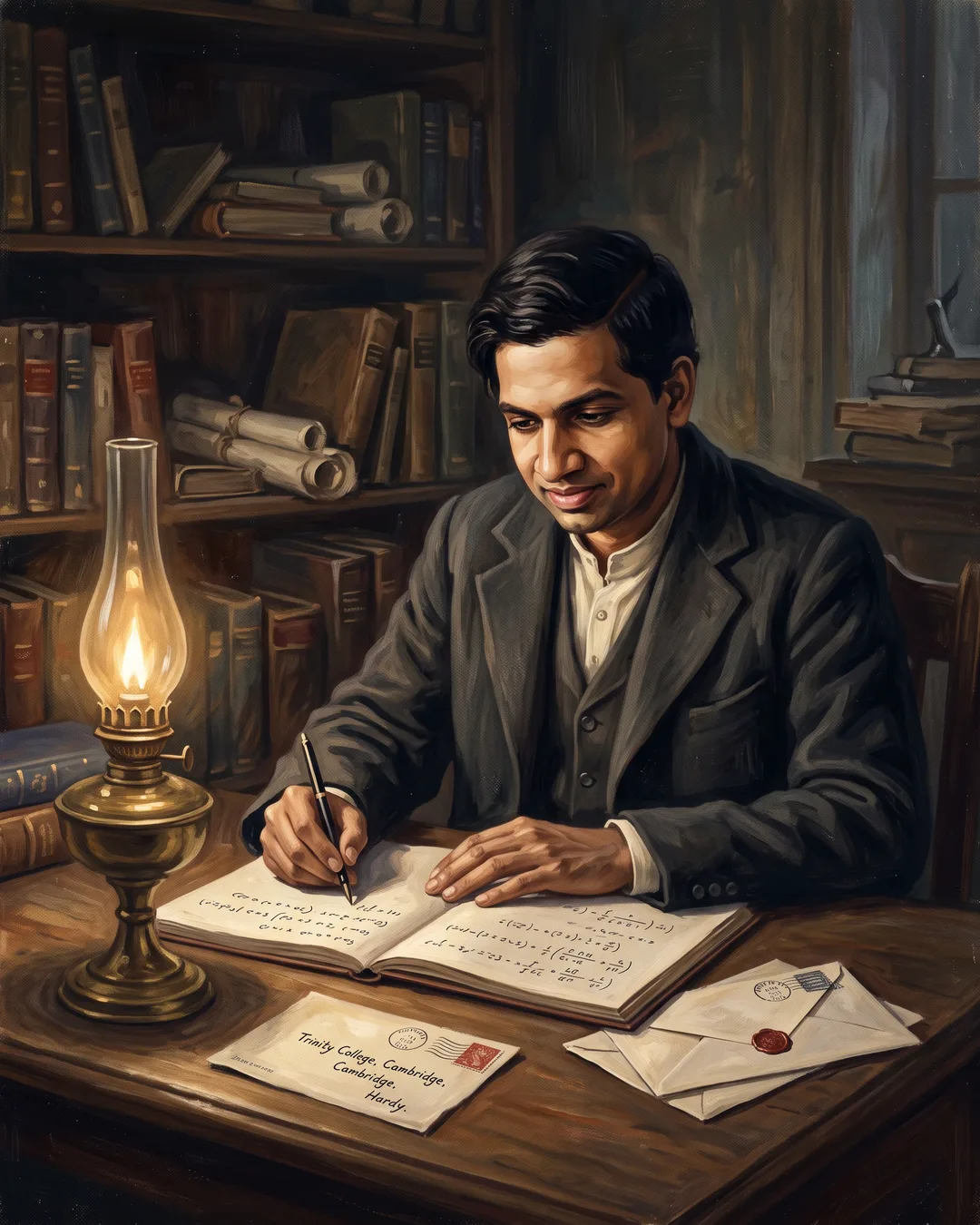 88Mathematics
Mathematics / 1887-1920
Letters from an Unknown Clerk
In 1913 a Madras shipping clerk mailed nine pages of impossible formulas to Cambridge. Mathematics is still mining them a century later.
7 min read ↗ 89Invention
Invention / 1833-1896
The Will That Rewrote an Obituary
Alfred Nobel made a fortune taming explosives and arming the world. His last-minute will spent it purchasing a different memory.
7 min read ↗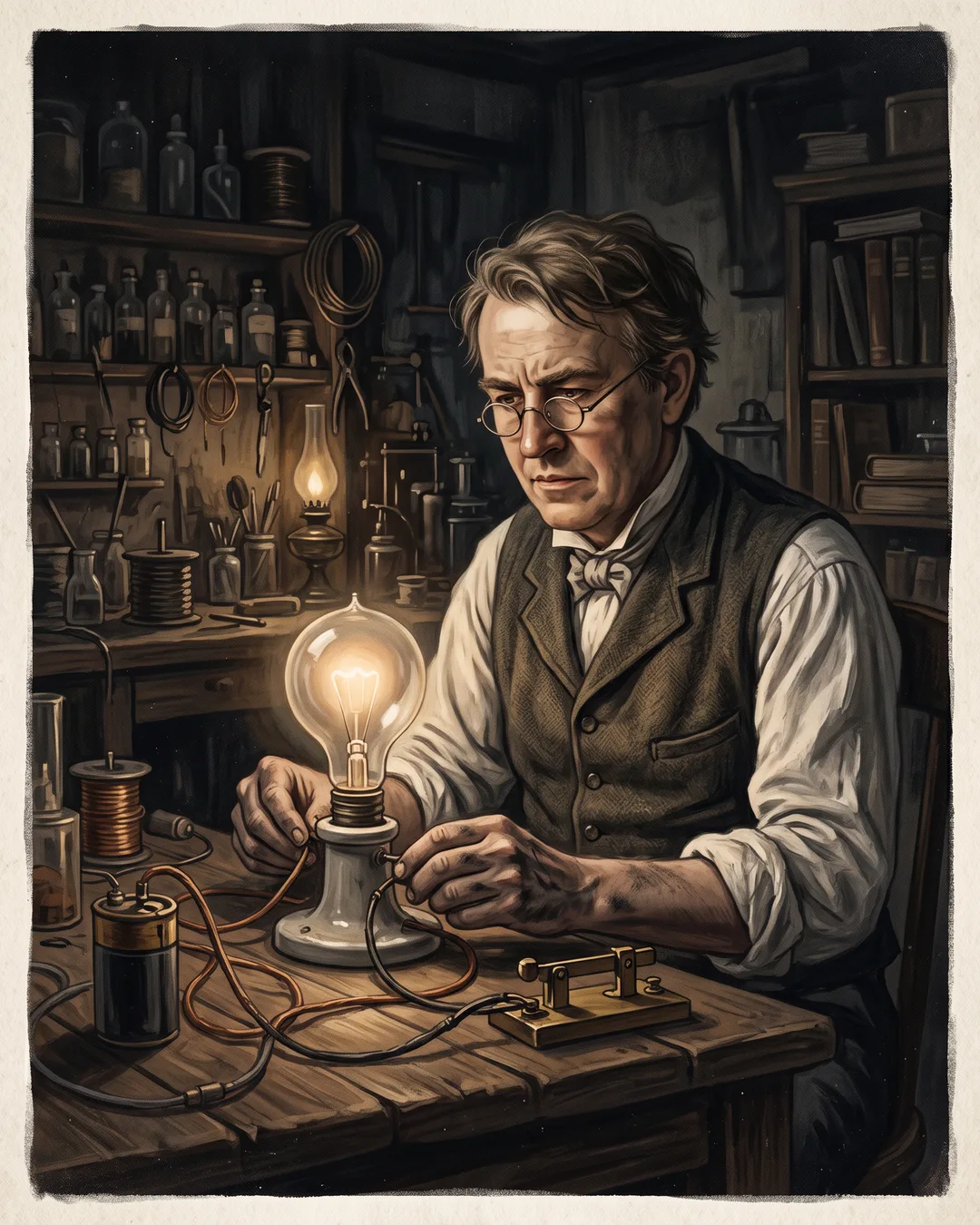 90Invention
Invention / 1847-1931
The Invention Factory
Thomas Edison's greatest invention was not the lamp or the phonograph. It was a New Jersey building full of other clever men, and a system for harvesting them.
8 min read ↗ 91Science
Science / 1885-1962
The Atom's Diplomat
Niels Bohr quantized the atom at twenty-seven, then spent the rest of his life refereeing physics' deepest argument and pleading for an open world.
7 min read ↗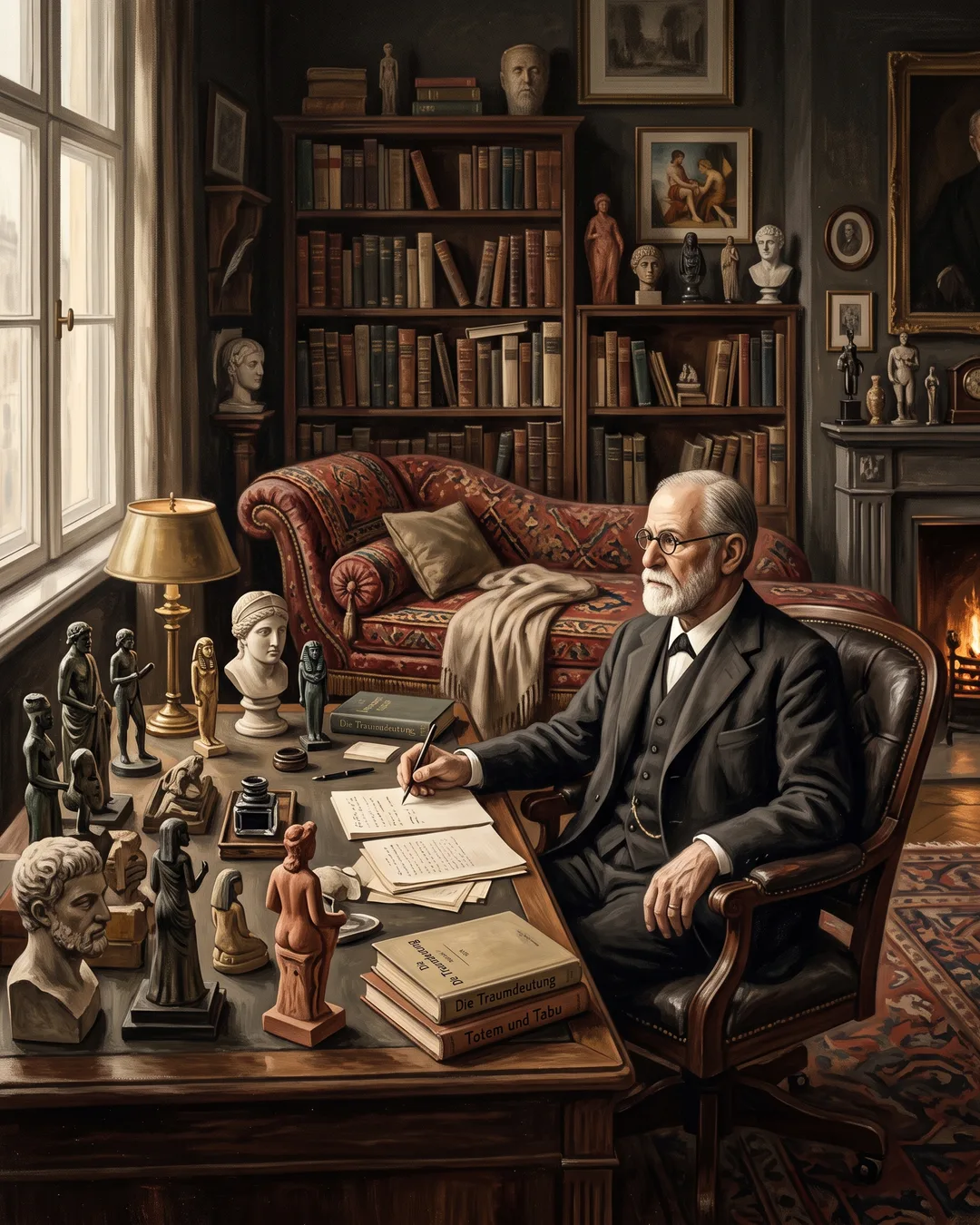 92Medicine
Medicine / 1856-1939
The Archaeologist of the Mind
Sigmund Freud claimed to have found a science of the unconscious. The science is bitterly disputed; the excavation changed how humanity talks about itself.
8 min read ↗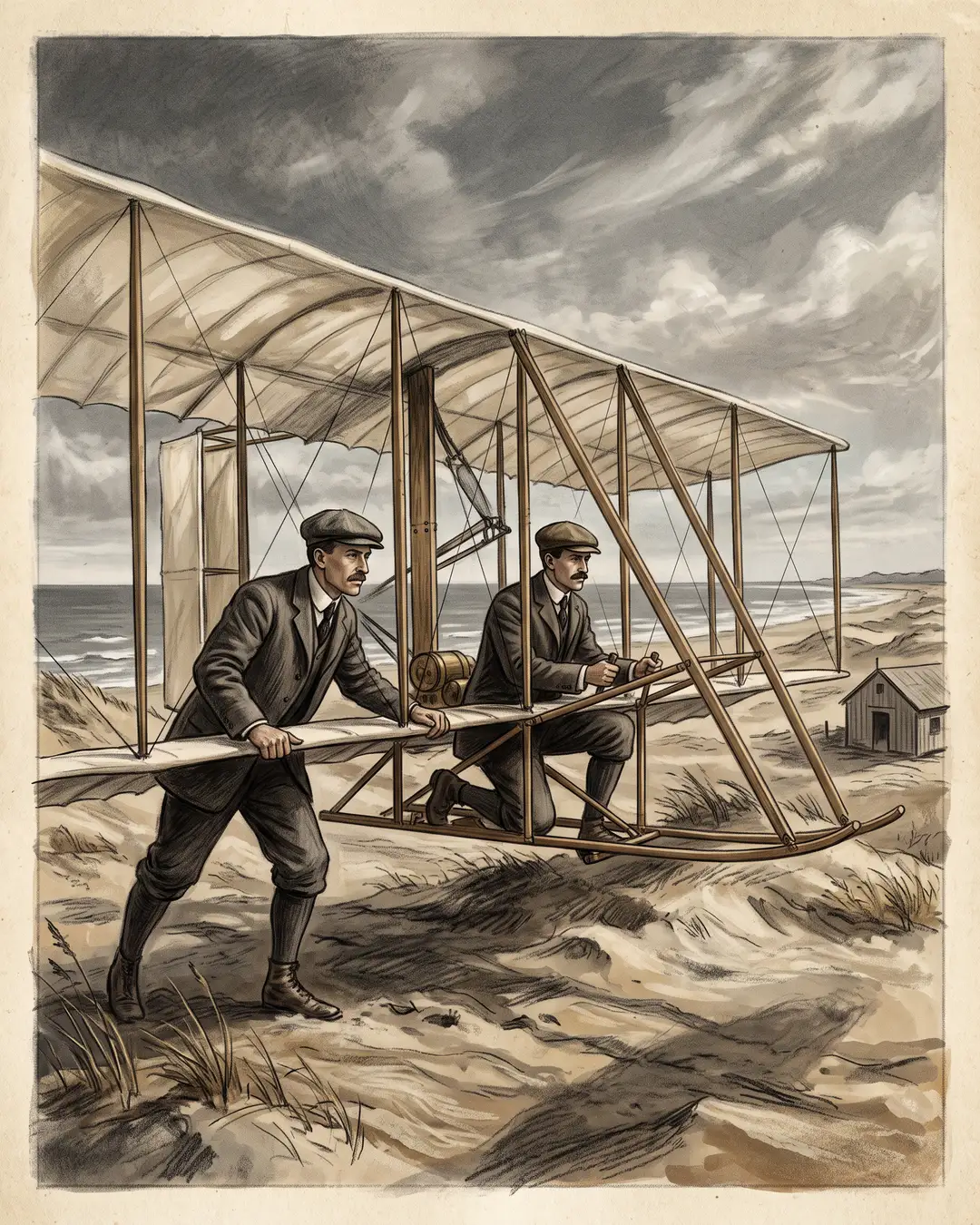 93Invention
Invention / 1867-1948
Twelve Seconds Over Sand
Two bicycle mechanics from Dayton solved what governments and geniuses could not, then spent their advantage suing everyone who flew.
7 min read ↗ 94Art
94ArtArt / 1881-1973
The Century's Appetite
Pablo Picasso broke painting open and remade it more often than any artist in history. The people closest to him paid the studio's real costs.
8 min read ↗ 95Literature
Literature / 1882-1941
The Mind Between the Acts
Virginia Woolf caught consciousness itself on the page, invented the modern essay on women and writing, and fought her own brain for every book.
7 min read ↗ 96Leadership
Leadership / 1874-1965
The Lion and the Ledger
In 1940 Winston Churchill's stubbornness helped save liberal civilization. The same man's record holds Gallipoli, empire, and Bengal. History needs the whole page.
8 min read ↗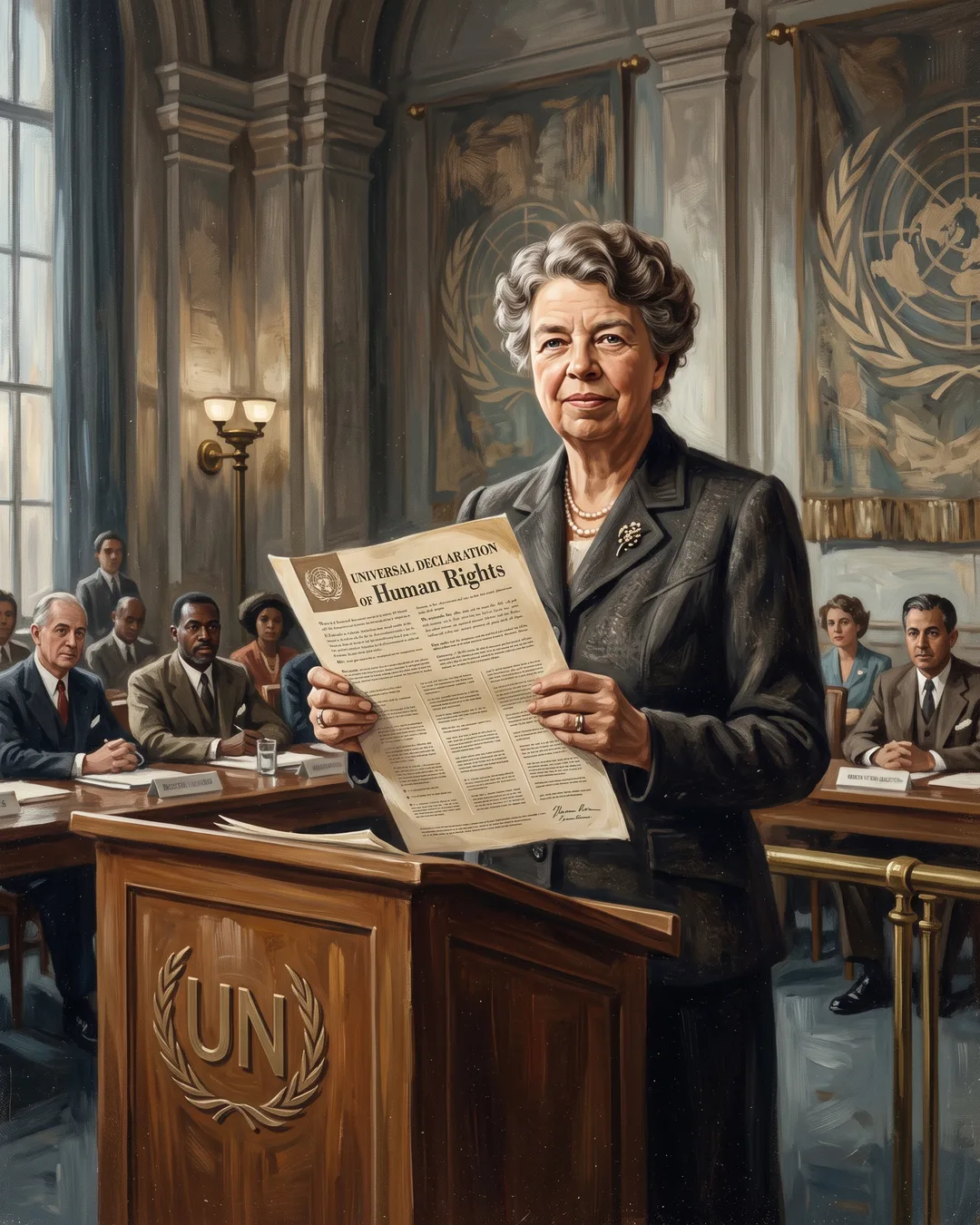 97Freedom
Freedom / 1884-1962
First Lady of the World
Eleanor Roosevelt turned a ceremonial role into a public office, then helped write the document that promises rights to everyone alive.
7 min read ↗ 98Mathematics
Mathematics / 1912-1954
The Imitation of Thought
Alan Turing defined computation, helped break Enigma, and asked whether machines can think. His country repaid him with a criminal conviction.
8 min read ↗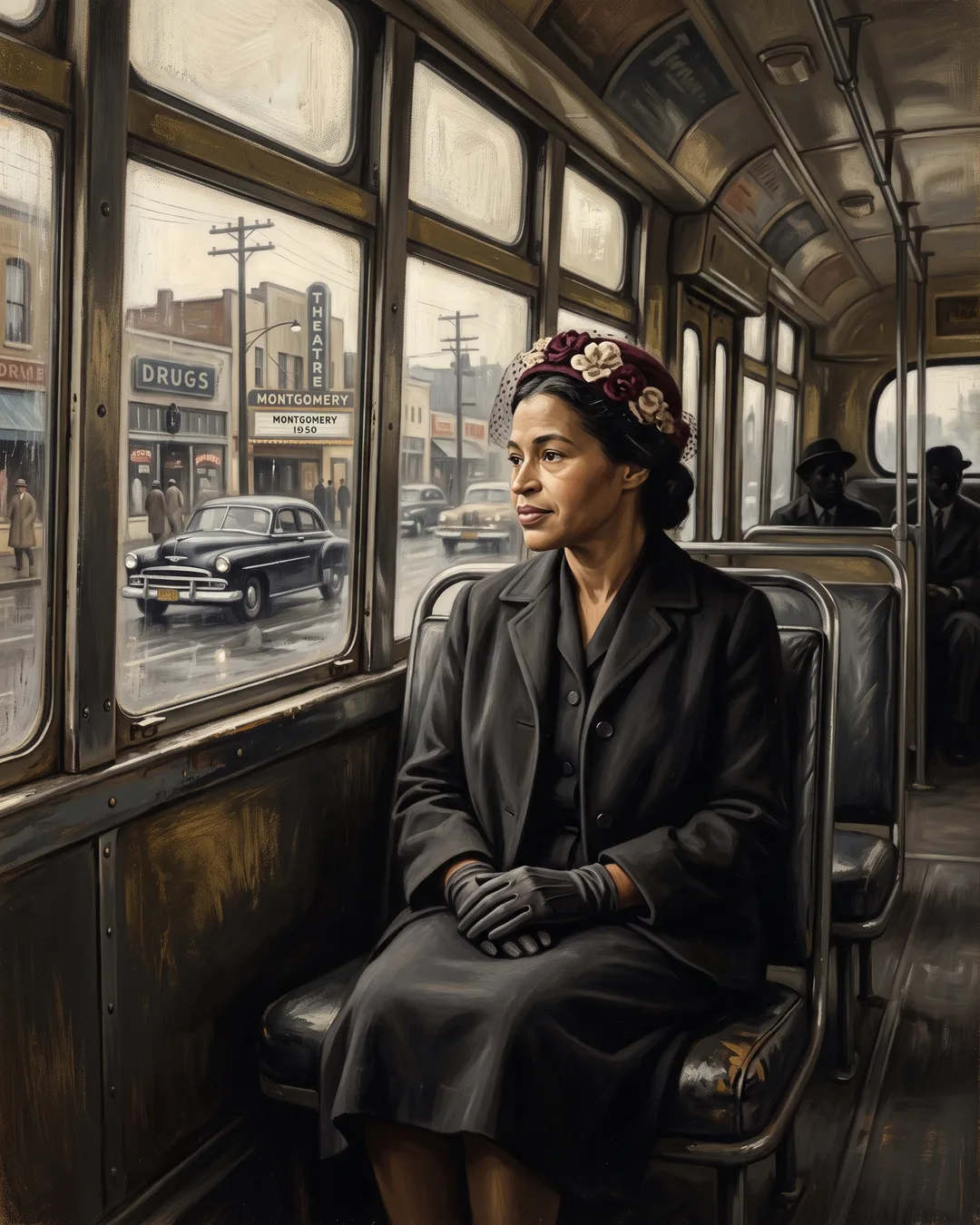 99Courage
Courage / 1913-2005
The Seamstress Who Had Been Ready for Years
The story says a tired woman kept her seat. The truth is better: a trained investigator with twelve years of movement work decided the moment had come.
7 min read ↗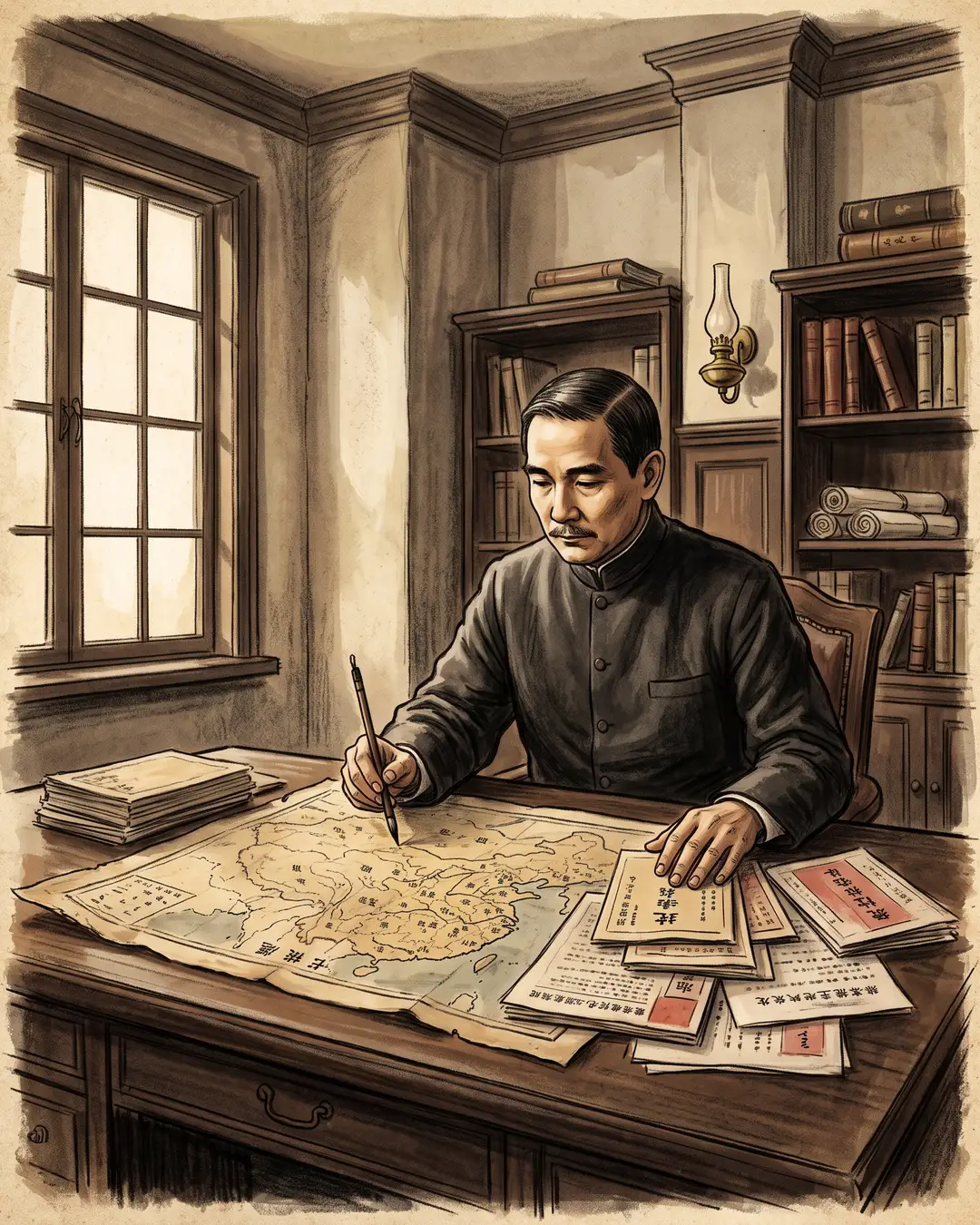 100Freedom
Freedom / 1866-1925
The Republic of a Traveling Salesman
Sun Yat-sen spent decades raising money and hope in exile for a Chinese republic. It arrived while he was reading a newspaper in Denver.
8 min read ↗ 101Faith
Faith / 1098-1179
The Abbess Who Called Her Visions a Living Light
Hildegard of Bingen wrote theology, composed liturgical song, catalogued plants and lectured bishops in an age that gave women almost no public voice. The legend that grew around her is nearly as tangled as the woman.
8 min read ↗ 102Philosophy
Philosophy / c. 1225-1274
The Silent Ox Who Married Aristotle to Faith
Thomas Aquinas spent twenty years arguing that reason and revelation could not finally contradict one another. Within three years of his death, propositions close to his own were condemned at Paris.
8 min read ↗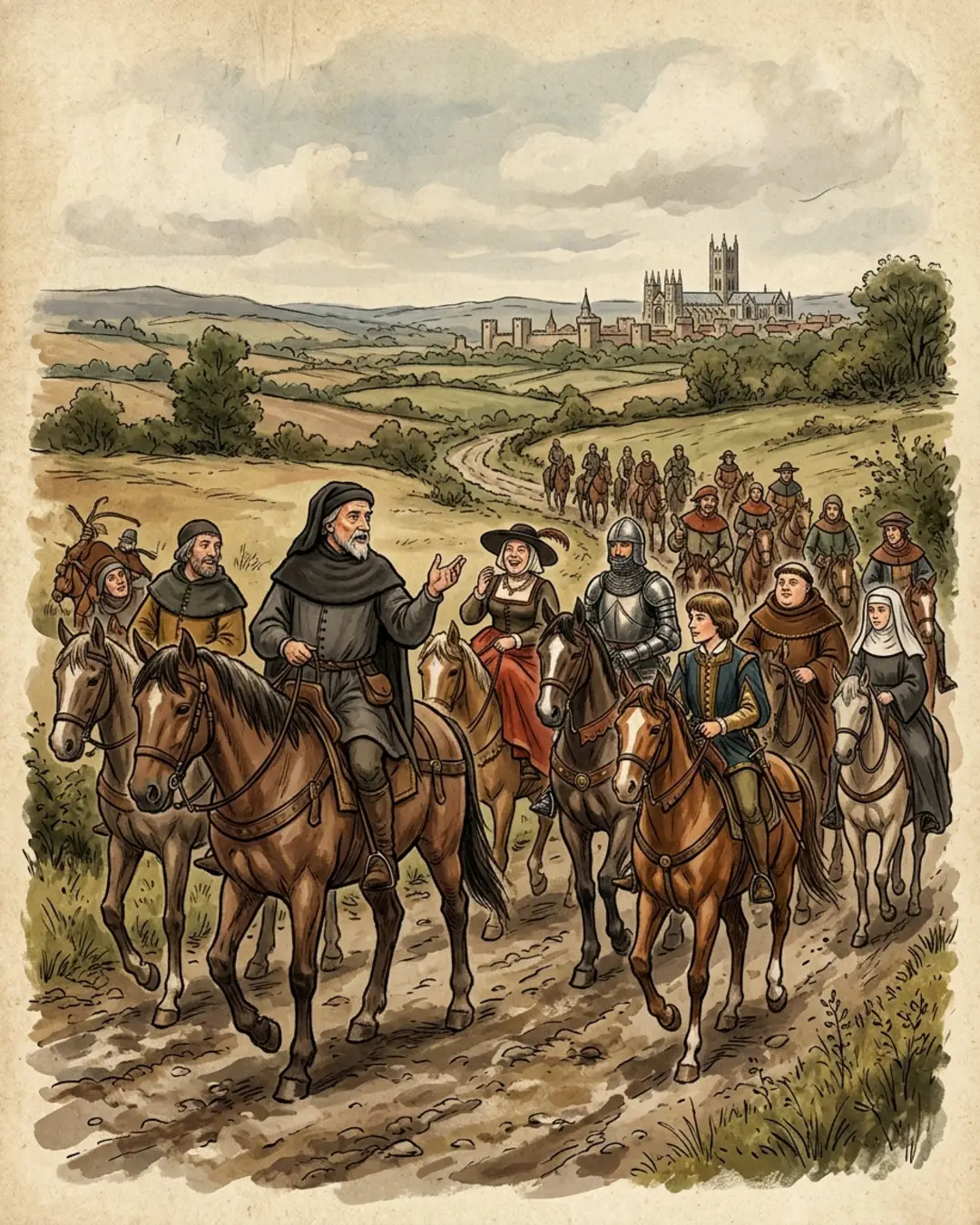 103Literature
Literature / c. 1343-1400
The Customs Clerk Who Gave English Its Range
Geoffrey Chaucer spent his working life counting wool sacks and running errands for kings. In the hours he stole from that, he made a London dialect capable of comedy, filth, grief and philosophy.
8 min read ↗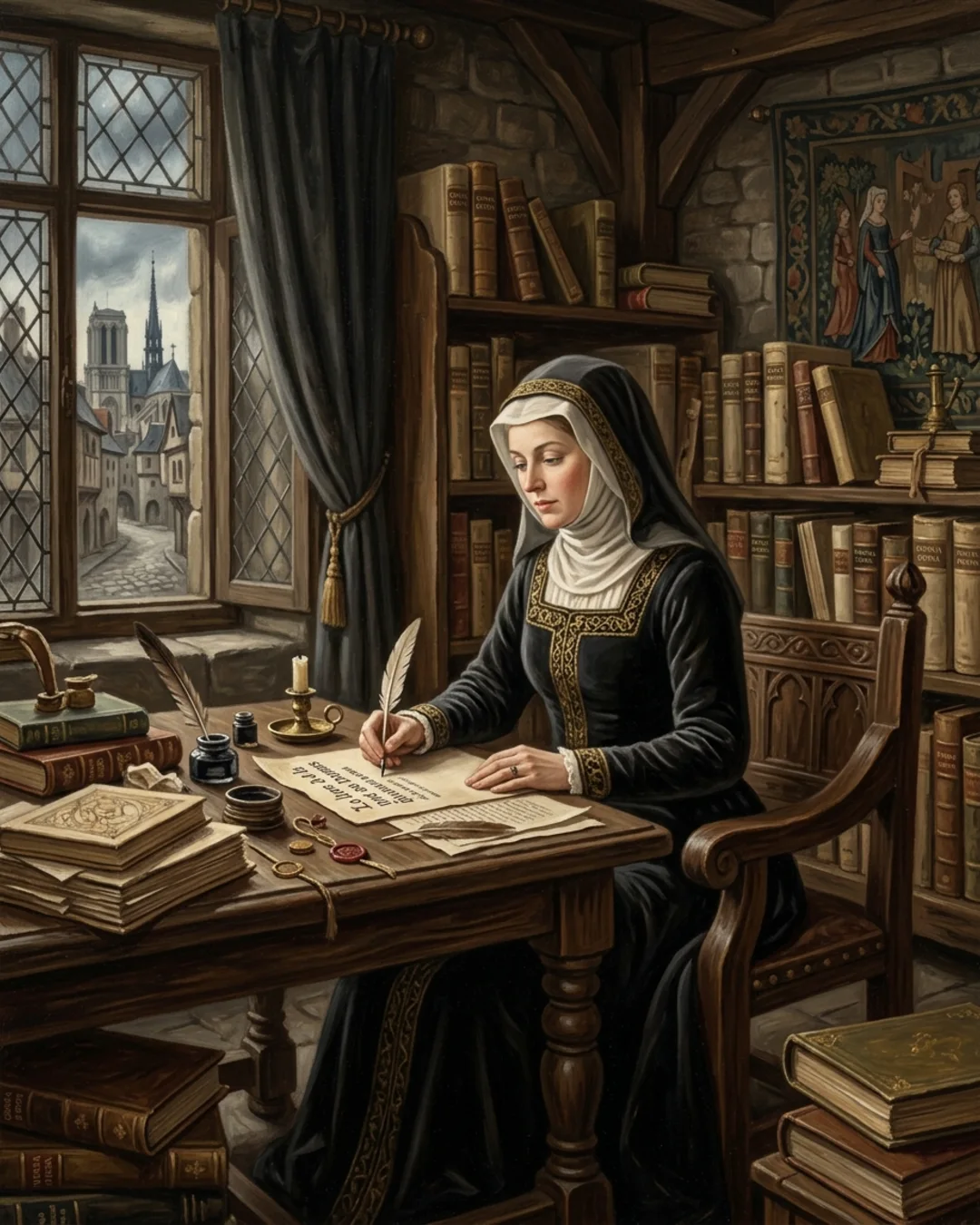 104Literature
Literature / c. 1364-c. 1430
The Widow Who Argued Back Against the Poets
Left with three children and a mountain of lawsuits, Christine de Pizan became the first woman in Europe known to have supported a household by her pen, and then used it to take apart the misogyny of her own literary tradition.
8 min read ↗ 105Poetry
Poetry / c. 630-570 BCE
The Poet We Read in Fragments and Guesses
Antiquity called Sappho the tenth Muse and copied her into nine books. Almost all of it is gone. What survives is a handful of poems and hundreds of torn scraps that still cut cleanly.
7 min read ↗ 106Mathematics
Mathematics / fl. c. 300 BCE
The Man Who May Be a Committee
The Elements shaped how Europe and the Islamic world thought about proof for two thousand years. About the person whose name is on it, we know almost nothing at all.
7 min read ↗ 107Medicine
Medicine / c. 460-370 BCE
The Name That Took Disease Away From the Gods
Sixty ancient medical treatises travel under one man's name, written across centuries by many hands that often disagree. Their shared claim was radical: illness has natural causes, and can be studied.
7 min read ↗ 108Mathematics
Mathematics / c. 570-495 BCE
The Theorem That Probably Was Not His
Pythagoras founded a religious community that treated number as the substance of reality. Almost every specific discovery credited to him belongs to somebody else, and that is the most interesting thing about him.
7 min read ↗ 109Leadership
Leadership / c. 460-c. 400 BCE
The Exiled General Who Invented Cold History
Thucydides lost a command, was banished for twenty years, and spent them writing the war that ruined his city into the first work of history that refuses to console its reader.
8 min read ↗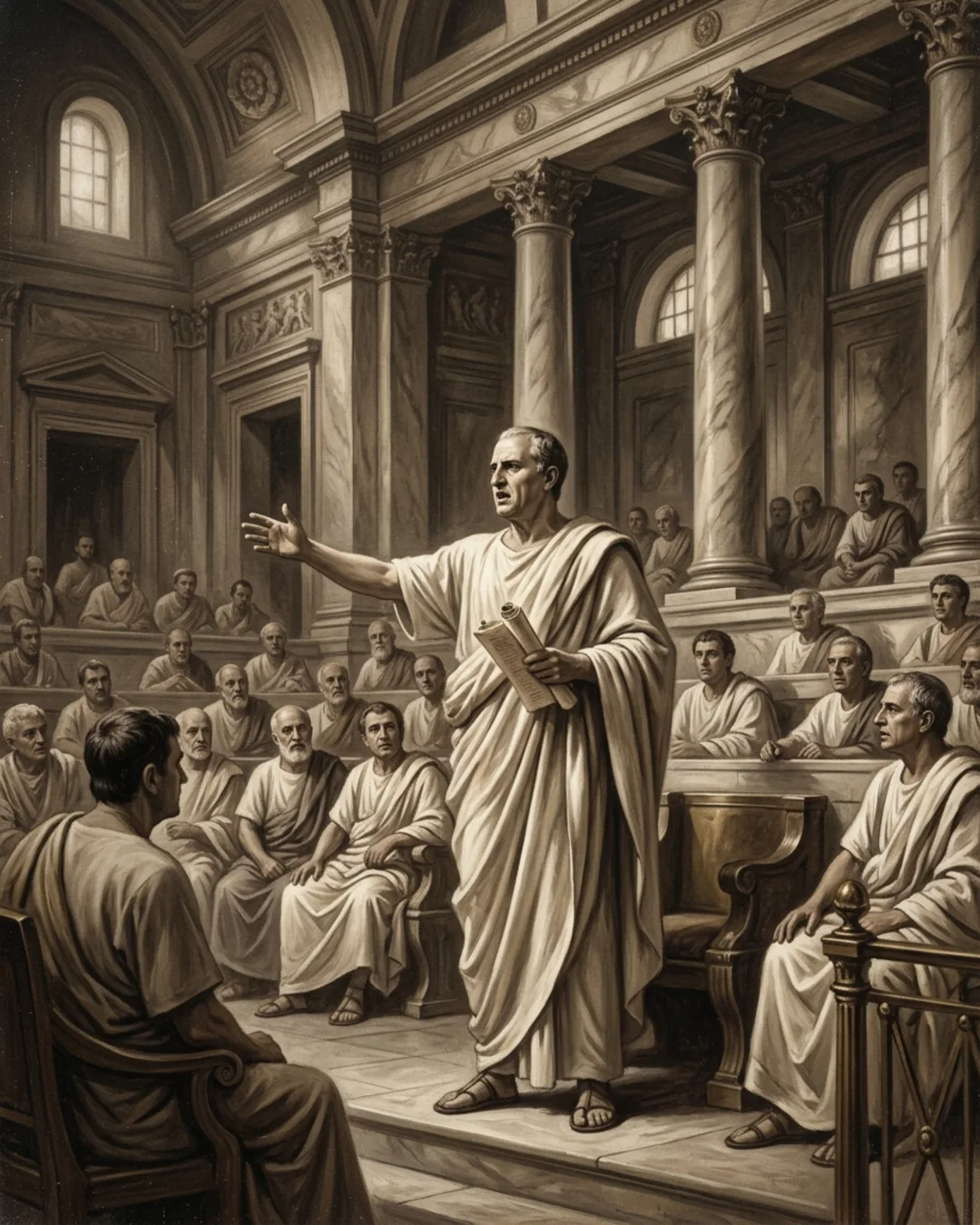 110Law
Law / 106-43 BCE
The Outsider Who Talked His Way to the Top and Died for It
Cicero had no ancestors in the Roman senate and no army. He built a career entirely out of argument, saved the republic once, and was hunted down when argument stopped being enough.
8 min read ↗ 111Poetry
Poetry / 70-19 BCE
The Poet Who Asked to Burn His Masterpiece
Virgil gave Rome the founding legend it wanted and quietly filled it with grief. On his deathbed he ordered the Aeneid destroyed, and was overruled by an emperor.
8 min read ↗ 112Faith
Faith / 354-430 CE
The Bishop Who Put His Own Mind on Trial
Augustine invented a way of writing about the self that Europe used for fifteen centuries. He also supplied the arguments that justified coercing dissenters, and he knew what he was doing.
8 min read ↗ 113Law
Law / 482-565 CE
The Emperor Who Codified Rome and Nearly Lost It
Justinian gave the world the legal code that underlies most of continental Europe, rebuilt Hagia Sophia, and reconquered the west at a cost his empire could not survive.
8 min read ↗ 114Leadership
Leadership / 849-899
The King Who Hid in a Marsh and Came Back With a Curriculum
Alfred survived a winter as a fugitive in the Somerset wetlands, beat the Danish army, and then decided the real emergency was that almost nobody in England could read Latin any more.
8 min read ↗ 115Leadership
Leadership / c. 1122-1204
Queen of Two Kingdoms and Prisoner of One
Eleanor of Aquitaine was queen of France, then queen of England, mother of two kings, and held under guard by her own husband for sixteen years. She outlived nearly everyone who underestimated her.
8 min read ↗ 116Leadership
Leadership / c. 1162-1227
The Outcast Boy Who Rebuilt a People From Nothing
Temujin was abandoned on the steppe as a child and enslaved by rivals. He went on to build the largest contiguous land empire in history, and to kill on a scale that is still being counted.
8 min read ↗ 117Leadership
Leadership / 1215-1294
The Grandson Who Traded the Saddle for a Throne
Kublai Khan conquered Song China and then did the harder thing: he governed it, as a foreign emperor running an empire he could never fully be trusted by.
8 min read ↗ 118Leadership
Leadership / 1336-1405
The Lame Conqueror Who Built Beauty on Bones
Timur campaigned for thirty-five years and lost nothing. He filled Samarkand with the finest architecture of its century and raised towers of severed heads outside the cities that paid for it.
8 min read ↗ 119Science
Science / 1031-1095
The Official Who Wrote Down Everything He Noticed
Shen Kuo surveyed rivers, reformed the calendar, described the magnetic compass and worked out how mountains are made. Then his political career collapsed and he wrote it all down in exile.
8 min read ↗ 120Engineering
Engineering / 1020-1101
The Minister Who Built a Clock the Size of a House
In 1094 a tower in Kaifeng struck the hours with automated figures, tracked the stars on a rotating sphere and ran on a water-driven escapement. Su Song wrote the manual, and it saved the design from oblivion.
8 min read ↗ 121Invention
Invention / 78-139 CE
The Court Astronomer Who Detected an Earthquake He Could Not Feel
Zhang Heng served an empire that read disasters as verdicts on its rulers. He built a bronze vessel that reported distant earthquakes, and wrote poetry good enough to survive the machine.
8 min read ↗ 122Mathematics
Mathematics / 476-c. 550 CE
The Astronomer Who Set the Earth Spinning
At twenty-three, Aryabhata compressed a system of mathematics and astronomy into a hundred and twenty-one verses, including the claim that the sky only appears to turn because the earth does.
8 min read ↗ 123Mathematics
Mathematics / 598-c. 668 CE
The First Man to Do Arithmetic With Nothing
In 628 CE Brahmagupta wrote down rules for calculating with zero and with negative quantities, treating debt as a number. He also got one rule wrong, and it took a thousand years to settle.
8 min read ↗ 124Philosophy
Philosophy / c. 150-c. 250 CE
The Monk Who Argued That Nothing Stands Alone
Nagarjuna took the sharpest tools of Indian logic and turned them against every fixed position, including his own. Buddhist thought from Tibet to Japan is still working through what he did.
8 min read ↗ 125Exploration
Exploration / 602-664 CE
The Pilgrim Who Left China Illegally and Came Back a Hero
Xuanzang crossed deserts and mountains against an imperial travel ban to find accurate Buddhist scriptures. He returned after sixteen years with hundreds of manuscripts and spent the rest of his life translating them.
8 min read ↗ 126Art
Art / 1632-1675
The Painter Who Made Silence Visible
Johannes Vermeer left roughly thirty-five paintings and almost no words. What survives is a body of work about light, patience, and the quiet rooms of one small Dutch city.
7 min read ↗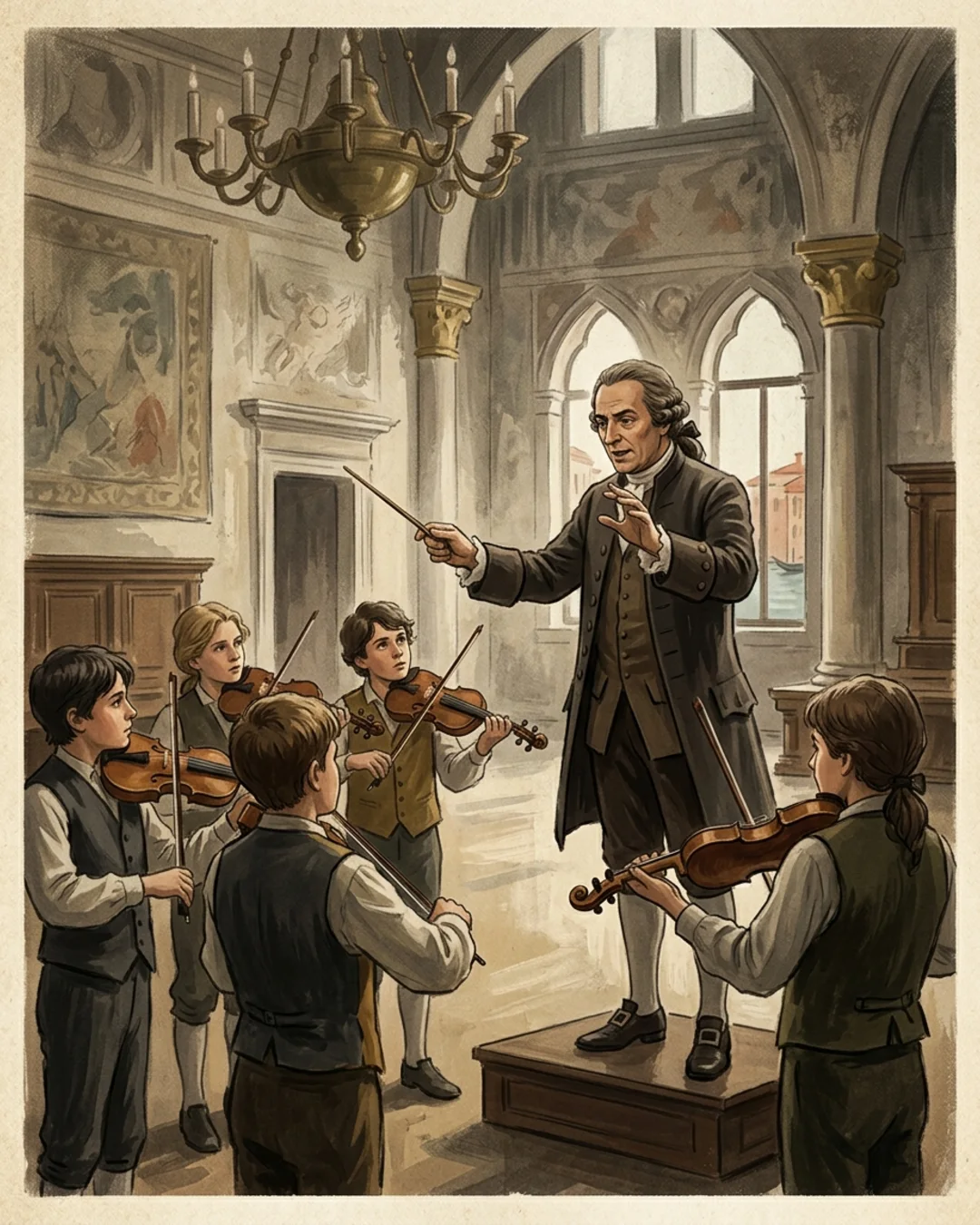 127Music
Music / 1678-1741
The Red Priest and the Orphans' Orchestra
Vivaldi wrote some five hundred concertos, many of them for an ensemble of foundling girls behind a Venetian grille. Then Europe forgot him for two hundred years.
7 min read ↗ 128Music
Music / 1756-1791
The Child Who Outgrew His Own Legend
Mozart was exhibited as a marvel before he was ten and died at thirty-five owing money. Almost everything the public believes about the end of his life is wrong.
8 min read ↗ 129Music
Music / 1732-1809
The Liveried Servant Who Taught Europe a New Grammar
For nearly thirty years Haydn wore a prince's uniform and wrote to order. The isolation of a Hungarian estate produced the shared language that Mozart and Beethoven inherited.
7 min read ↗ 130Science
Science / 1632-1723
The Draper Who Found a Living World in a Drop
A Delft cloth merchant with no Latin and no university built lenses better than anyone alive, then reported creatures nobody believed existed. Verification took three years.
7 min read ↗ 131Science
Science / 1635-1703
The Man Who Was Paid to Be Curious Every Week
Hooke owed the Royal Society three or four new experiments at every meeting. He gave the world the biological cell, a law of springs, and a lifetime of quarrels over credit.
8 min read ↗ 132Medicine
Medicine / 1749-1823
The Country Doctor Who Tested a Dairy Rumour
Jenner did not discover that cowpox protects against smallpox. He did something harder and more consequential: he tested it, wrote it down, and refused to let it stay local.
7 min read ↗ 133Science
Science / 1791-1867
The Bookbinder Who Made Invisible Fields Real
Faraday had almost no formal schooling and no mathematics. He gave physics the electric motor, the transformer, the dynamo, and the idea of the field itself.
8 min read ↗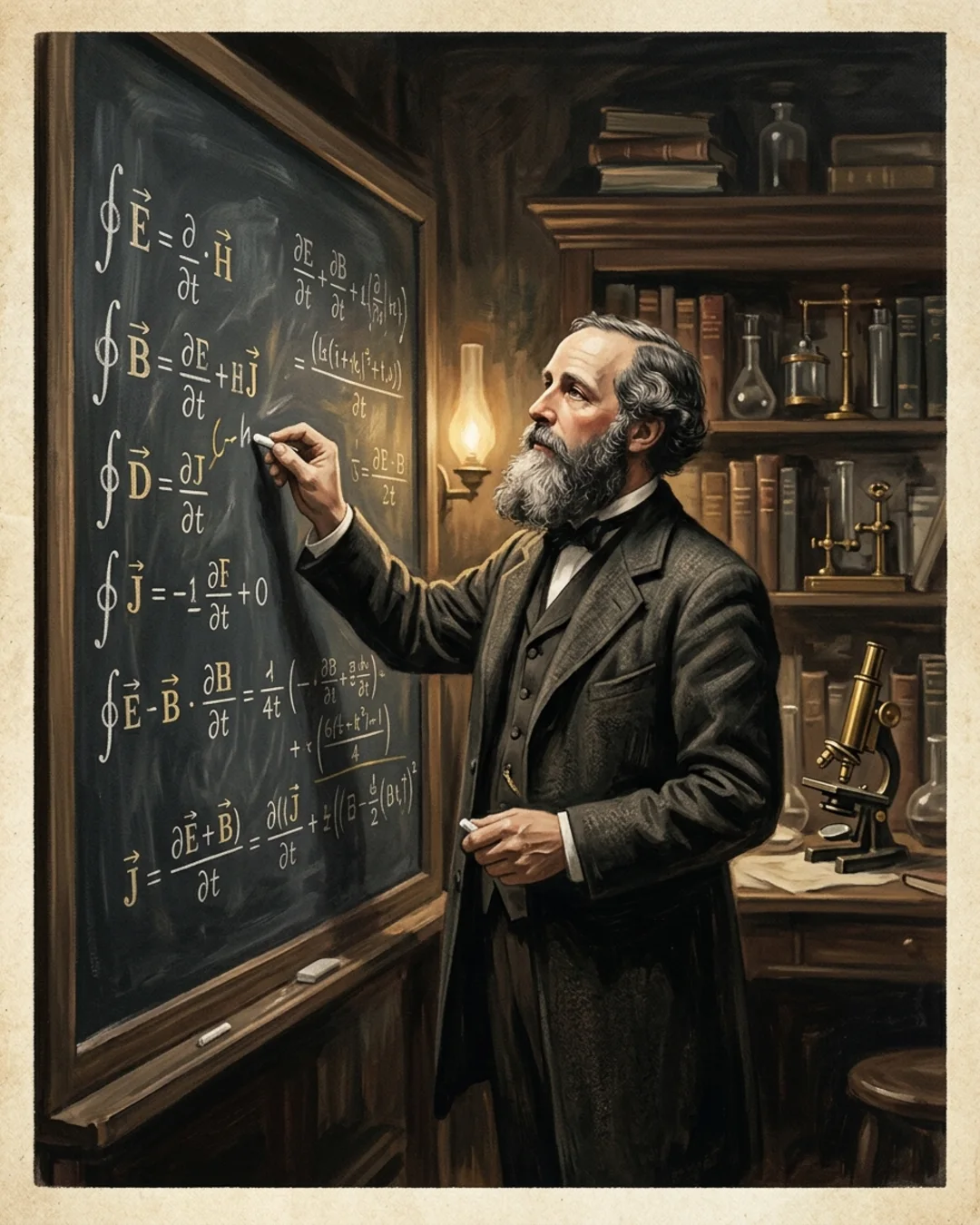 134Science
Science / 1831-1879
The Equations That Turned Light Into Electricity
Maxwell showed that electricity, magnetism and light are one phenomenon. He died at forty-eight, eight years before anyone produced the waves his theory required.
8 min read ↗ 135Mathematics
Mathematics / 1780-1872
The Woman Who Showed the Sciences Were One Subject
Denied schooling and refused candles at night, Mary Somerville taught herself mathematics, explained Laplace to Britain, and tutored the young Ada Byron.
7 min read ↗ 136Science
Science / 1750-1848
The Sweeper of Comets
Kept as a household drudge until she was twenty-two, Caroline Herschel became the first woman in Britain paid for scientific work and found eight comets of her own.
7 min read ↗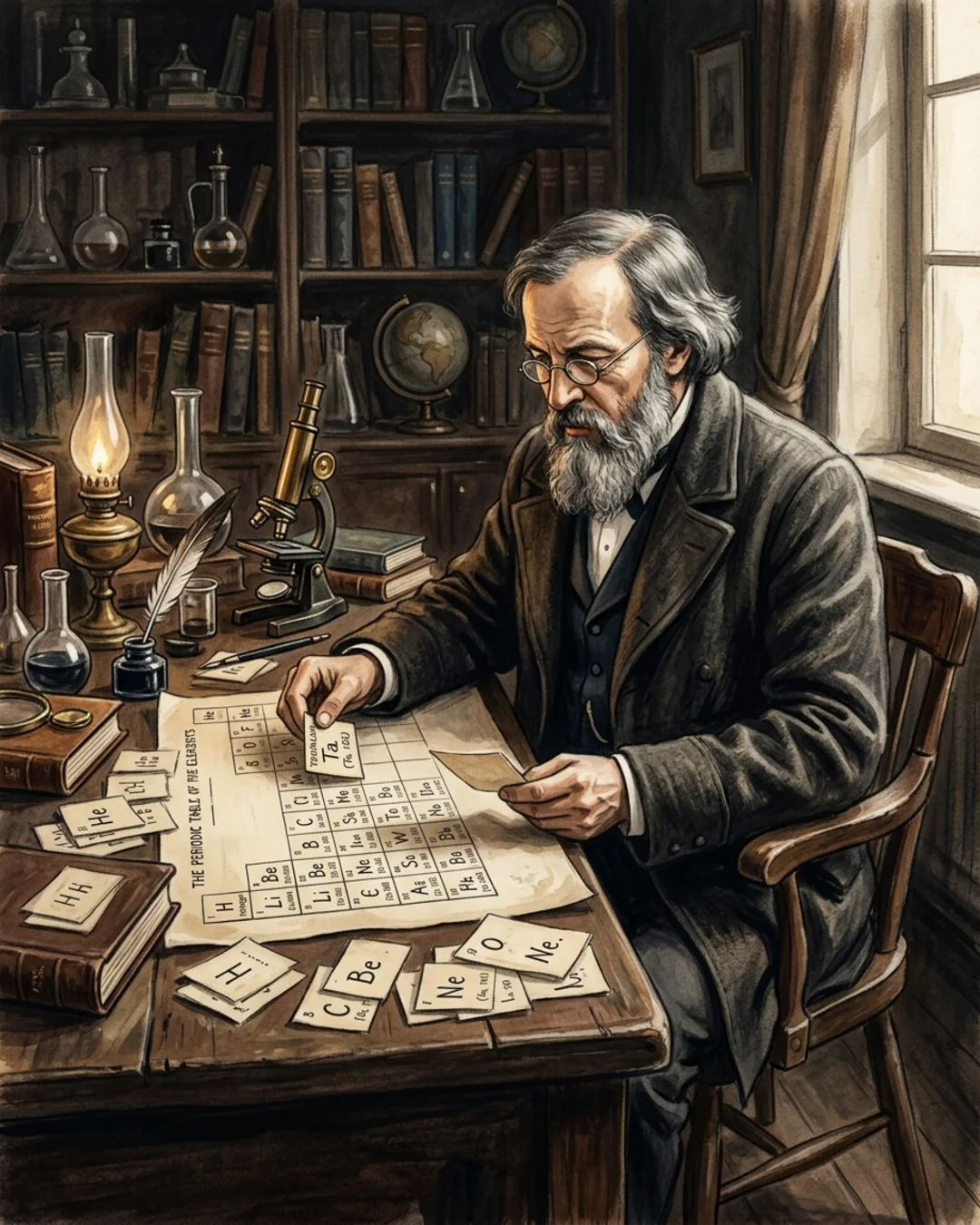 137Science
Science / 1834-1907
The Table That Dared to Leave Gaps
Several chemists glimpsed the periodic pattern in the 1860s. Mendeleev was the one who trusted it enough to leave holes and describe the elements that would fill them.
8 min read ↗ 138Science
Science / 1878-1968
The Physicist Who Explained the Split
Lise Meitner worked out what happened when a uranium nucleus broke apart, gave the process its name, and watched the Nobel Prize go to her collaborator alone.
8 min read ↗ 139Mathematics
Mathematics / 1882-1935
The Theorem Beneath Every Conservation Law
Emmy Noether lectured for years under another man's name and was paid almost nothing. She also proved why energy is conserved, and then rebuilt algebra from the ground up.
8 min read ↗ 140Science
Science / 1868-1921
The Yardstick She Cut From Blinking Stars
Paid thirty cents an hour to measure photographic plates, Henrietta Leavitt found the rule that let astronomers weigh the distance to other galaxies.
7 min read ↗ 141Science
Science / 1920-1958
Photograph 51 and the Cost of Being Right First
Franklin's X-ray images gave the double helix its shape. The data reached her rivals without her knowledge, and the prize was awarded four years after her death.
8 min read ↗ 142Mathematics
Mathematics / 1918-2020
The Woman the Astronaut Asked to Check the Computer
Katherine Johnson calculated the trajectories that carried Americans into orbit and to the Moon, from a segregated computing pool that was not supposed to include her.
7 min read ↗ 143Invention
Invention / 1906-1992
The Admiral Who Taught Machines to Read English
Grace Hopper was told that computers could only do arithmetic. She built the first compilers anyway, and spent forty years arguing that programming should be legible to people.
7 min read ↗ 144Invention
Invention / 1914-2000
The Screen Star Who Patented a Way to Hide a Signal
Hedy Lamarr learned about torpedoes at her arms-dealer husband's dinner table, escaped, and in 1942 co-patented a frequency-hopping scheme the US Navy filed away.
7 min read ↗ 145Leadership
Leadership / 1860-1935
The House on Halsted Street
Jane Addams turned a decaying Chicago mansion into a laboratory for urban democracy, then lost most of her reputation by opposing a popular war.
8 min read ↗ 146Courage
Courage / 1862-1931
The Reporter Who Counted the Lynchings
When a mob destroyed her Memphis newspaper, Ida B. Wells kept publishing from exile, using white southern papers as her evidence against the lie that lynching punished crime.
8 min read ↗ 147Freedom
Freedom / 1818-1895
The Voice That Refused to Stay a Symbol
Abolitionists wanted Douglass to recite his suffering and let others do the thinking. He learned to read in secret, escaped in a sailor's coat, and spent fifty years arguing on his own terms.
8 min read ↗ 148Freedom
Freedom / 1797-1883
The Woman Who Sued a White Man for Her Son and Won
Before she took a preacher's name, Isabella Baumfree walked out of bondage carrying an infant and went to court in 1828 to recover a child sold illegally into Alabama.
7 min read ↗ 149Leadership
Leadership / 1856-1915
The Bargain Struck at Atlanta
Born enslaved, Washington built Tuskegee out of a shanty and became the most powerful Black man in America by accepting terms that a younger generation refused.
8 min read ↗ 150Philosophy
Philosophy / 1868-1963
The Scholar Who Named the Colour Line
Du Bois brought statistics, philosophy and rage to the same page, founded a movement, and ended a ninety-five-year life as a citizen of Ghana.
8 min read ↗