A Vintner's Son at Court
Chaucer was born in London around 1343, son of a prosperous wine merchant, and entered the household of the Countess of Ulster as a teenager. He was captured while campaigning in France in 1359 and ransomed, with the king contributing to the payment. From there he became a career servant of the crown: valet, esquire, diplomat on missions to Italy and Spain, controller of the wool custom in the port of London, clerk of the king's works, deputy forester. He married Philippa Roet, whose sister Katherine Swynford became the mistress and eventually the wife of John of Gaunt.
That connection mattered. Gaunt was the wealthiest man in England and a dangerous patron in unstable times, and Chaucer survived the political convulsions of the 1380s and the deposition of Richard II in 1399 without ruin. His verse was written around the edges of this life, in a language that carried little prestige. Serious writing in England still meant Latin or French; English was the tongue of the street and the shop. His choice to work in it was neither obvious nor a gesture of patriotism, but it proved decisive for everyone who came after.
Borrowed Frames, New Voices
He was a magpie of genius. The Book of the Duchess borrows the machinery of French dream vision; Troilus and Criseyde reworks Boccaccio's Il Filostrato into a long, sceptical study of love and betrayal; The House of Fame answers Dante. From Boethius, whom he translated, he took the questions about fortune and providence that shadow all his strongest work. What he added was voice. His narrators are unreliable, self-deprecating and often obtuse, and the gap between what a character claims and what a reader can see is exactly where the comedy lives.
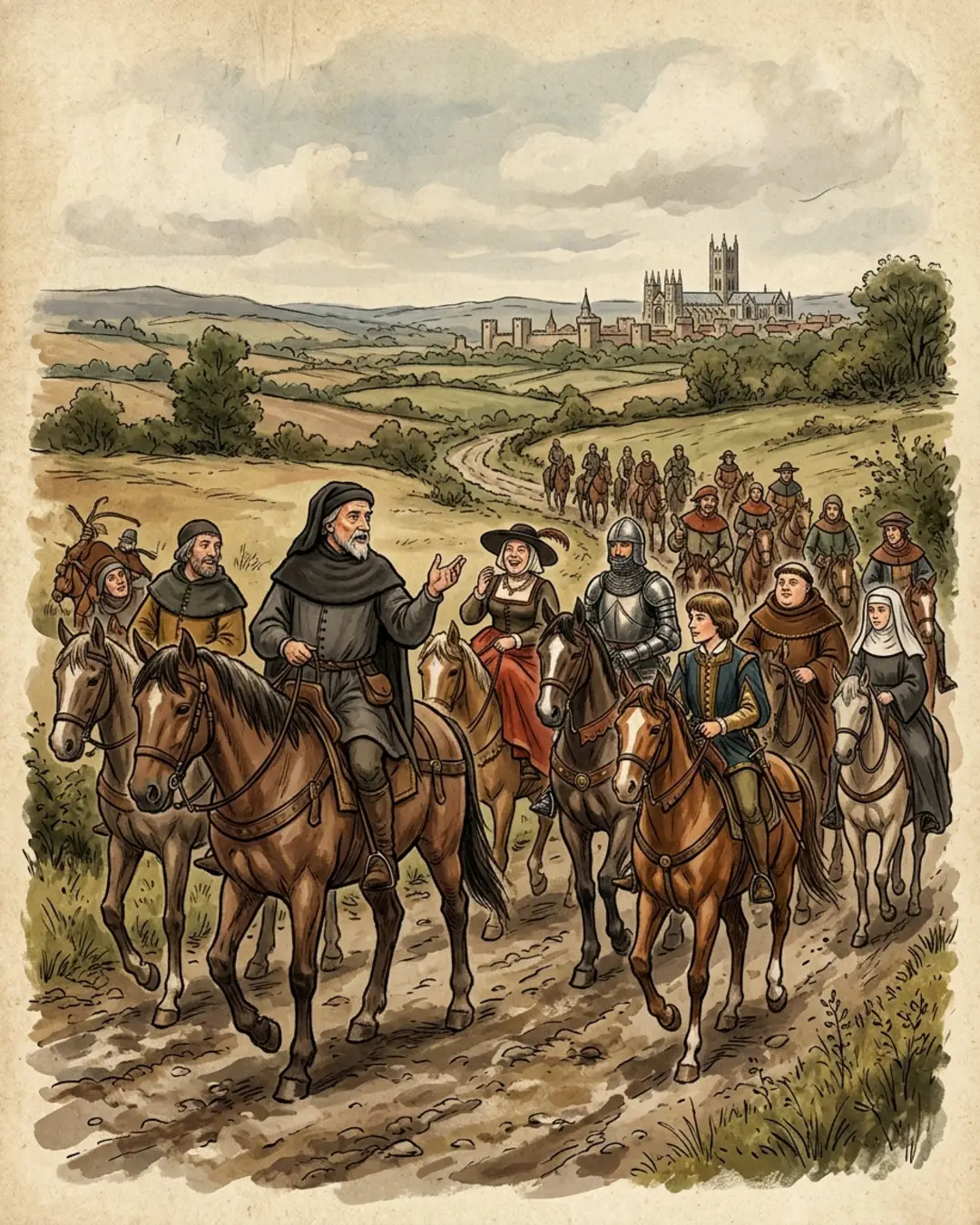
The Canterbury Tales, begun in the late 1380s, set some thirty pilgrims on the road to Becket's shrine and let them compete in storytelling. A knight, a miller, a prioress, a pardoner peddling fake relics, and the Wife of Bath, who argues from scripture for the authority of her own experience of five husbands, speak in registers that had never before shared a book. The scheme was never finished. No manuscript in Chaucer's hand survives, and the eighty-odd copies disagree about the order of the tales, so every modern edition is an editorial argument.
The Record and the Reputation
The documentary Chaucer is a bureaucrat, and the archive holds hard material. In 1380 a woman named Cecily Chaumpaigne released him from legal action over what the Latin document calls raptus, a word that can mean rape or abduction. Scholars argued over the term for decades. Records identified in 2022 suggest the case may instead have concerned a disputed labour contract, but that reading remains contested and the question is not closed. Honest treatment holds the poetry and the unresolved archive in view together, rather than choosing whichever version is the more comfortable.
He died in 1400 and was buried in Westminster Abbey, probably because he had leased a house nearby rather than for any literary fame; the tomb that turned the spot into Poets' Corner came much later. The title father of English poetry was awarded by Dryden nearly three centuries afterwards, and it obscures the crowd around him, Gower, Langland, the Gawain poet, and the scribes and printers who decided what survived. Caxton printed the Tales twice. What Chaucer actually proved was that English could hold anything a writer wanted to put into it.


