Before eradication
Smallpox killed and scarred people for centuries. Long before modern vaccination, communities in parts of Asia, Africa and the Ottoman world practiced forms of variolation: deliberately introducing smallpox material to induce a usually milder infection. The method could protect, but it also carried serious risks and could spread disease.
In 1796, the English physician Edward Jenner tested whether exposure to cowpox could protect against smallpox. His work helped establish vaccination, a word derived from the Latin for cow. Jenner was important, but the familiar hero story is incomplete: older practices, patients, local vaccinators and later laboratory science all belong in the history.
From vaccine to campaign
A vaccine does not eradicate a disease by existing. It must remain effective, reach communities and be paired with information strong enough to find outbreaks. In 1959 the World Health Organization launched a global eradication effort; an intensified programme began in 1967.
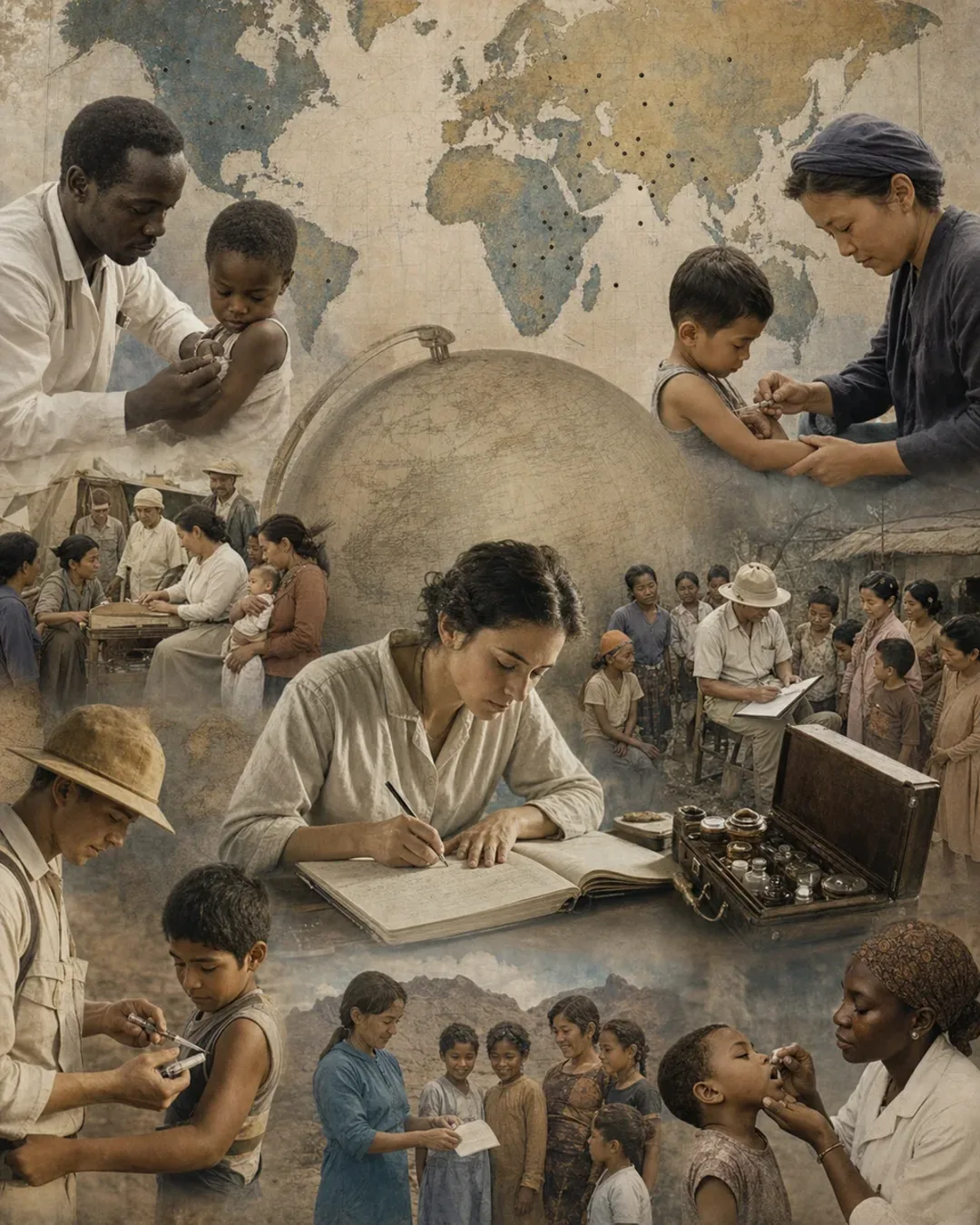
Teams combined mass vaccination with surveillance and containment. When a case appeared, workers identified contacts and vaccinated people around the outbreak, forming a barrier to transmission. The strategy had to adapt to conflict, difficult terrain, shortages and public distrust. Local knowledge was indispensable.
The final chain
The last naturally occurring case of variola major was recorded in Bangladesh in 1975, and the last natural case of variola minor in Somalia in 1977. Independent commissions examined evidence country by country. In 1980, the World Health Assembly declared smallpox eradicated.
It remains the only human infectious disease eradicated worldwide. The achievement required a biological opportunity—smallpox had no animal reservoir—plus sustained international cooperation. Its lesson is demanding: science becomes public health only through trust, logistics, careful records and the determination to reach the final person at risk.


