A reused fragment
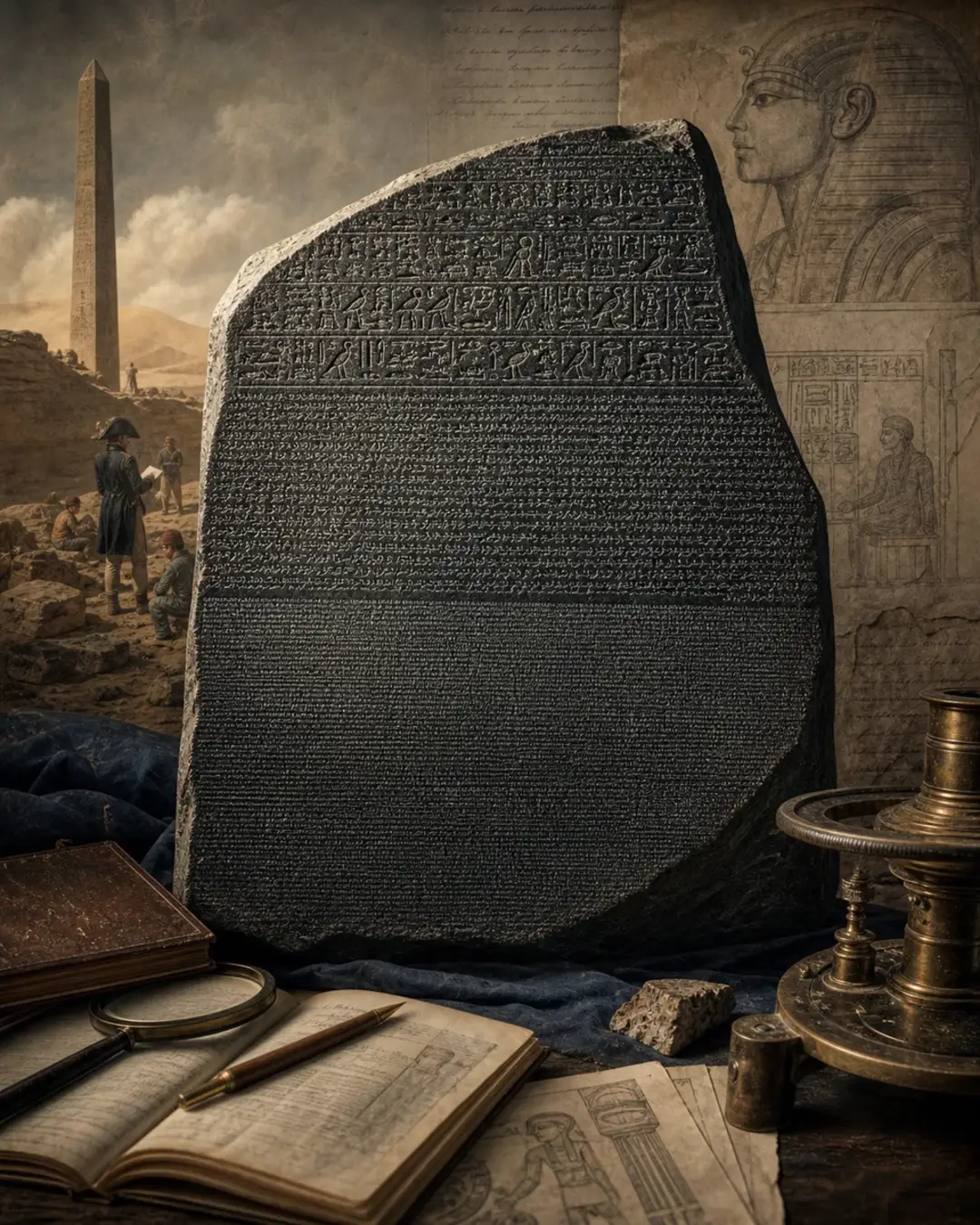
The Rosetta Stone is part of a larger granodiorite slab inscribed in 196 BCE during the reign of Ptolemy V. Its decree appears in hieroglyphic, Demotic and ancient Greek. The texts are not word-for-word identical in every detail, but their shared subject gave scholars a powerful comparative tool.
French soldiers found the fragment in 1799 during work near the town of Rashid, known in Europe as Rosetta. After the French defeat in Egypt, it passed to British possession and reached the British Museum in 1802, where its ownership remains contested by Egypt.
Names inside an oval
Because ancient Greek could be read, scholars used that portion to identify likely names and titles in the Egyptian scripts. Thomas Young made important advances, including work on the royal name Ptolemy. Jean-Francois Champollion then combined evidence from the stone with other inscriptions and his knowledge of Coptic.
In 1822, Champollion announced a decisive breakthrough: hieroglyphs were not only symbolic pictures. The script could also represent sounds, including beyond foreign royal names. This flexible system—phonetic, symbolic and determinative—had resisted approaches that expected a single kind of sign.
A key, not the whole door
Calling the stone a 'key' is fair if we remember that many locks remained. Decipherment was cumulative and international, shaped by rivalries, earlier copies, Coptic language study and inscriptions beyond Rosetta. The stone mattered because hypotheses could be compared against parallel text.
Its afterlife changed the study of ancient Egypt. Temples, tombs and everyday documents became readable as language rather than mute decoration. The breakthrough was not one dazzling translation, but a method becoming reliable enough for other people to use.


